The Martial Arts Journey
Where you start, what you are working towards, and how long it really takes.
Every program here has a path, and it starts on your first day.
The point is constant progression. Students are recognised for their effort as much as their skill, so there is always a next step in front of them.
Belts mark that progress. Some take a few months, some take years, and the honest answer to how long is that it depends on how often you are on the mat.
Black belt is not the finish. It is where the training wheels come off and you start learning the system properly.
Choose a program below to see the full path.
YOUR JOURNEY
Select Your Martial Arts style to see the journey
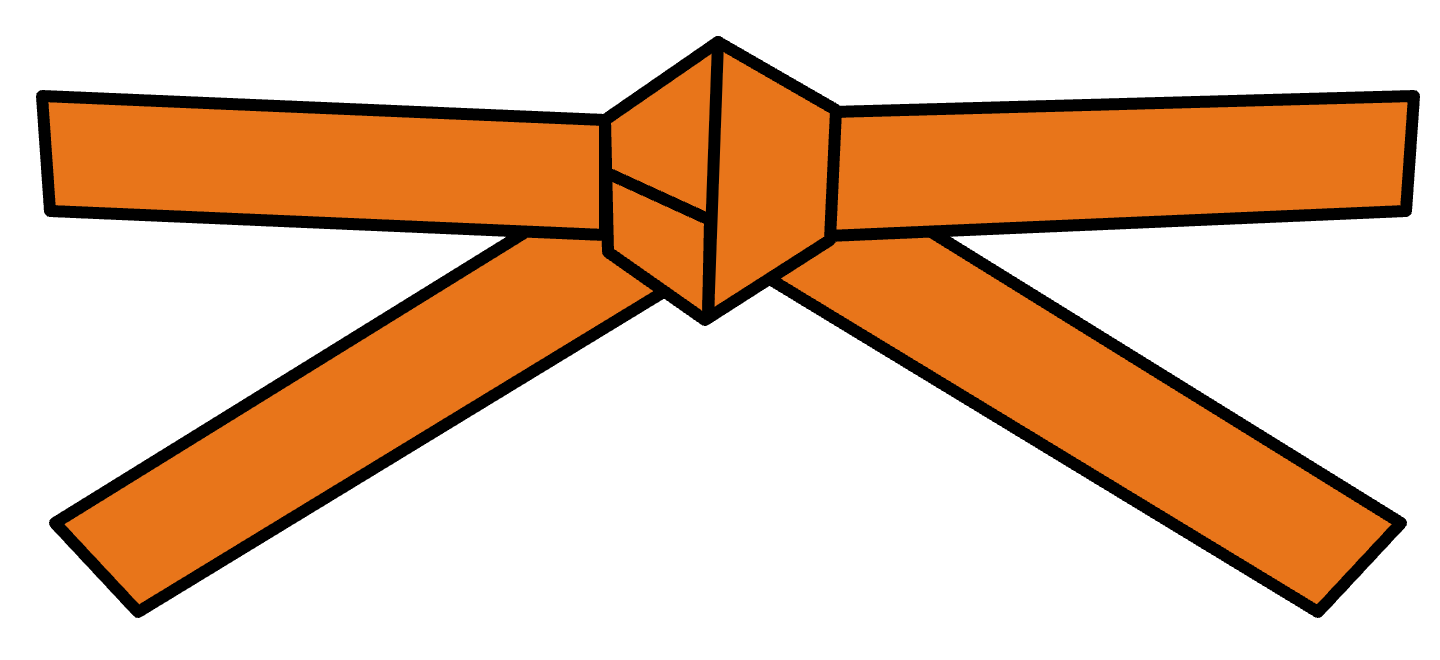
Tigers is where it starts. There are no belt ranks here – the work is learning to listen, take turns, fall safely and have a go. Progress is marked with stripes.
Before your first class
- A T-shirt and tracksuit pants. We train barefoot on rubber mats.
How progress works
Tiger BeltA stripe is awarded at the end of each school term. Tigers do not grade for belts – the stripe marks the term's work.
Moving up to Youth Self Defence
At 9, Tigers move into the Youth program. The Tiger Belt is the same starting position as the Youth white belt, and stripes carry across – nothing is lost in the change.
 Youth Self Defence – White Belt
The point is constant progression. Students are recognised for their effort as much as their skill, so there is always a next step in front of them.
Before your first class
- A T-shirt and tracksuit pants. We train barefoot on rubber mats.
Belt & Rank System
Tiger – 0 Stripes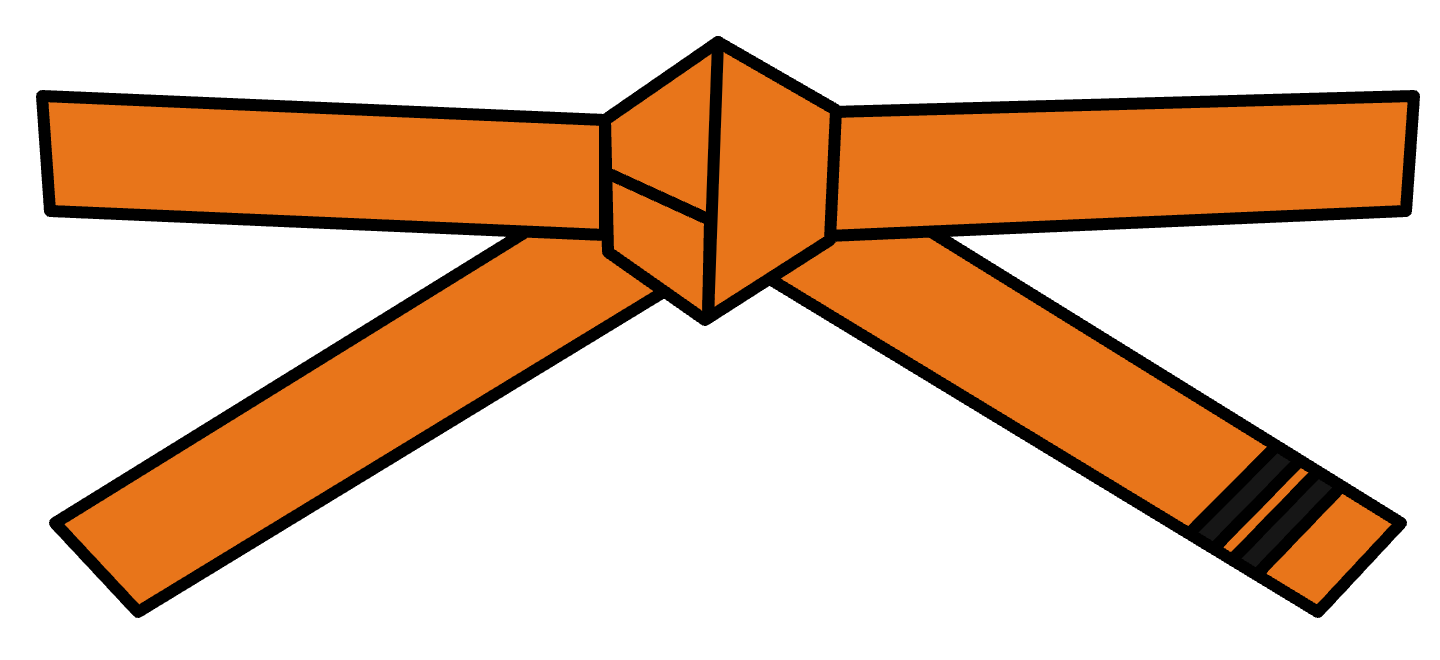 Tiger – 2 Stripes
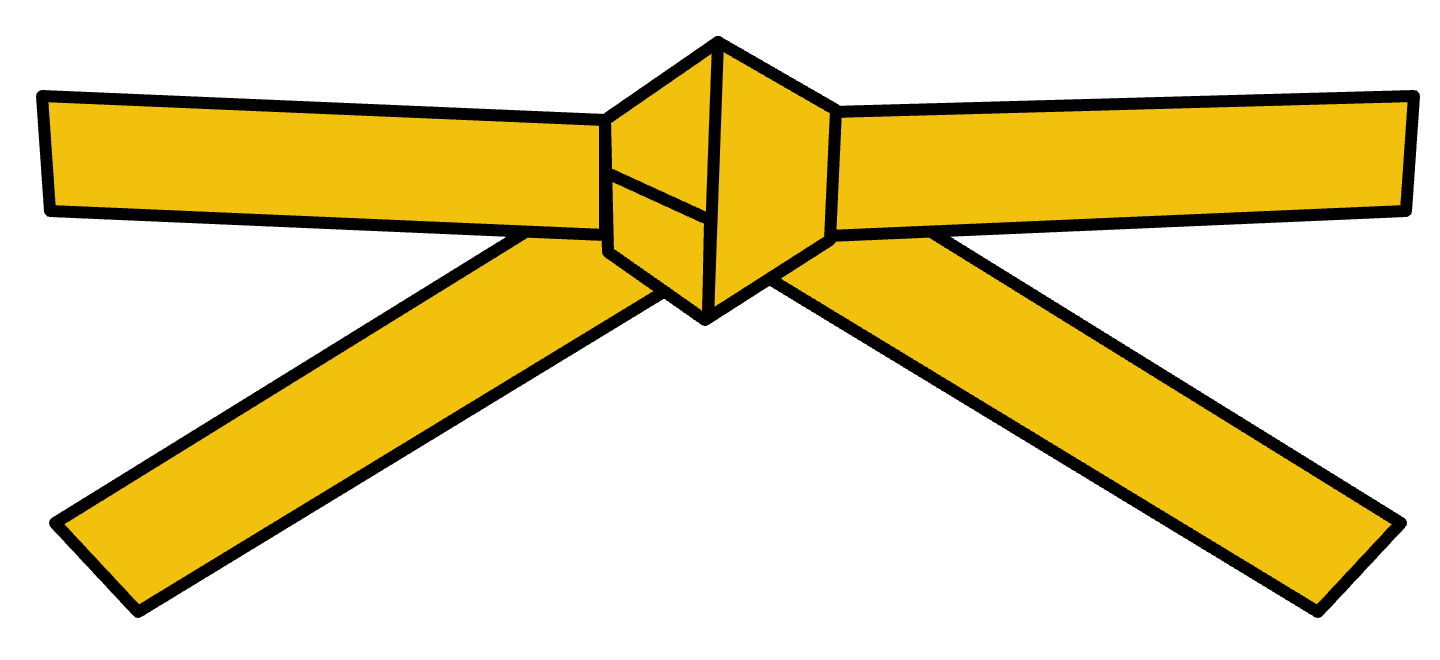 Yellow
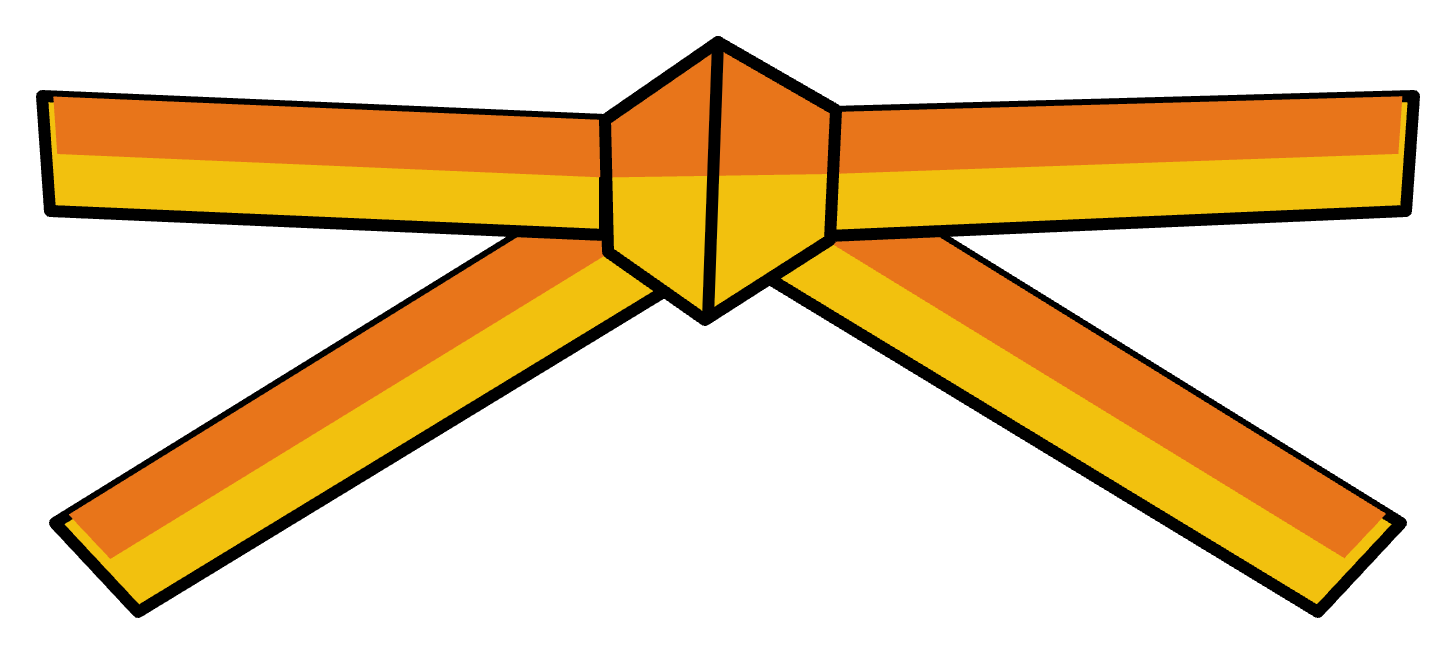 Yellow/Orange
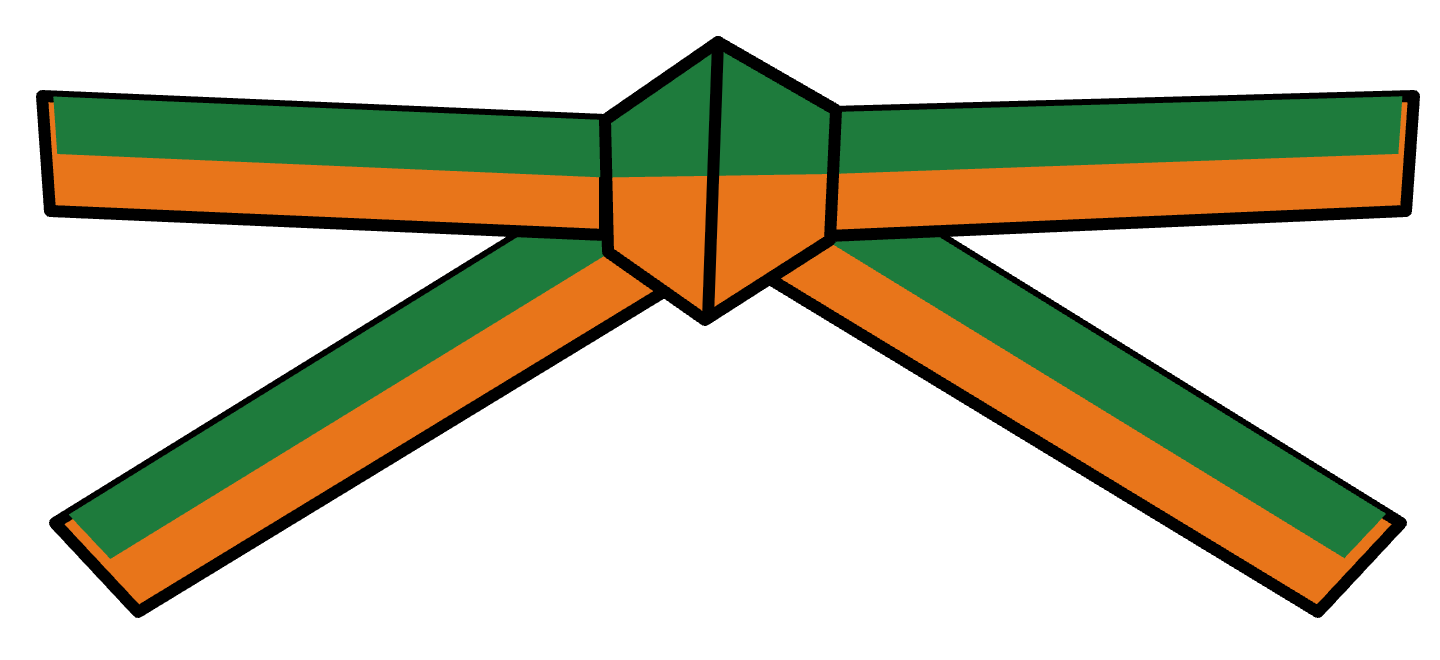 Orange/Green
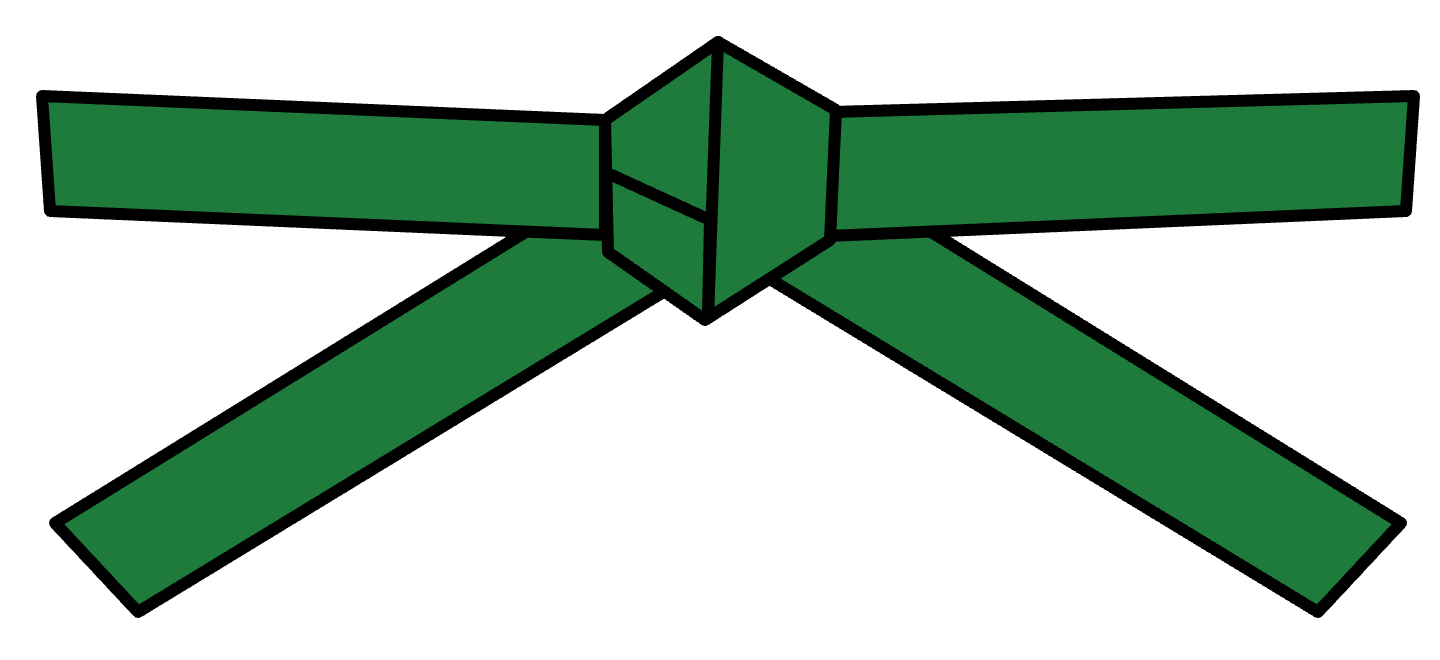 Green
Green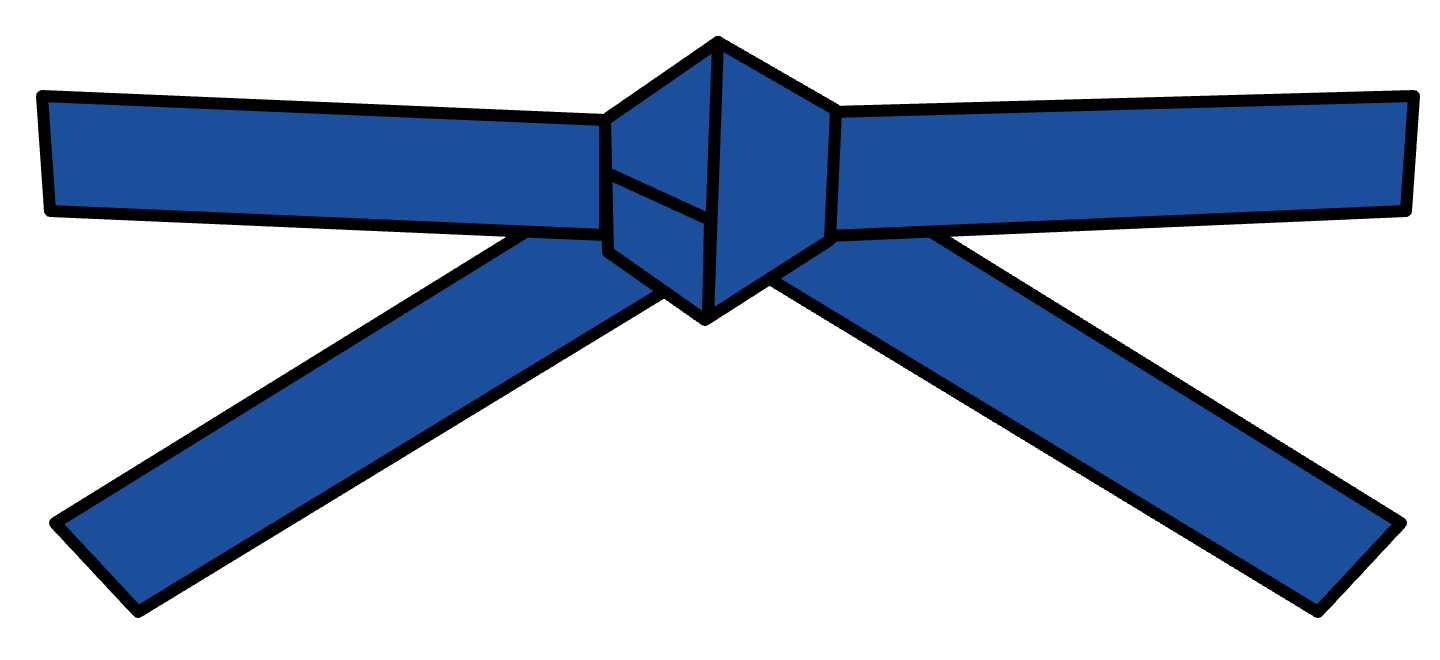 Blue
Blue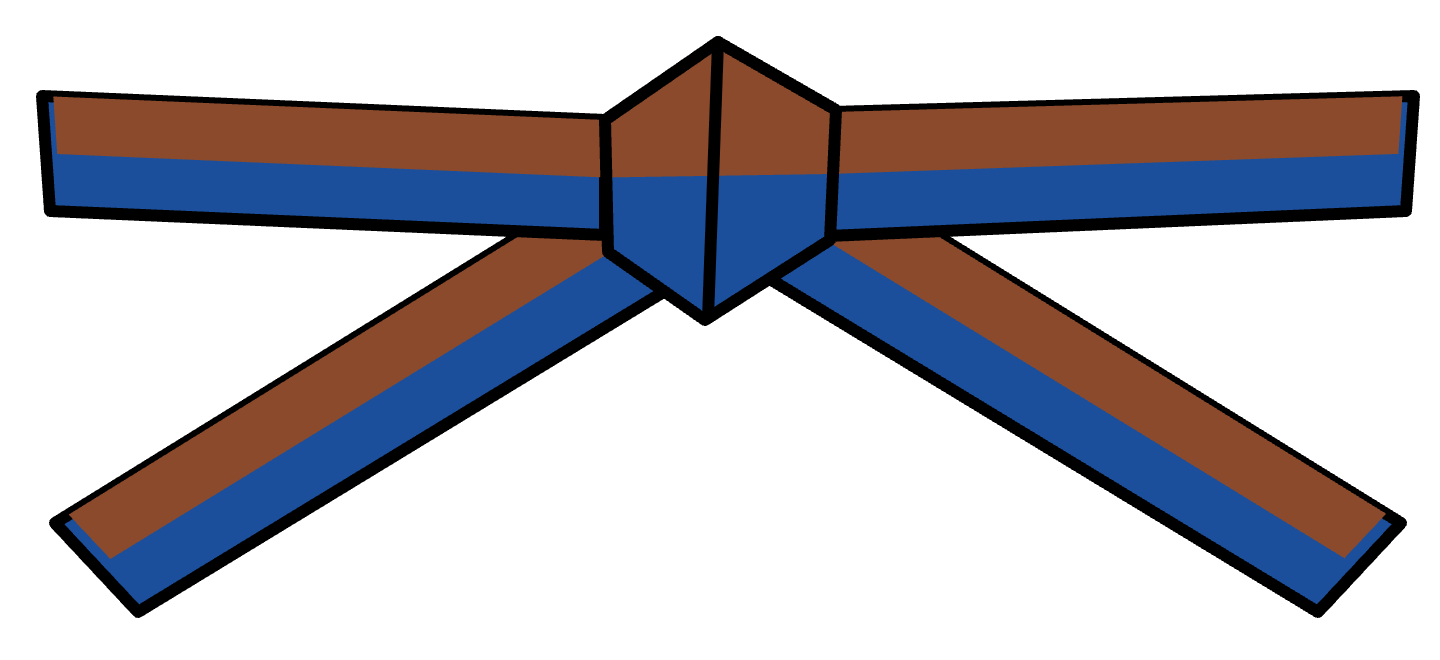 Blue/Brown
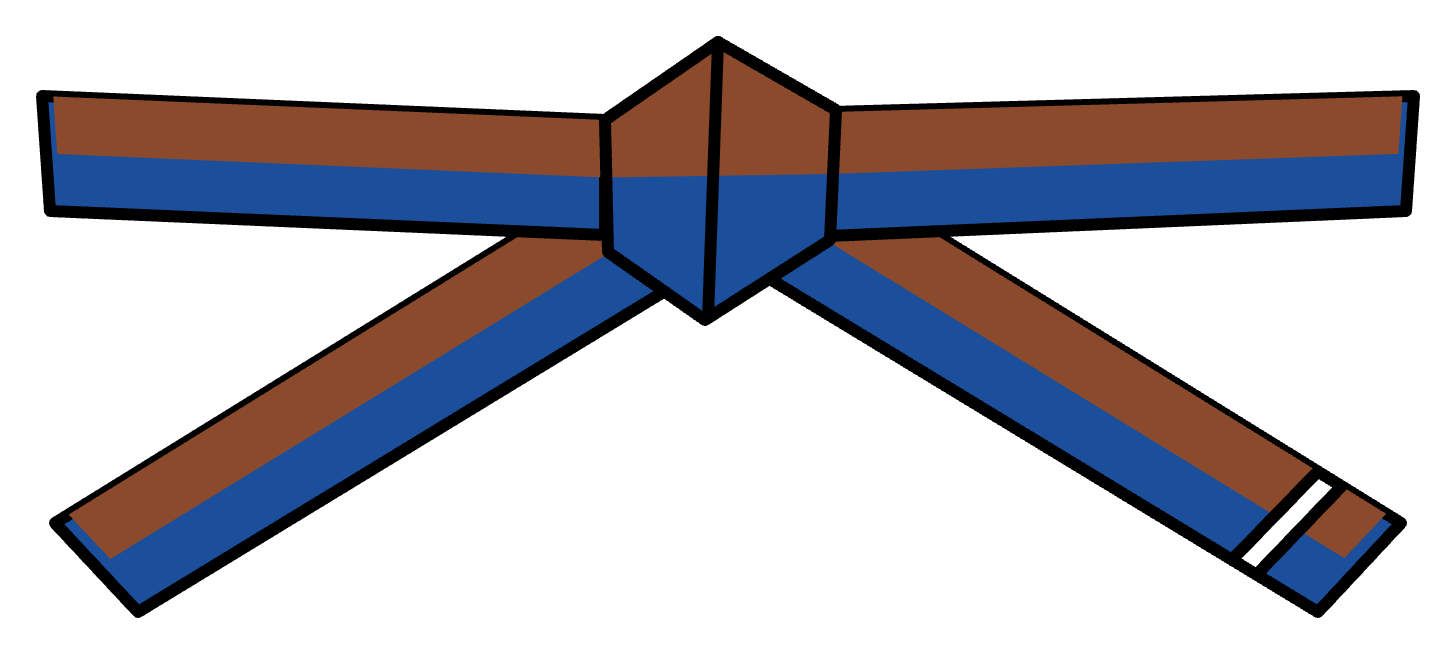 Blue/Brown
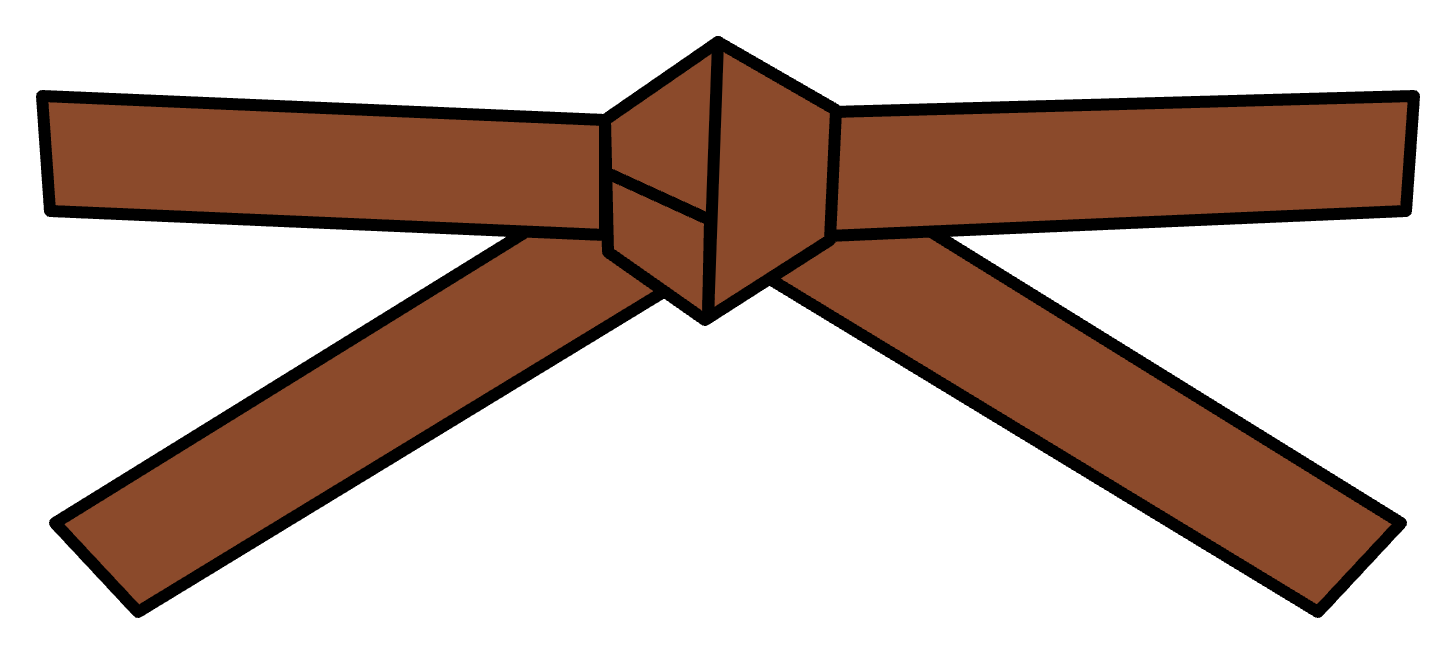 Brown
Brown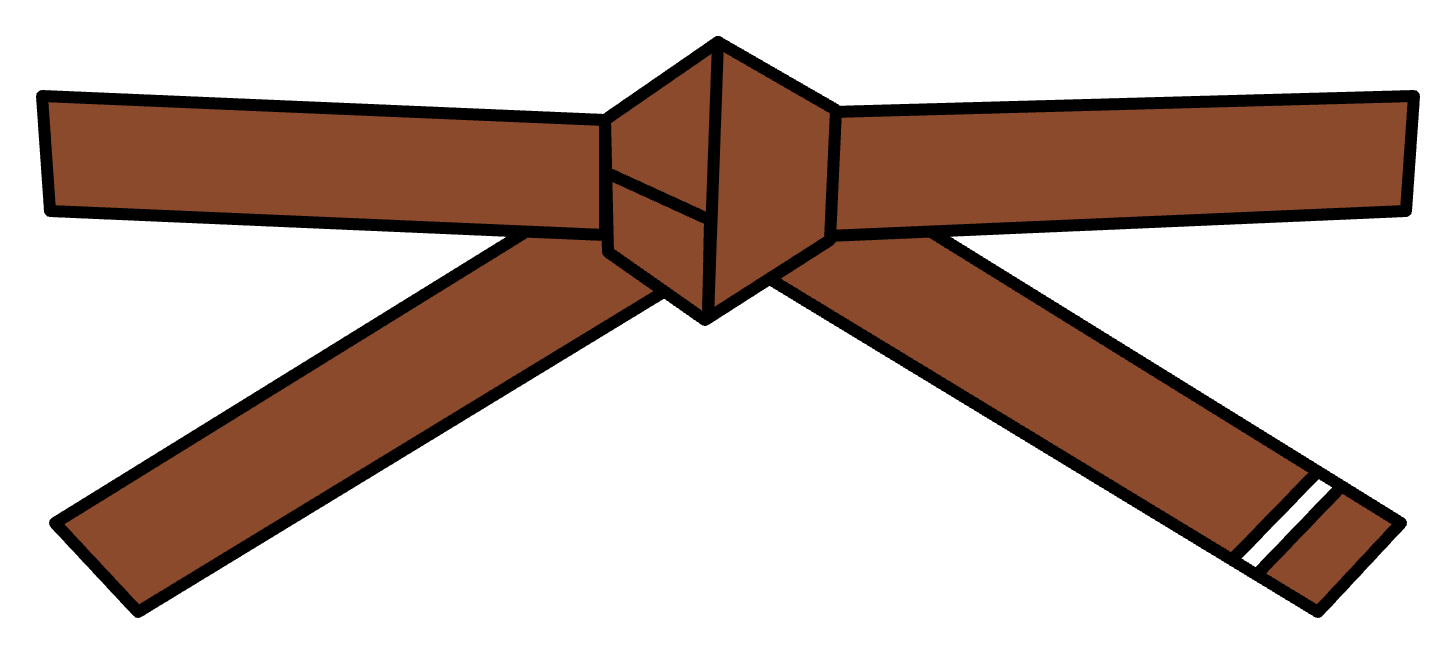 Brown
Brown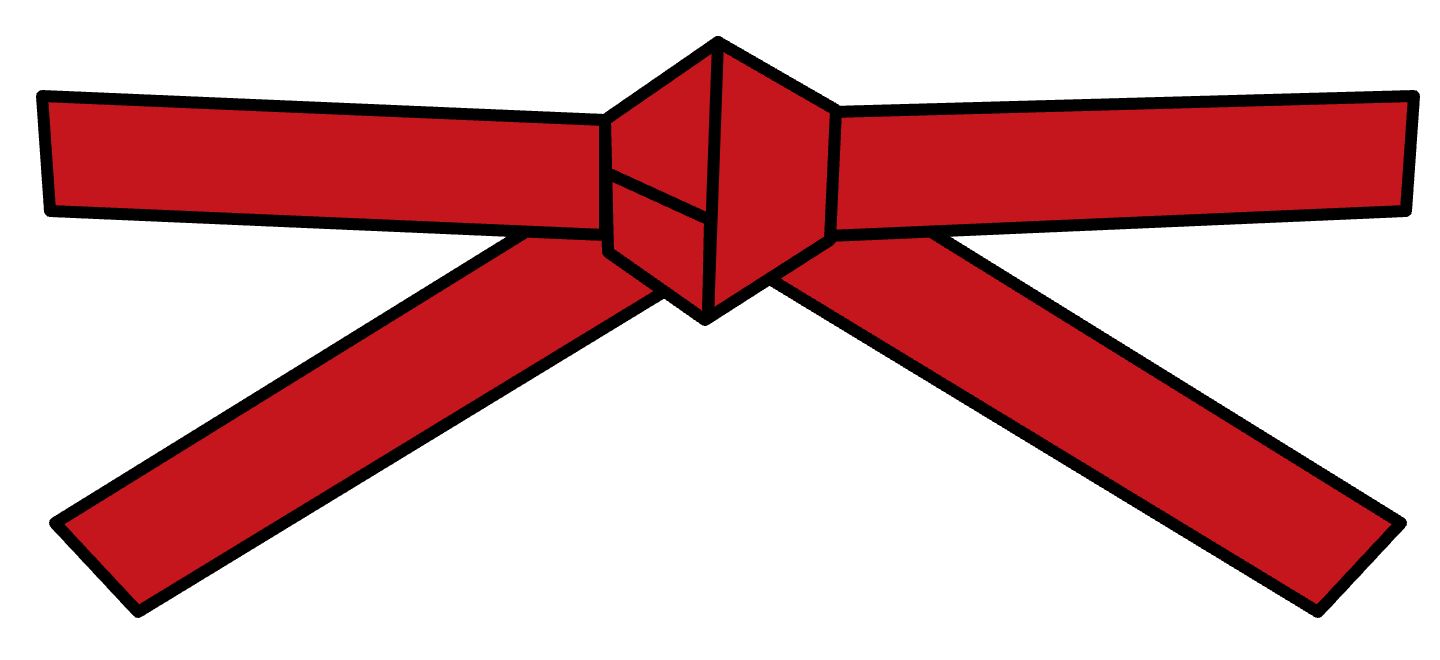 Red
Red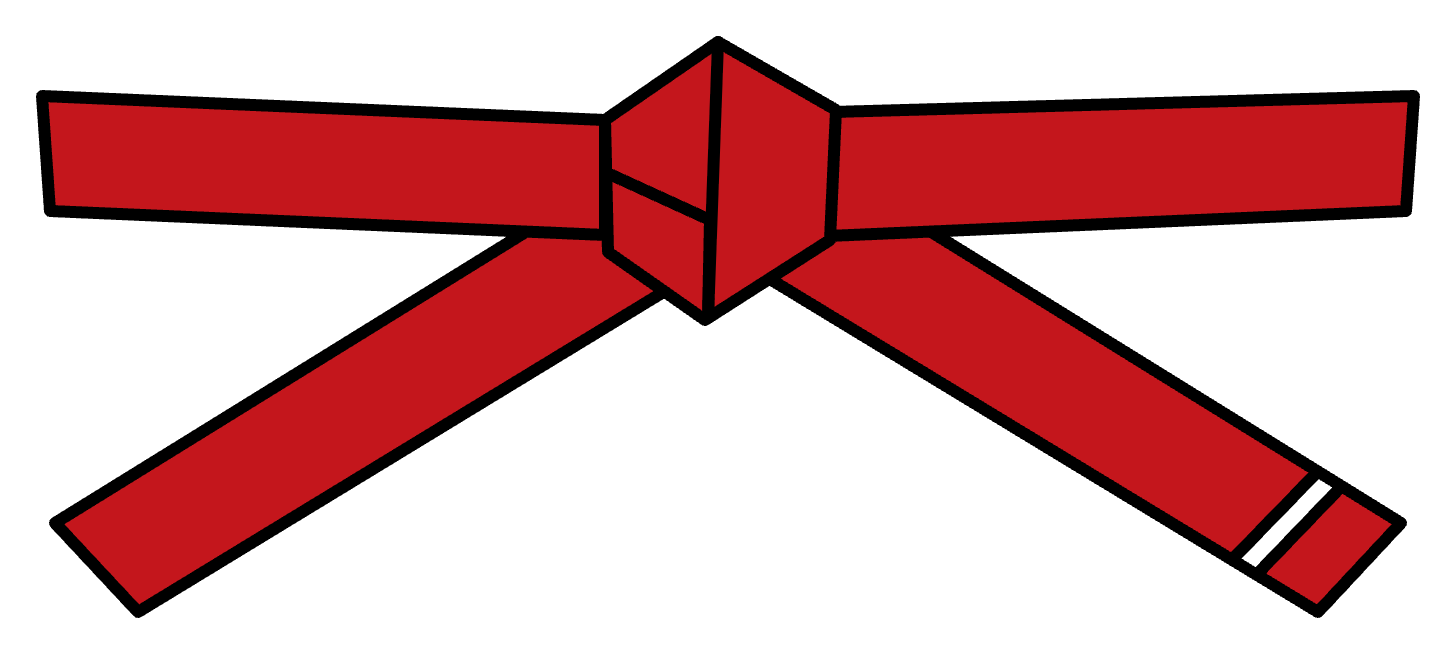 Red
Red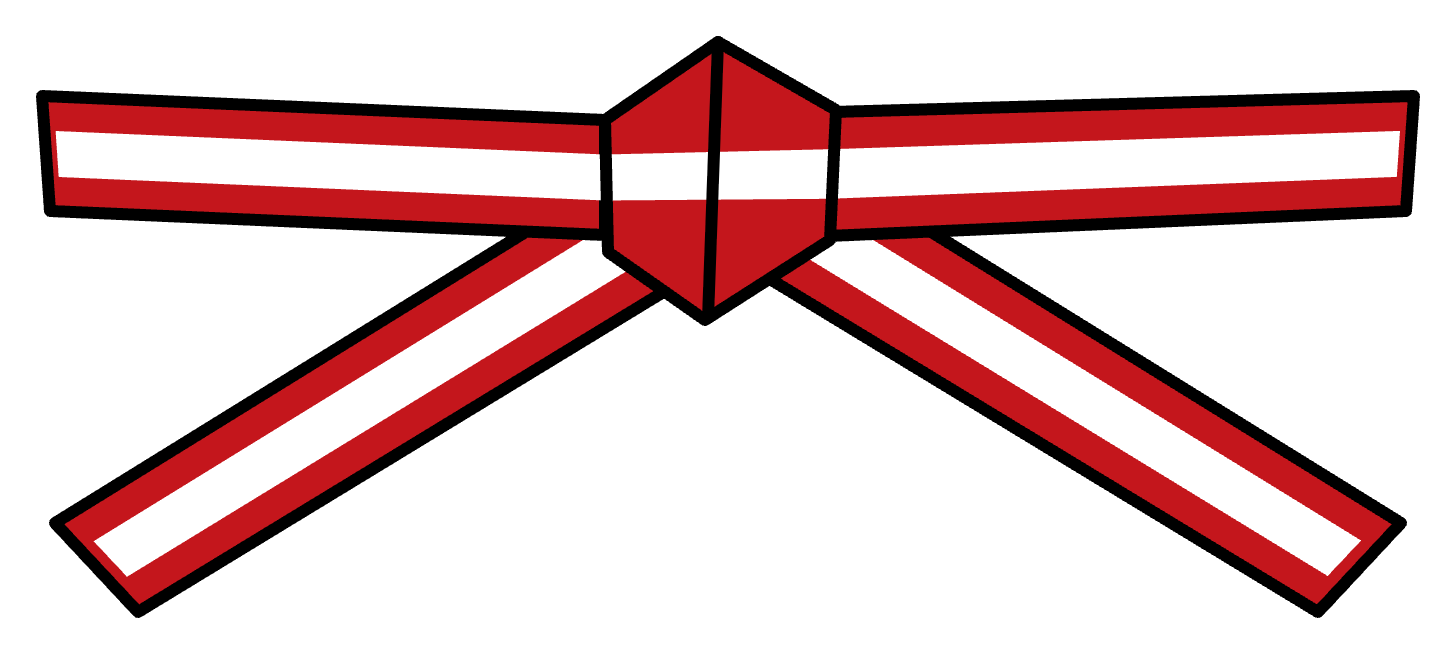 Red with White
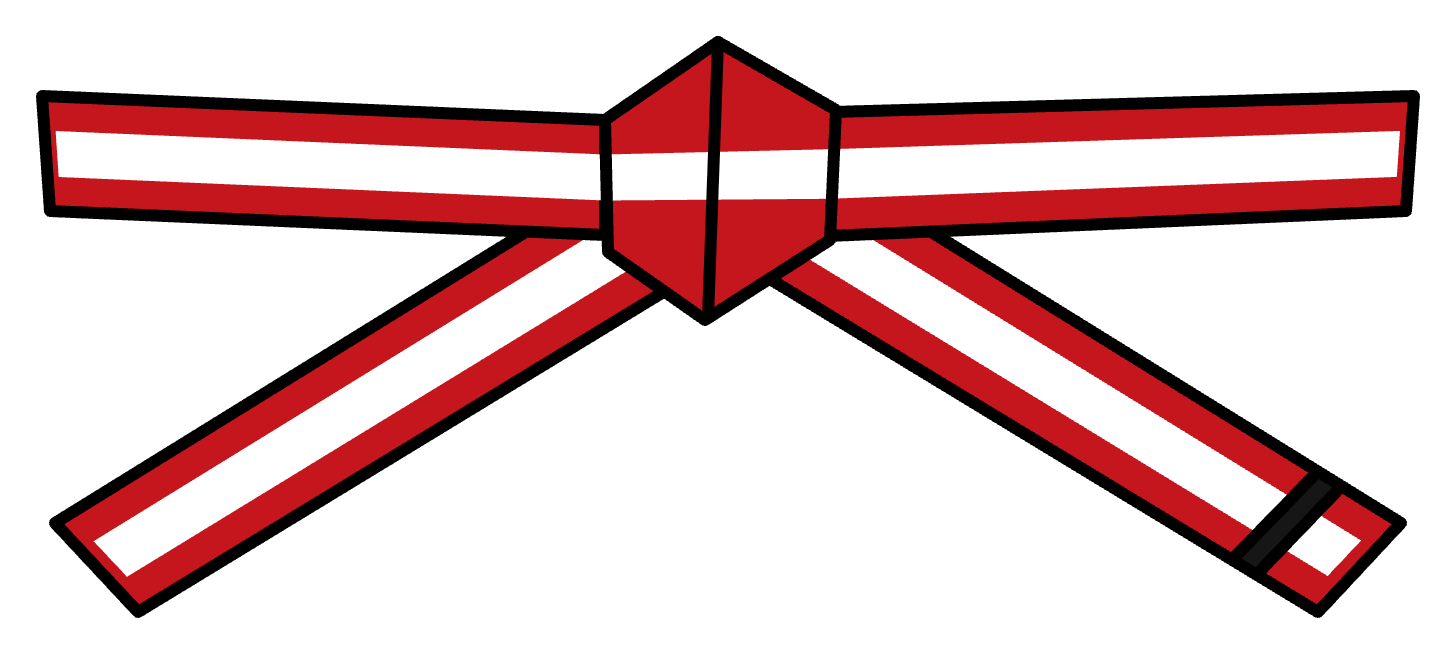 Red with White
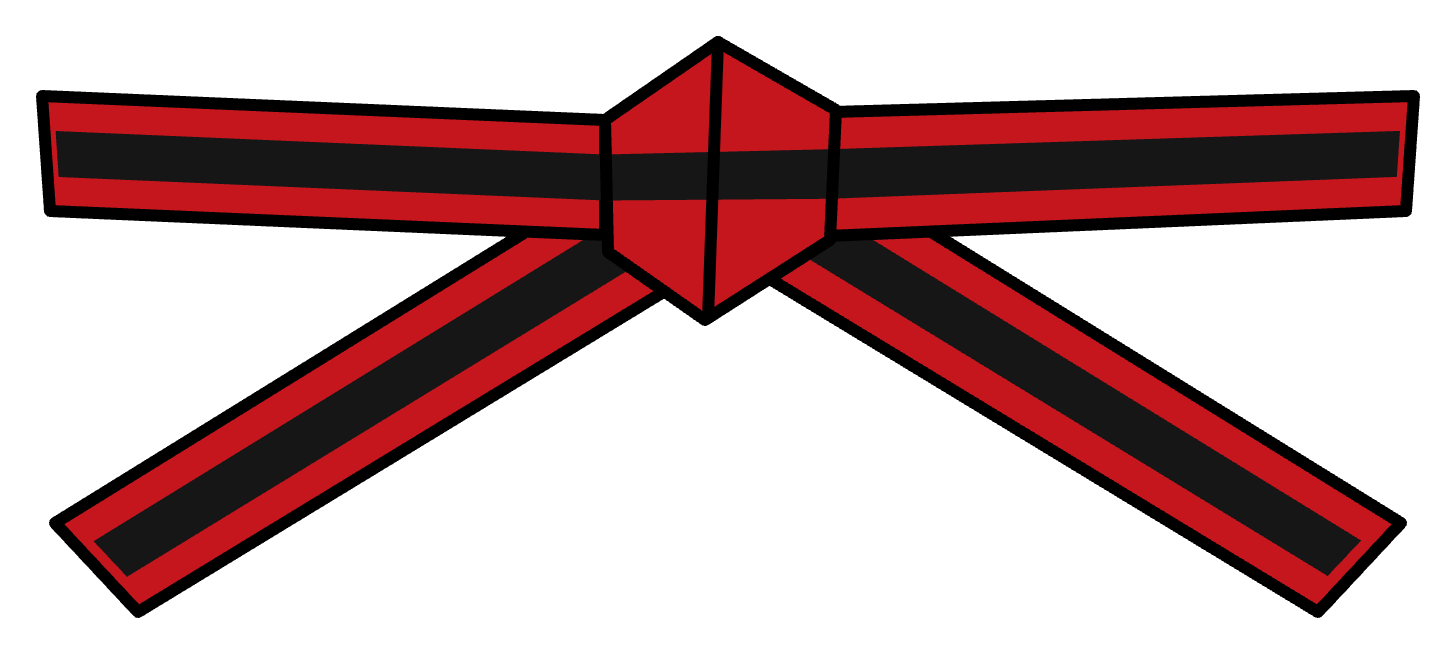 Red with Black
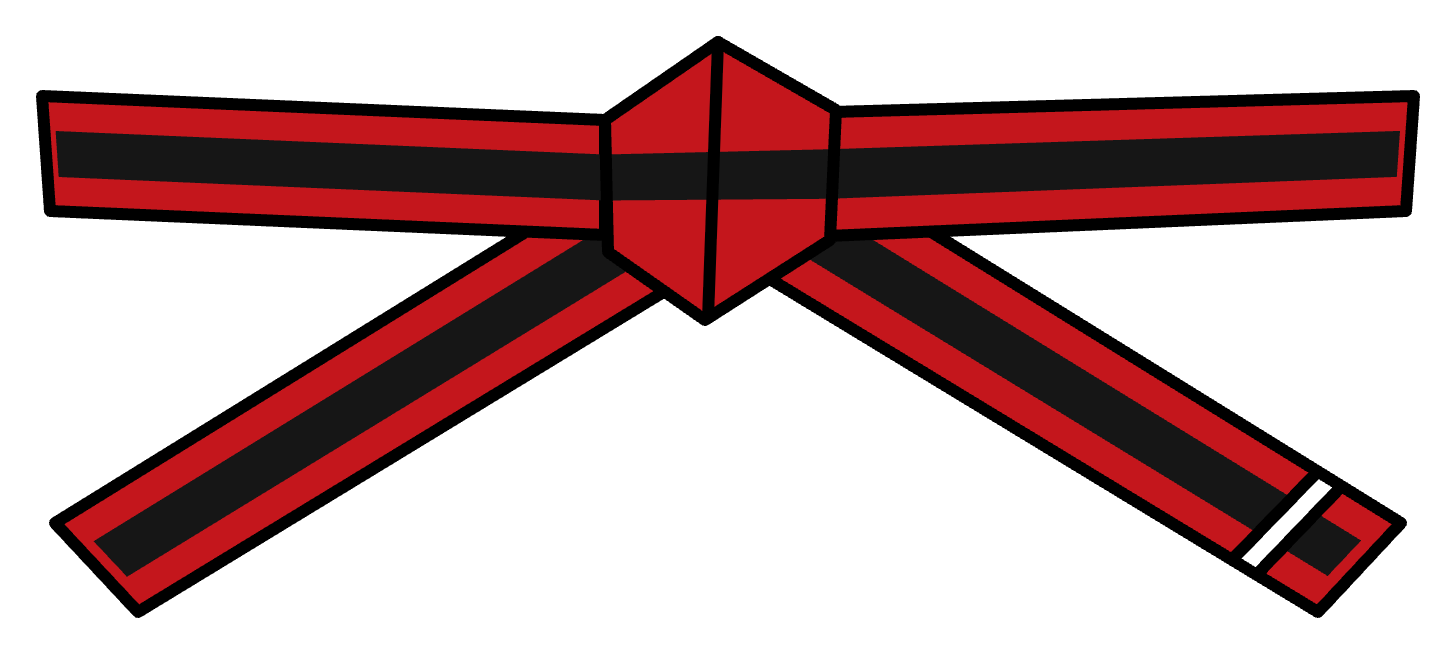 Red with Black
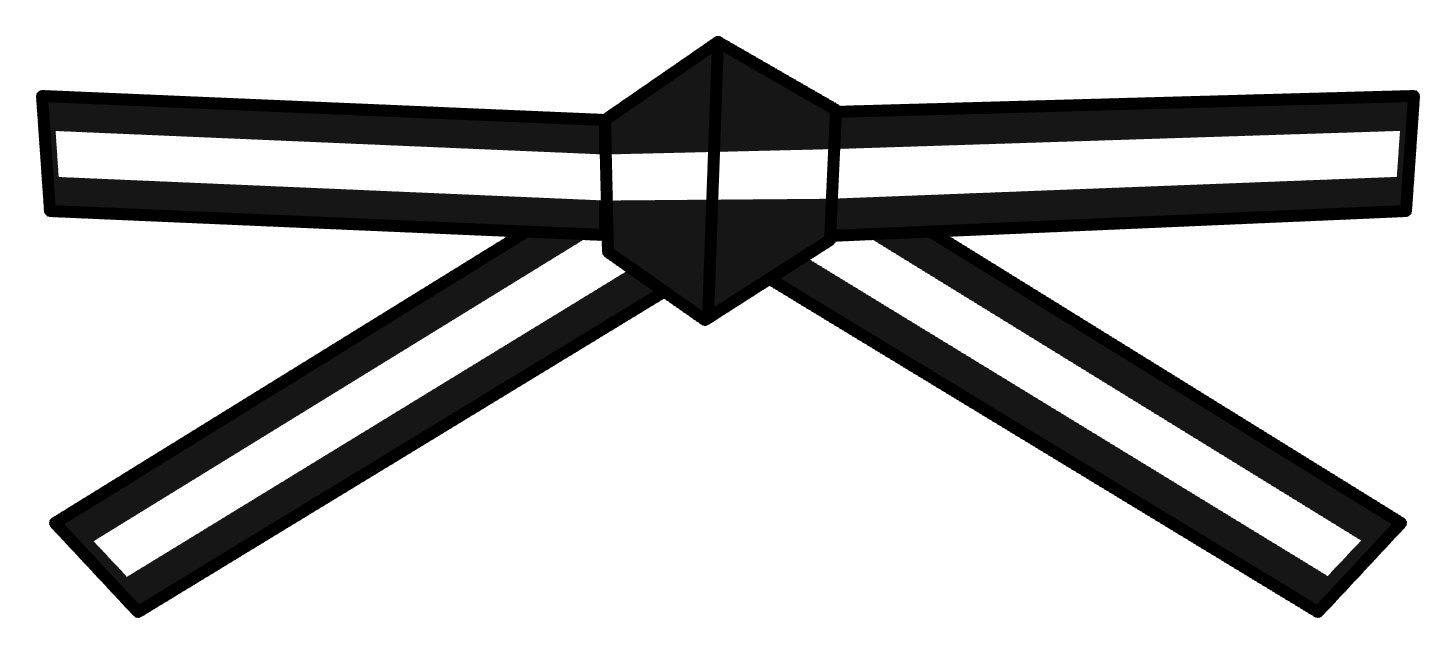 Black with White
+ stripe – these belts have a stripe awarded at the midpoint. There is a lot to learn at this level, so progress is marked along the way.
Junior Black Belt, then the real beginning
The Junior Black Belt cannot be attempted before age 12, and takes up to 12 months from Black with White. From there the focus shifts to the adult classes and a full black belt around 15–16.
Moving across, we assess each student and place them at the matching adult rank. Nothing is lost in the change.
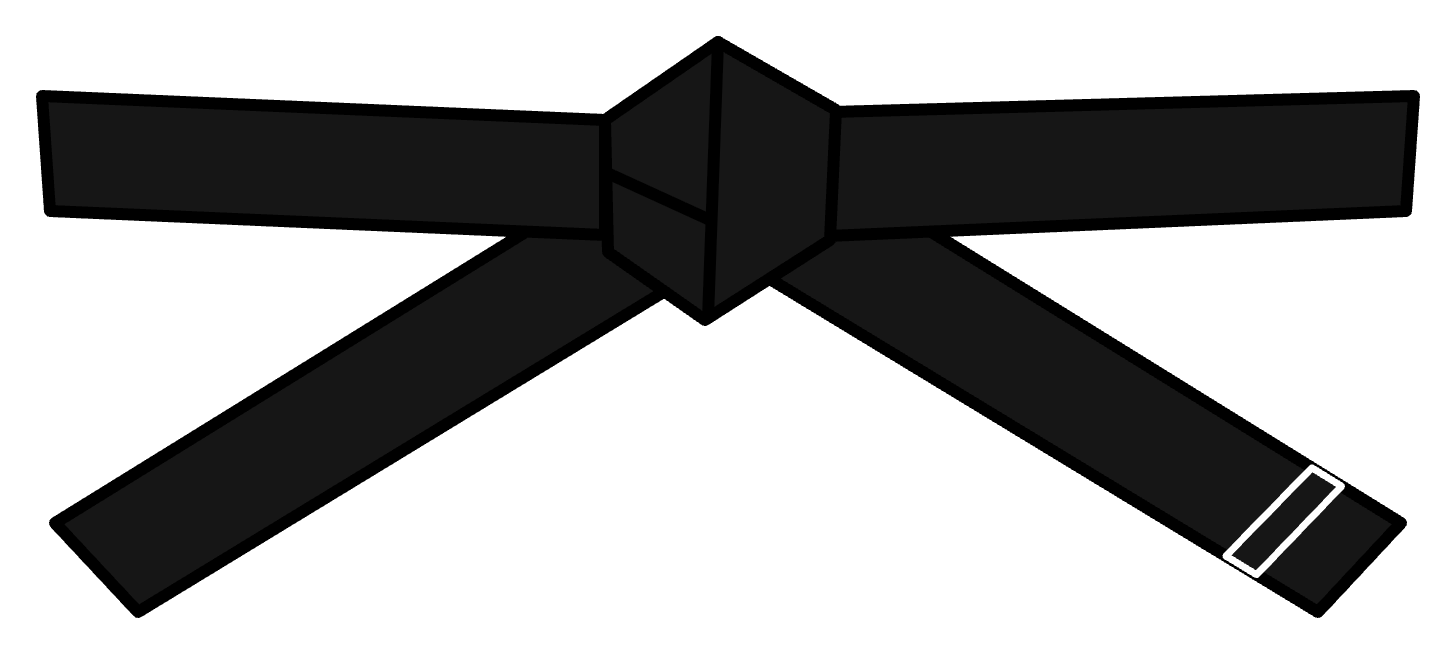 Junior Black Belt (12–15yrs)
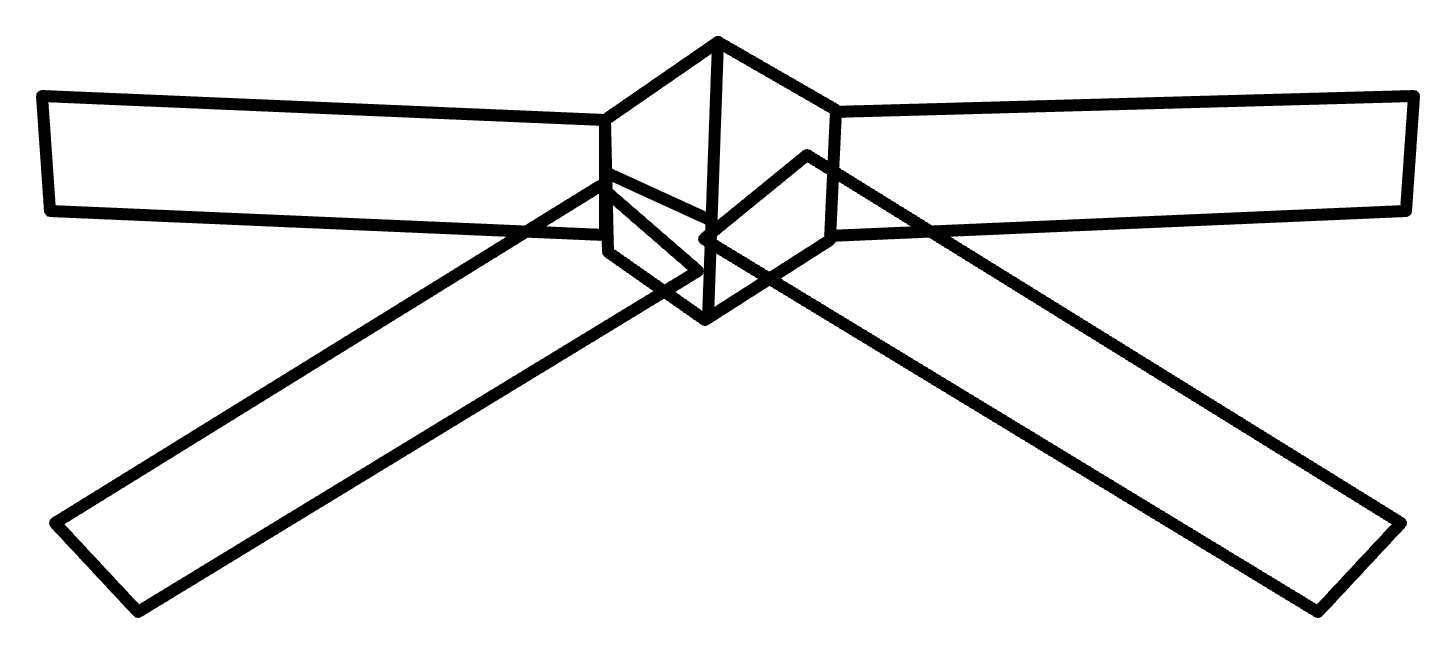
Youth Taekwondo is built on kicking, forms and discipline. Every belt has a clear next step, so students always know what they are working towards.
Before your first class
- A T-shirt and tracksuit pants. We train barefoot on rubber mats.
- Youth Taekwondo is for students aged 8 and up.
- There is no uniform to buy before you start. Come as you are for the first class.
Coming from another martial art
- If your child has trained in a different martial art they still start at white belt, but they may progress faster – the basic principles are similar across a number of martial arts.
- If they have trained at another taekwondo school, depending on how similar the techniques are, they may be assessed and given a rank above white belt.
How grading works
- Four gradings a year, usually in week 9 of each school term.
- Four to seven years to Black Belt with dedicated training, depending on the student's age.
Belt & Rank System
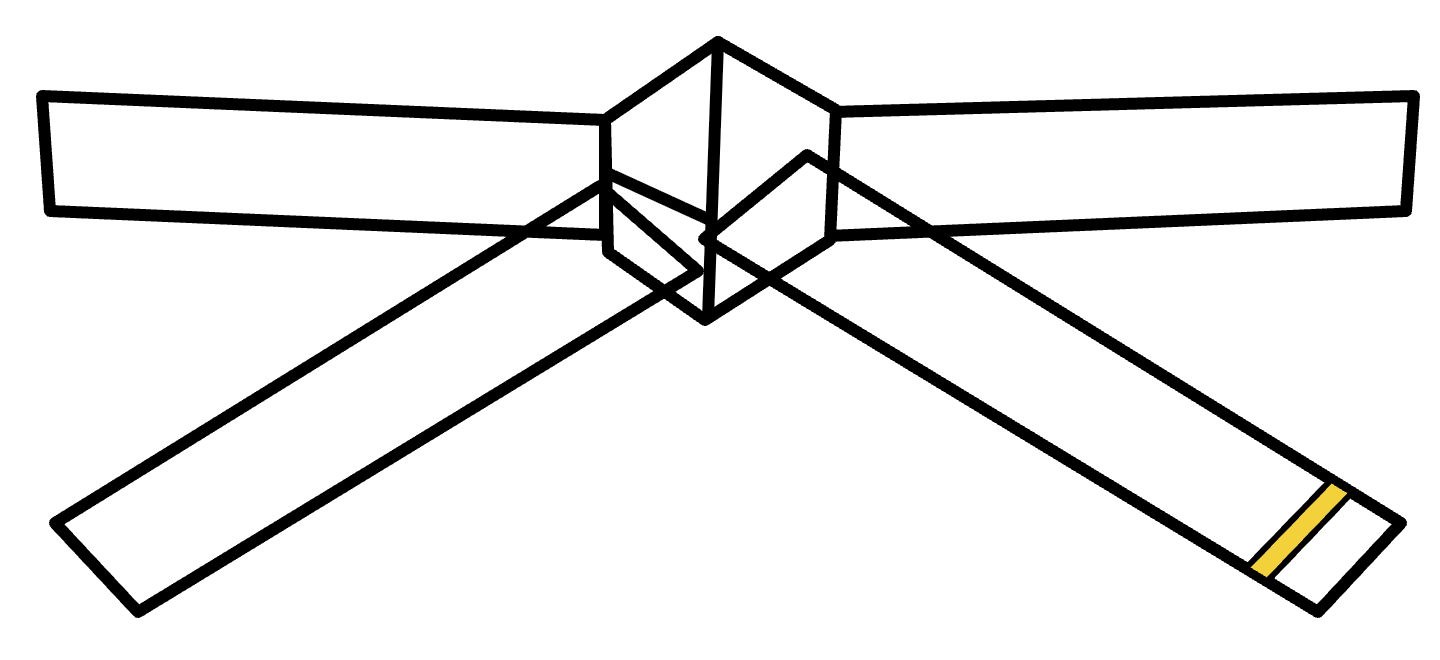 White – 9th Kup (급)
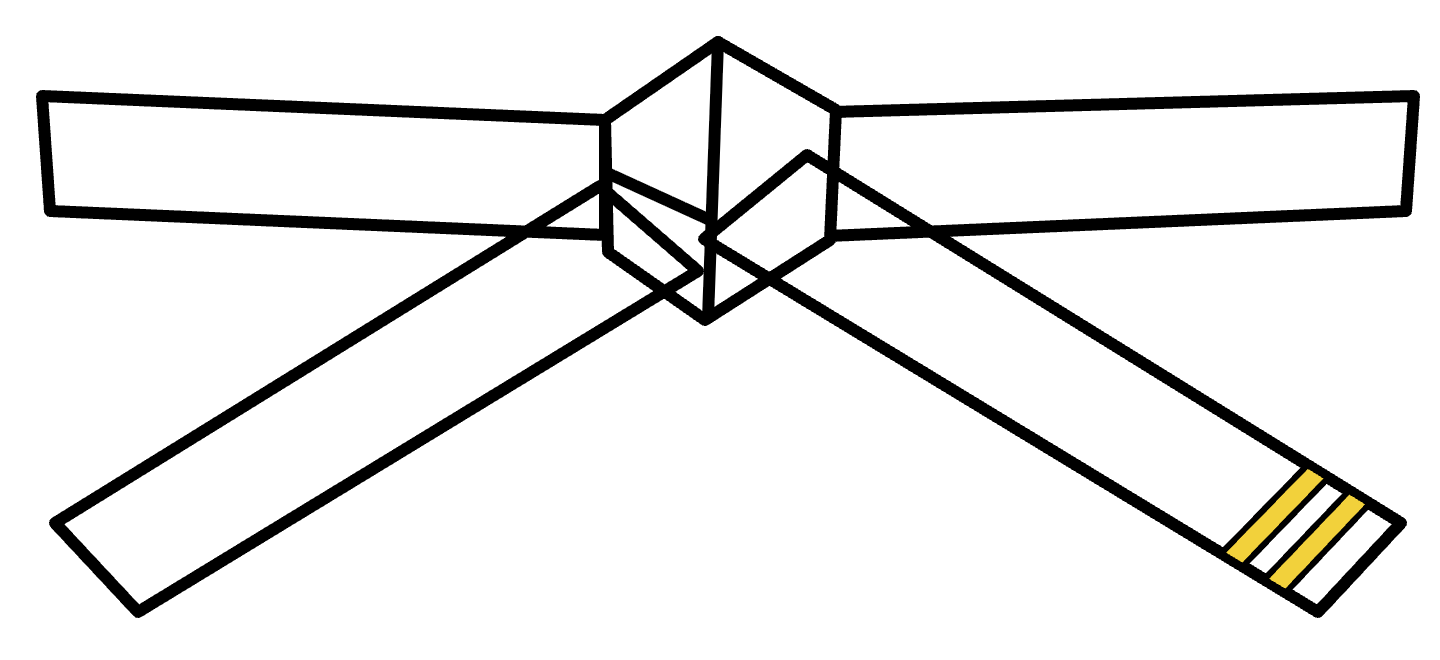 White – 9th Kup (급)
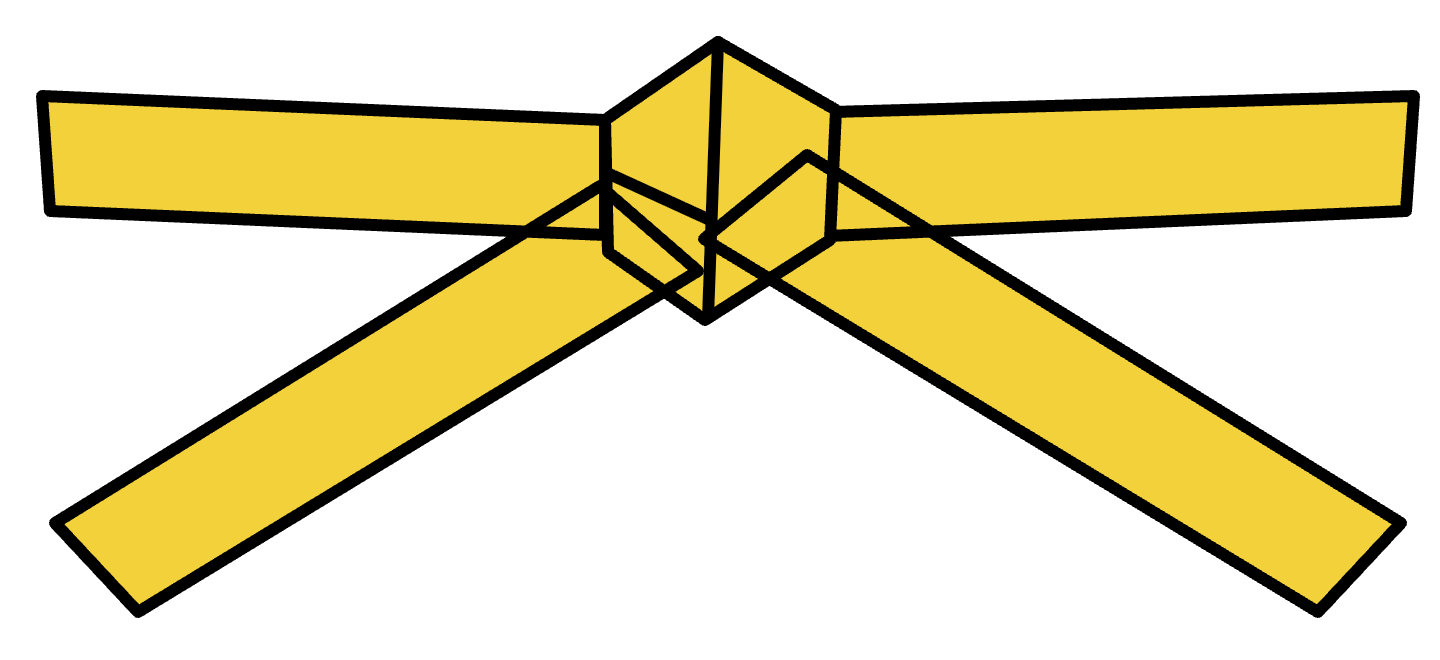 Yellow – 8th Kup (급)
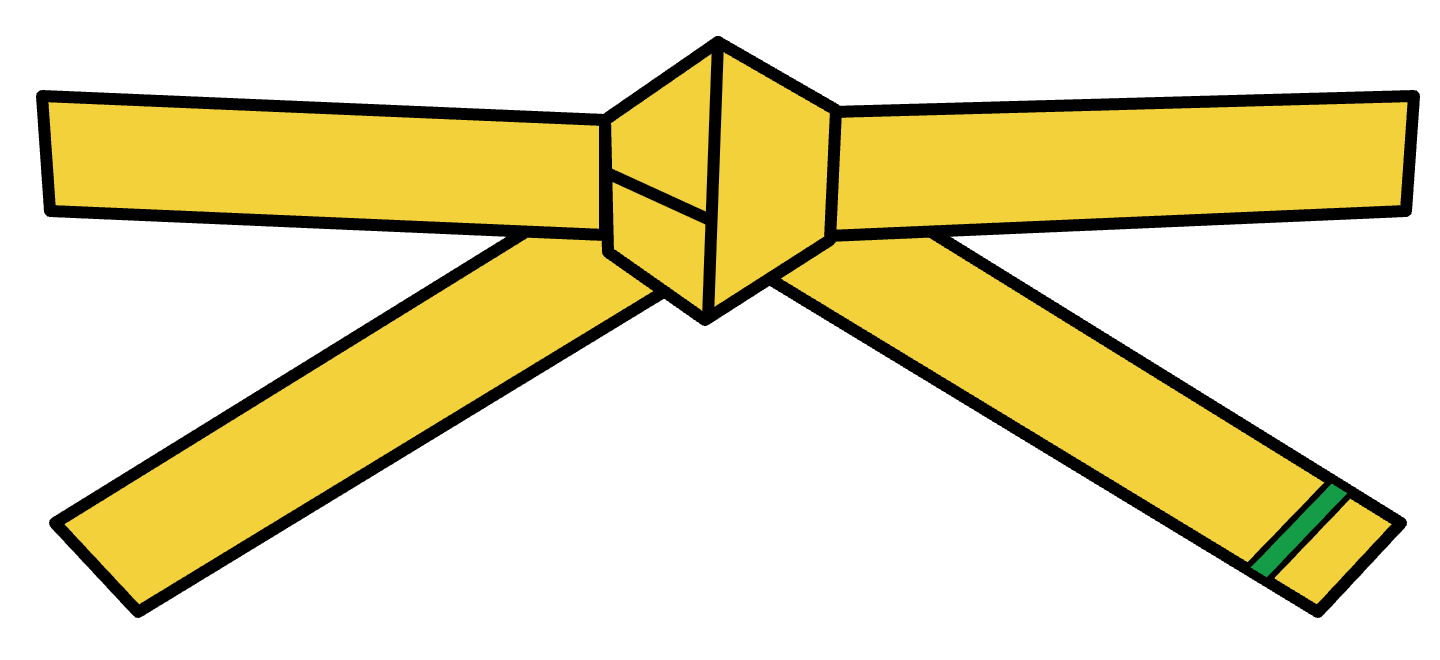 Yellow with Green Tip – 7th Kup (급)
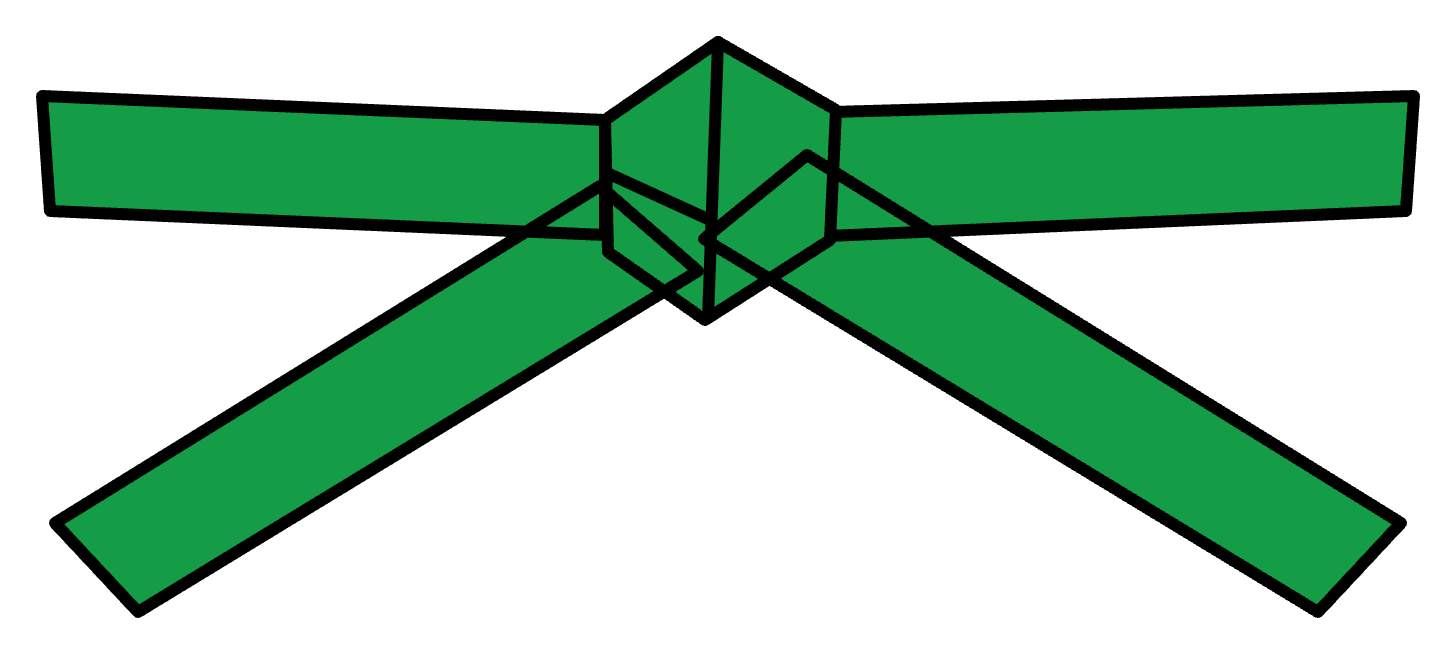 Green – 6th Kup (급)
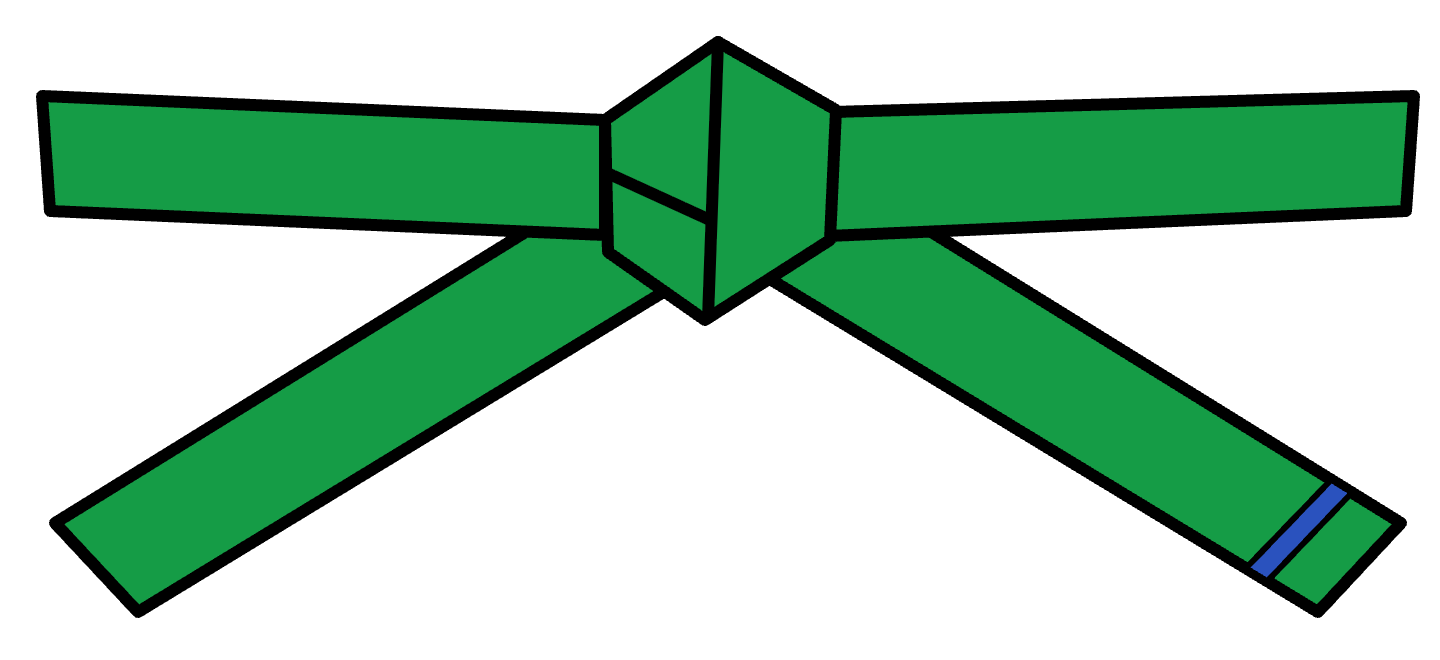 Green with Blue Tip – 5th Kup (급)
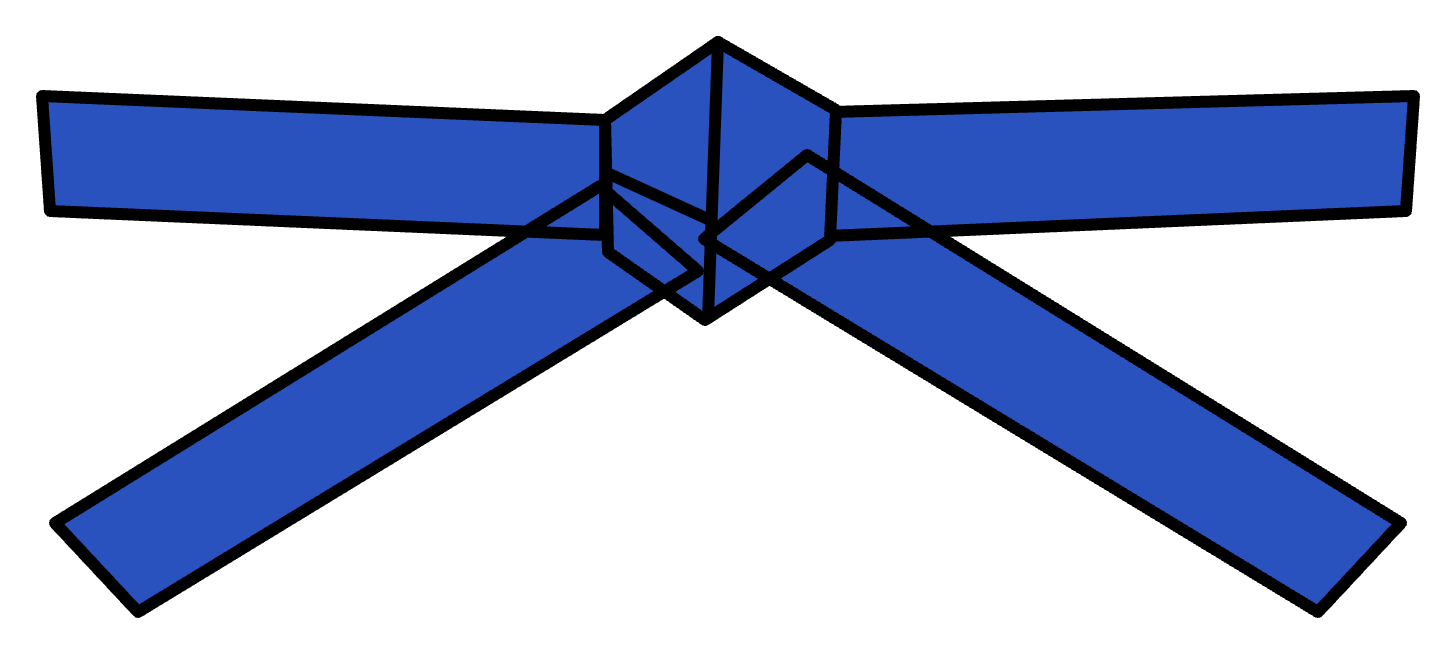 Blue – 4th Kup (급)
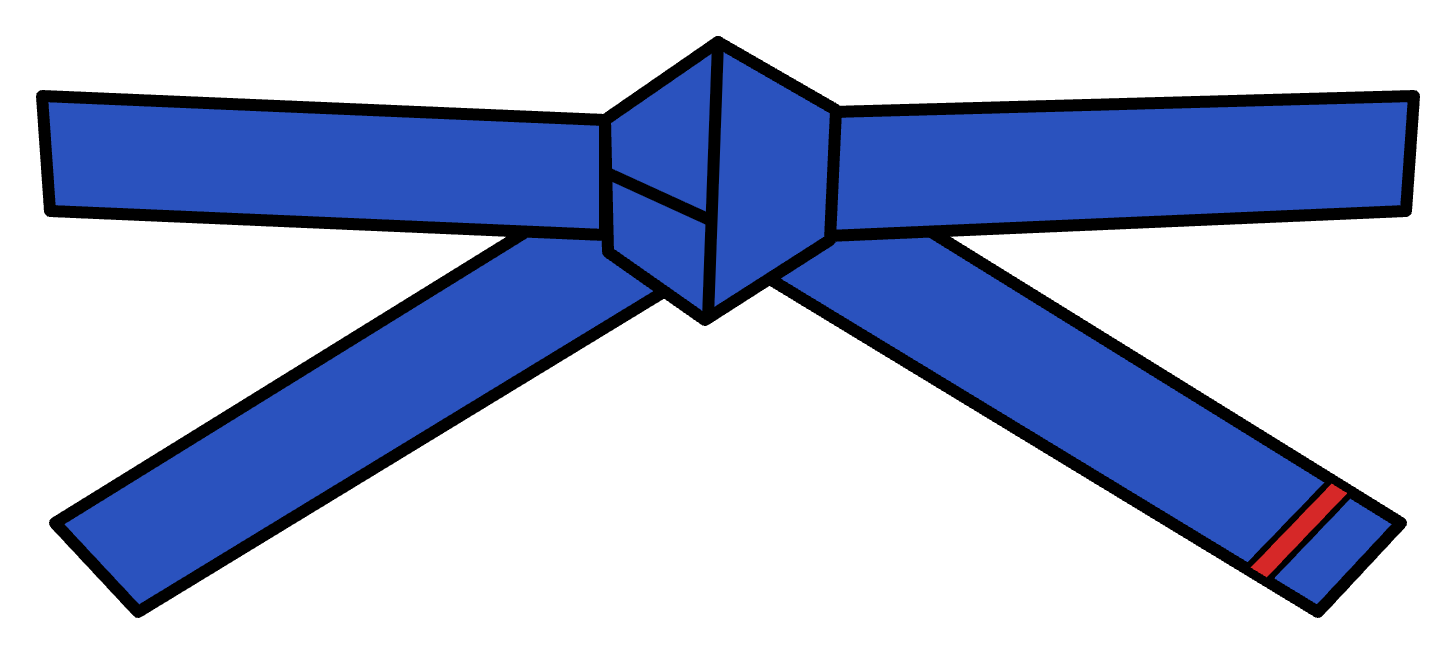 Blue with Red Tip – 3rd Kup (급)
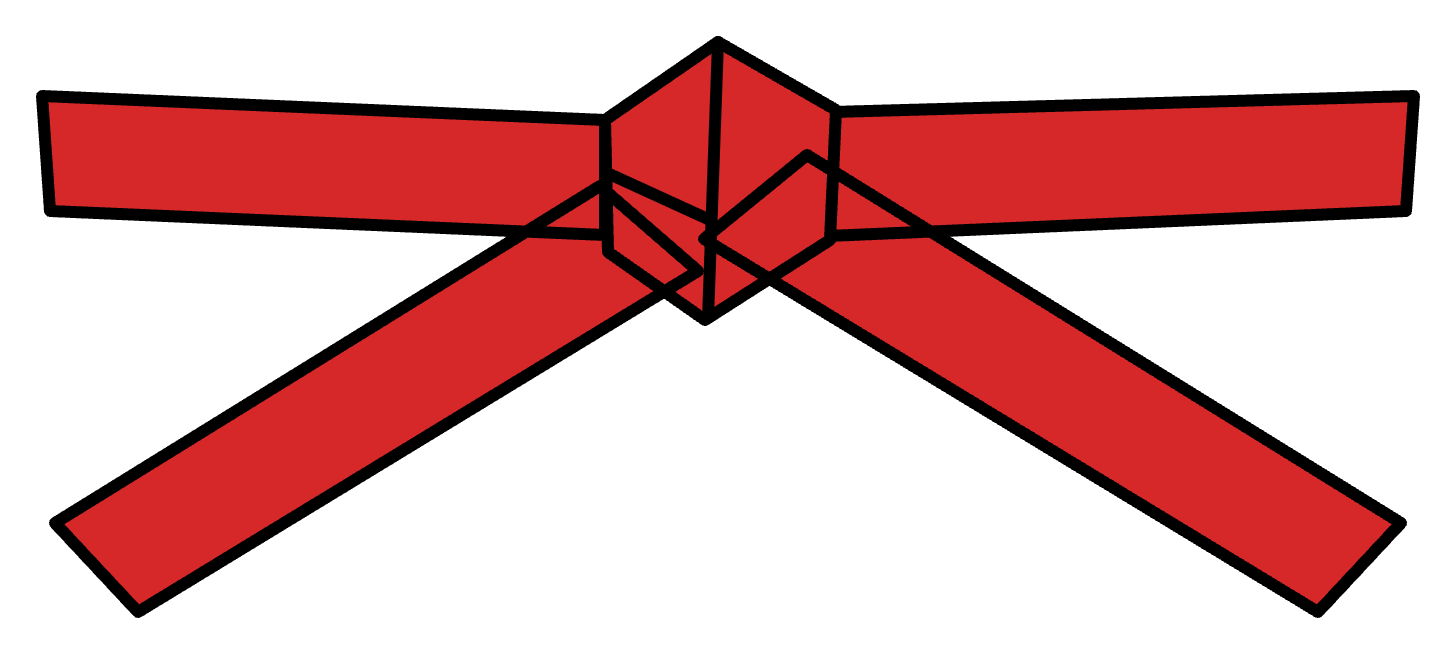 Red – 2nd Kup (급)
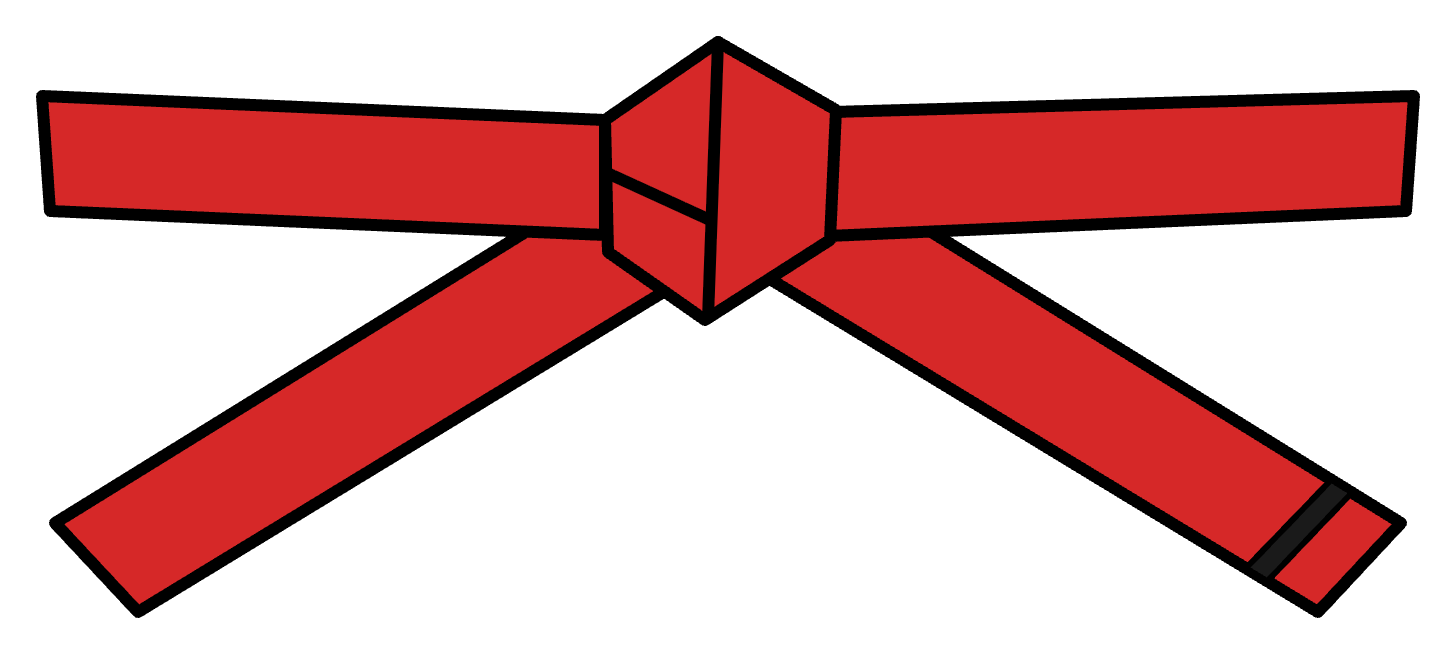 Red with Black Tip – 1st Kup (급)
The white belt carries one then two yellow stripes at 9th Kup (급), marking progress before Yellow. From there, each full coloured belt moves to the next through a tipped belt.
Black Belt, then the adult program
Black Belt is our rank for junior black belts. From here, students learn advanced techniques before grading to 1st degree black belt and joining the adult program.
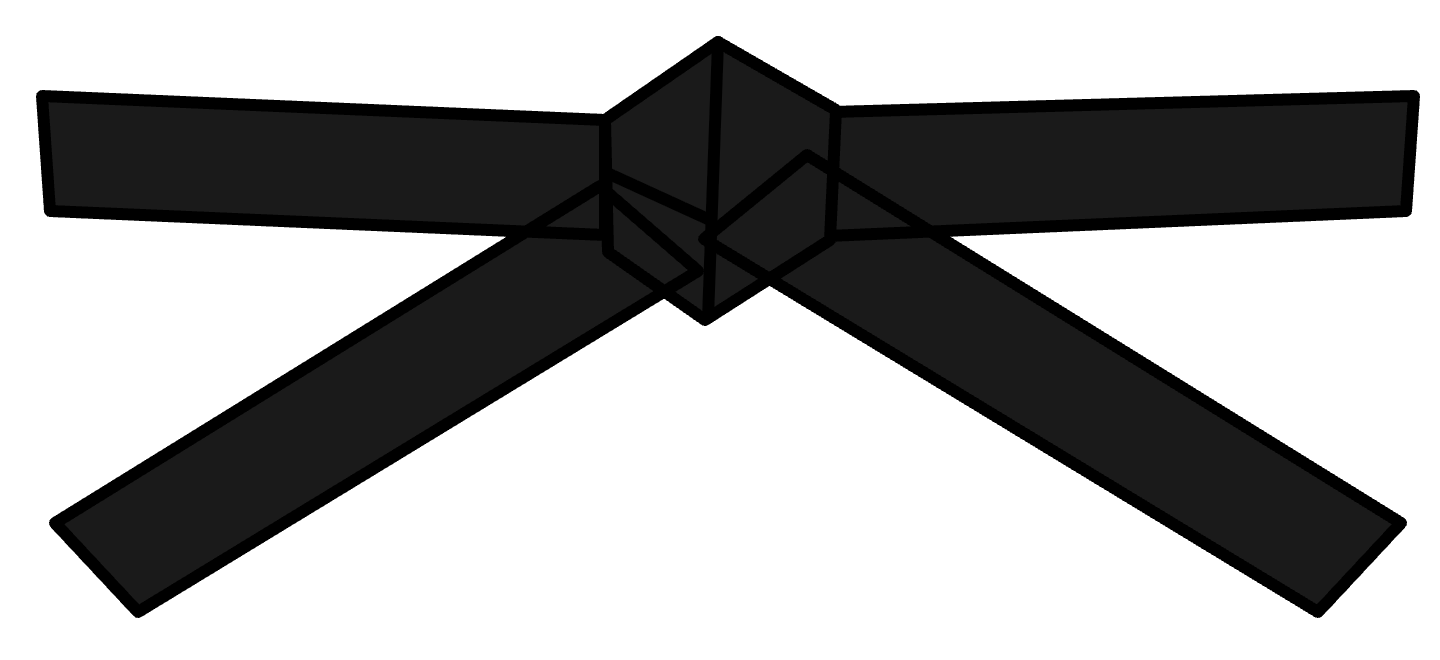 Black Belt
Korean sword for young students. Kummooyeh builds control, focus and respect – safety and etiquette come before anything else.
Before your first class
- A T-shirt and tracksuit pants. We train barefoot on rubber mats.
- Youth Kummooyeh is for students aged 9 and up.
- Swords are provided – there is nothing to buy before the first class.
Coming from another martial art
- If your child has trained in a different martial art they still start at white belt, but they may progress faster – the basic principles are similar across a number of martial arts.
How grading works
- Four gradings a year, roughly 12 weeks apart.
- Four to seven years to Black Belt with dedicated training, depending on the student's age.
Belt & Rank System
 Yellow
 Green
Green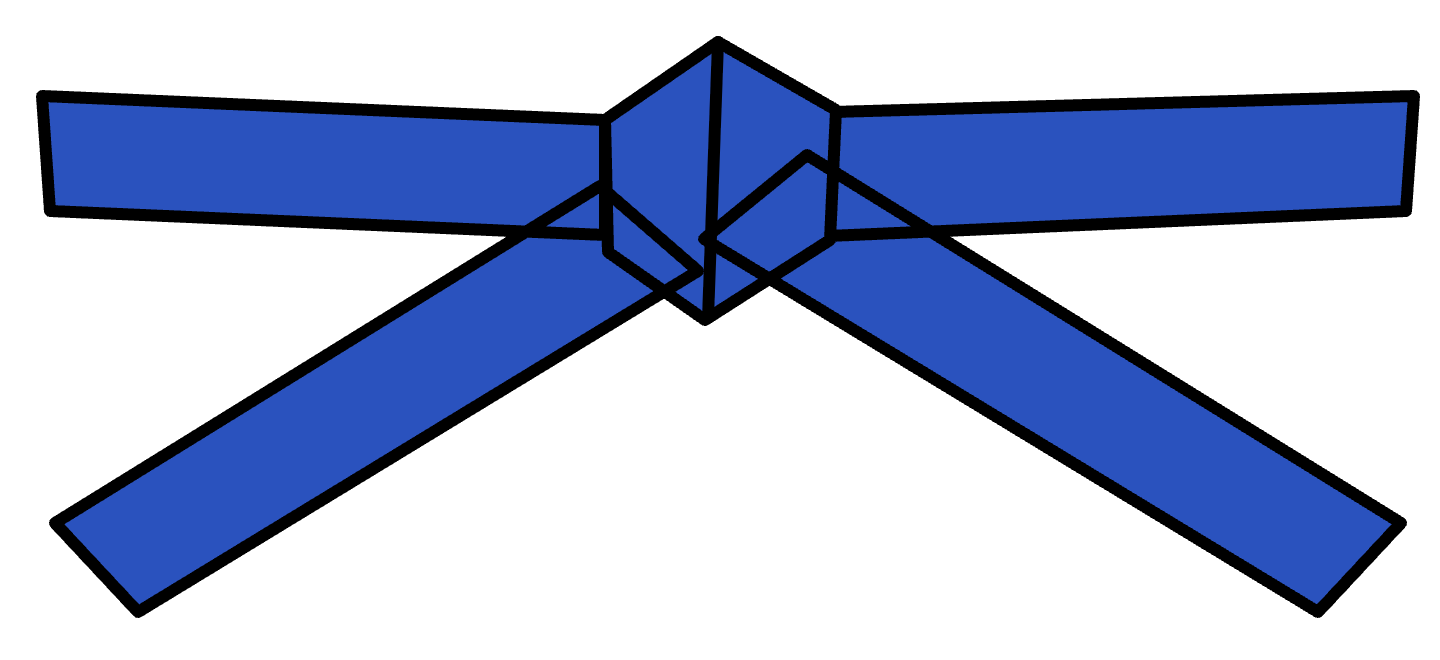 Blue
Blue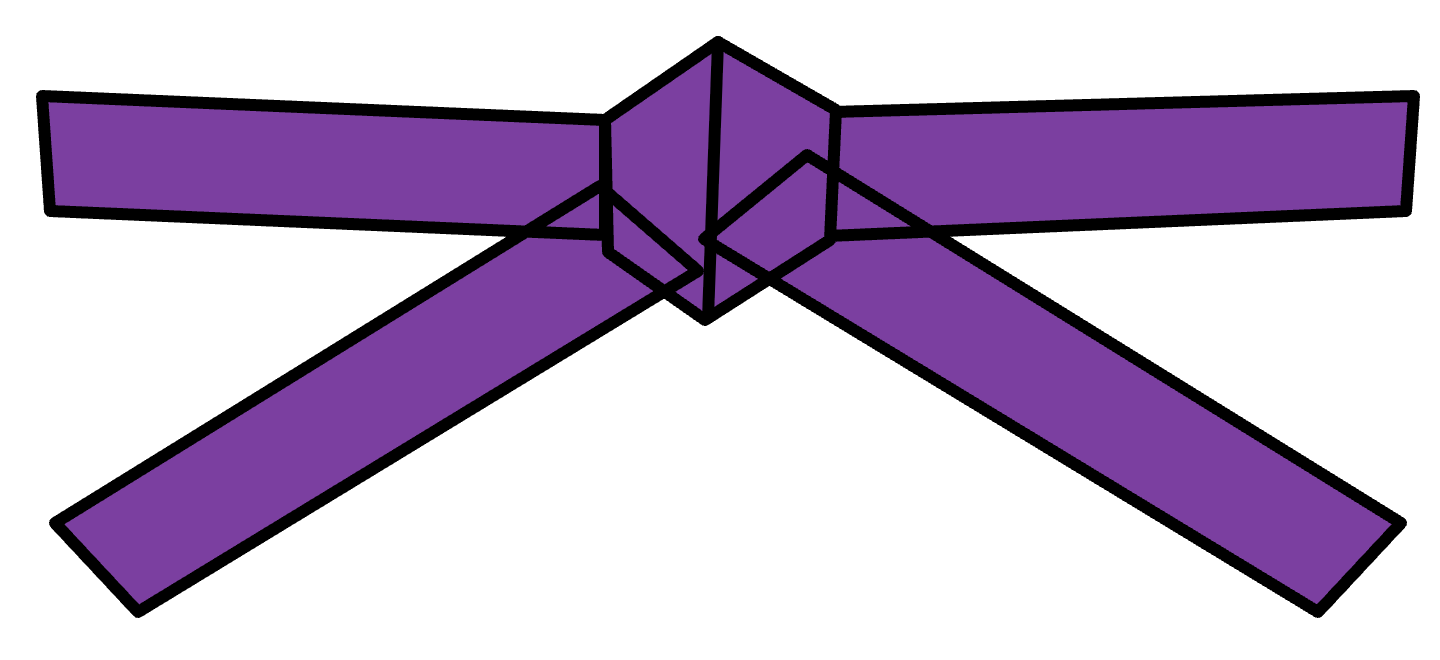 Purple
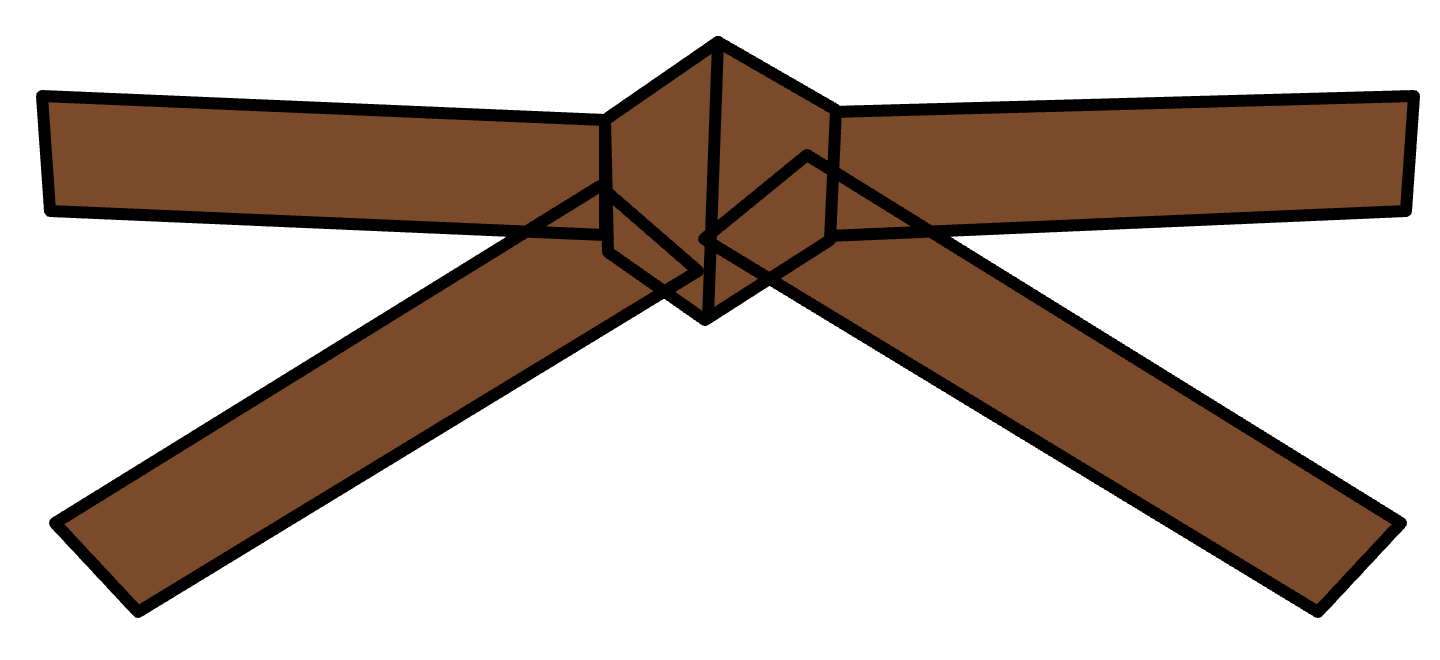 Brown
Brown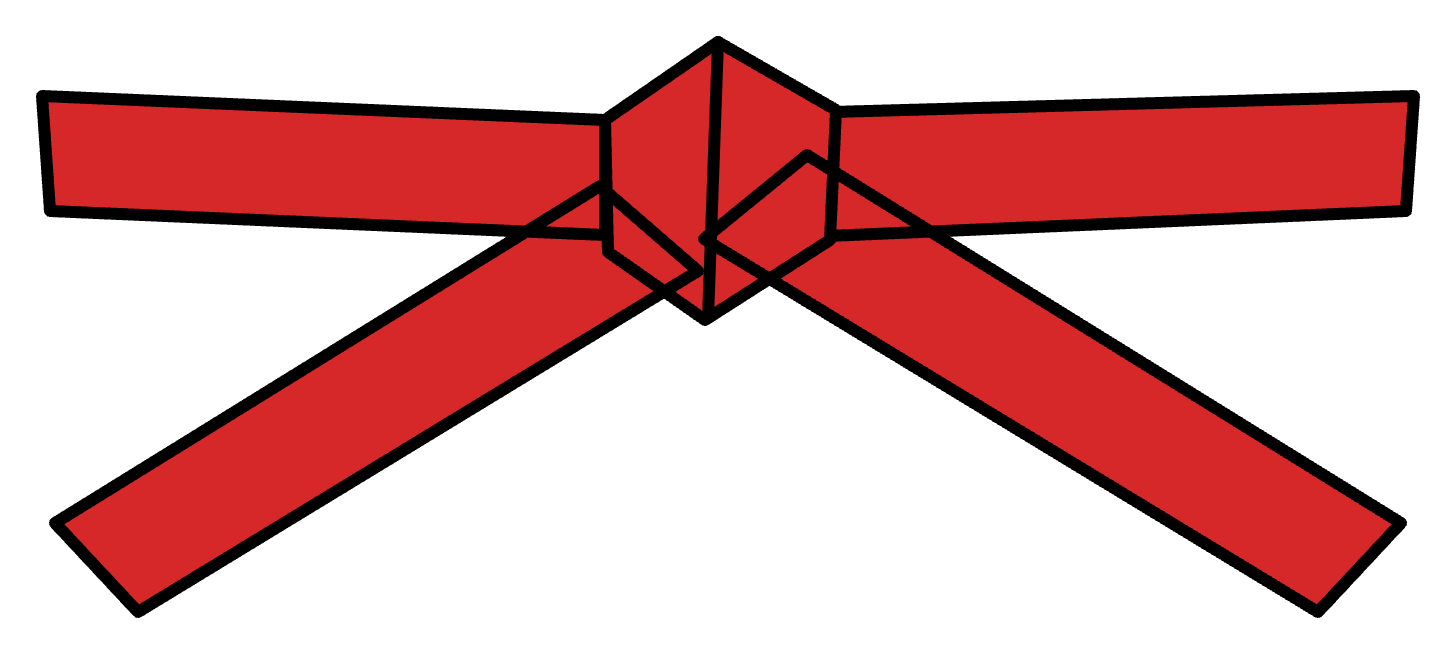 Red
Red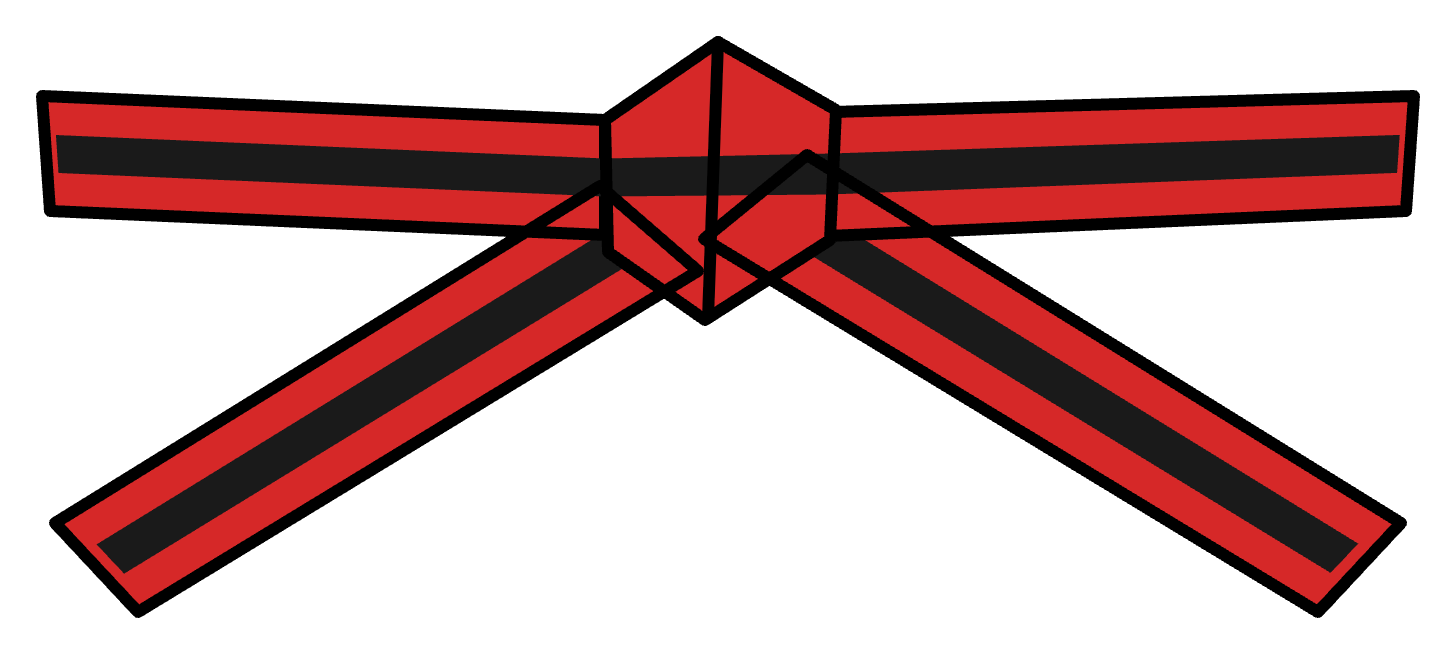 Red with Black
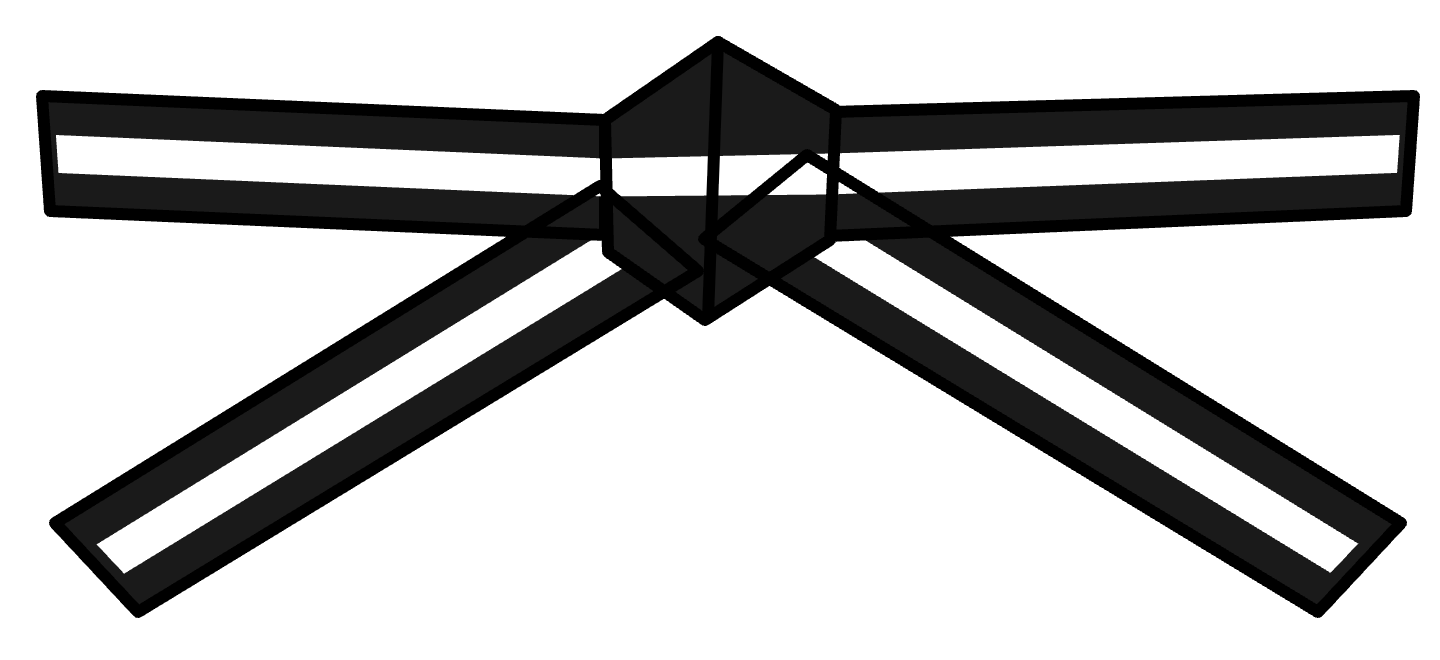 Black with White
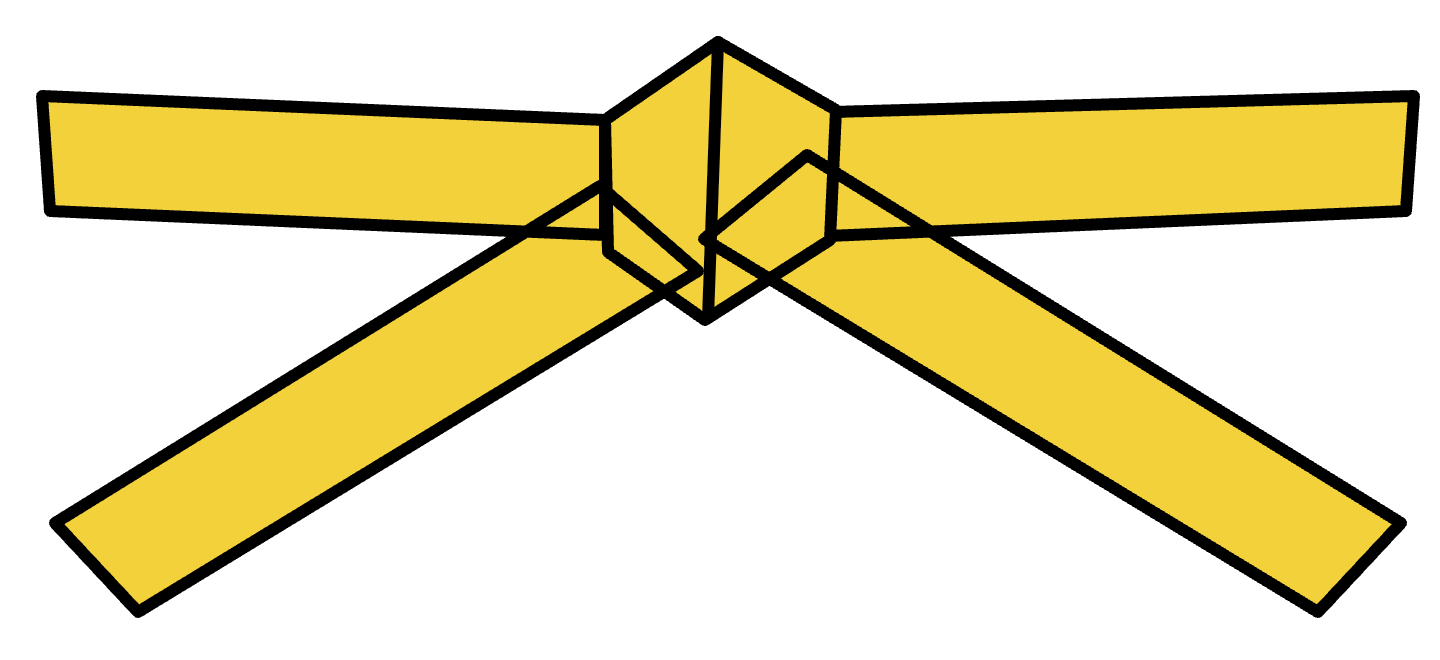
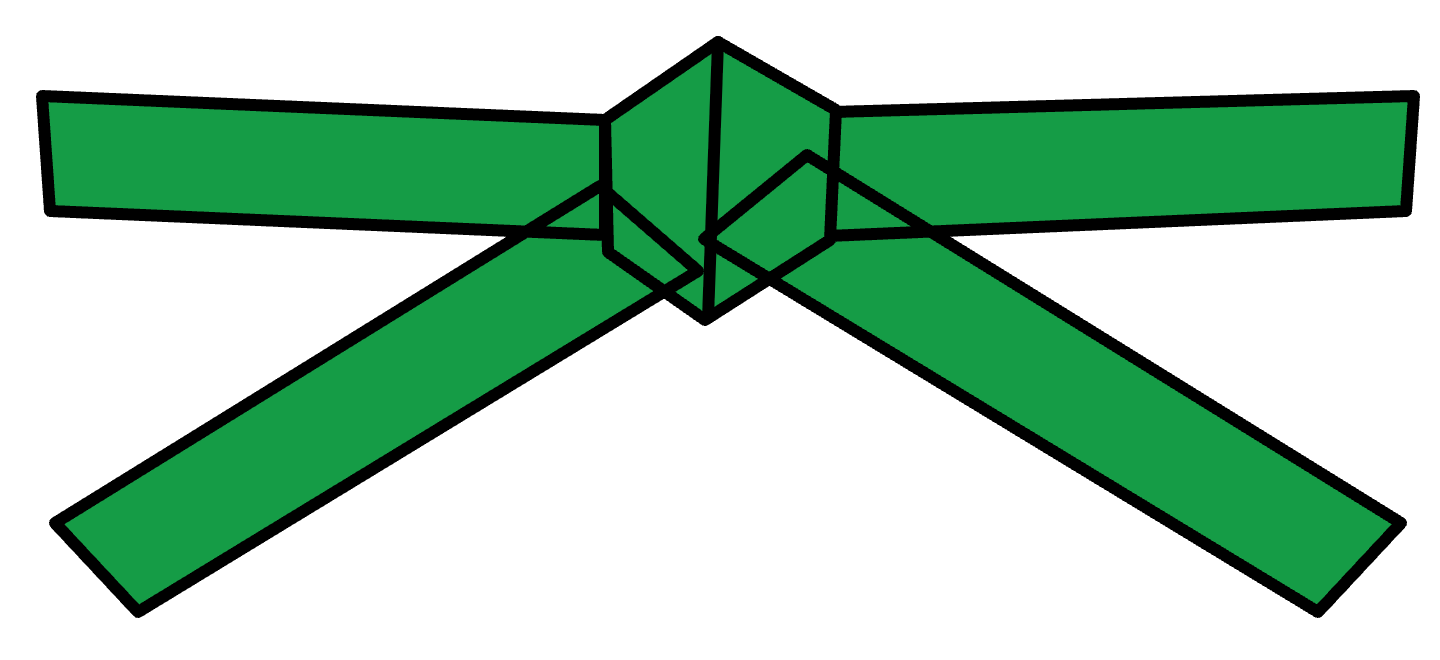
Kummooyeh belts do not carry midpoint stripes – each grading moves a student to the next full belt.
Black Belt, then the adult program
Black Belt is our rank for junior black belts. From here, students learn advanced techniques and patterns before grading to 1st degree black belt and joining the adult program.
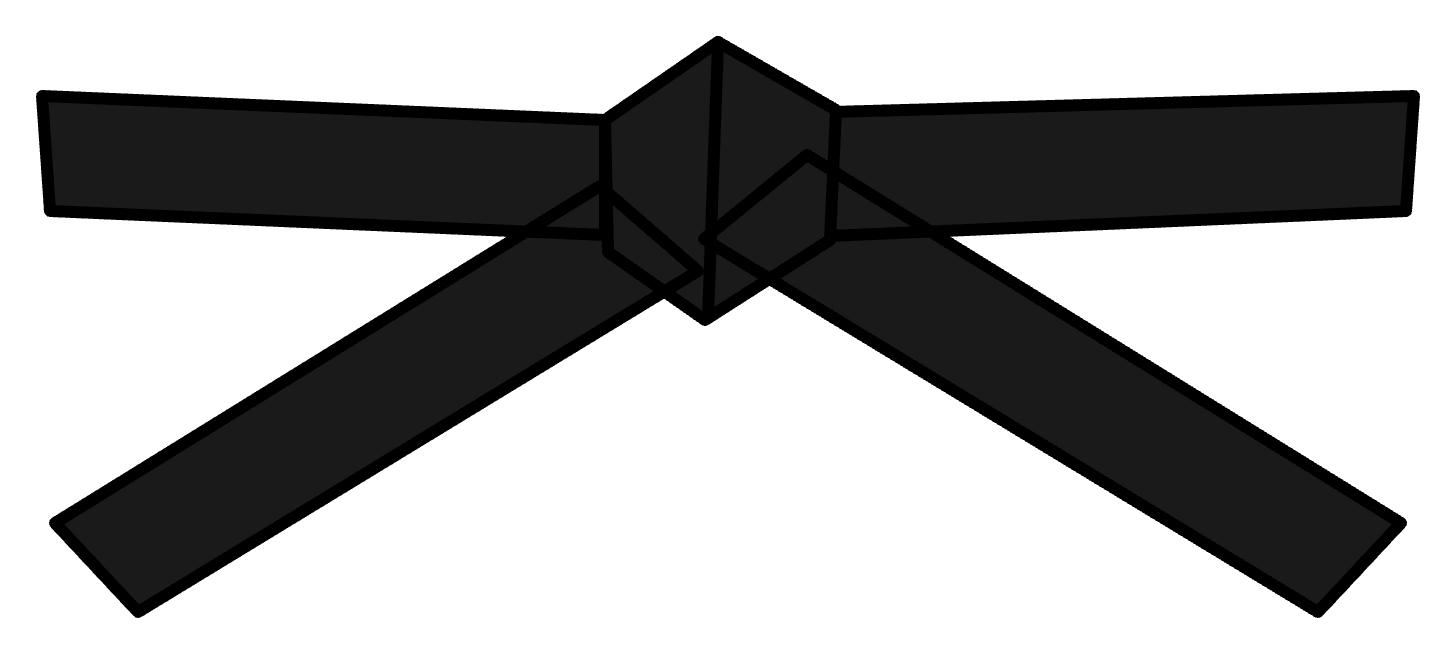 Black Belt
The point is constant progression. You are recognised for your effort as much as your skill, so there is always a next step in front of you.
Before your first class
- A T-shirt and tracksuit pants. We train barefoot on rubber mats.
- Adult classes are for students aged 14 and up, with some allowances made for younger students who are ready.
Belt & Rank System
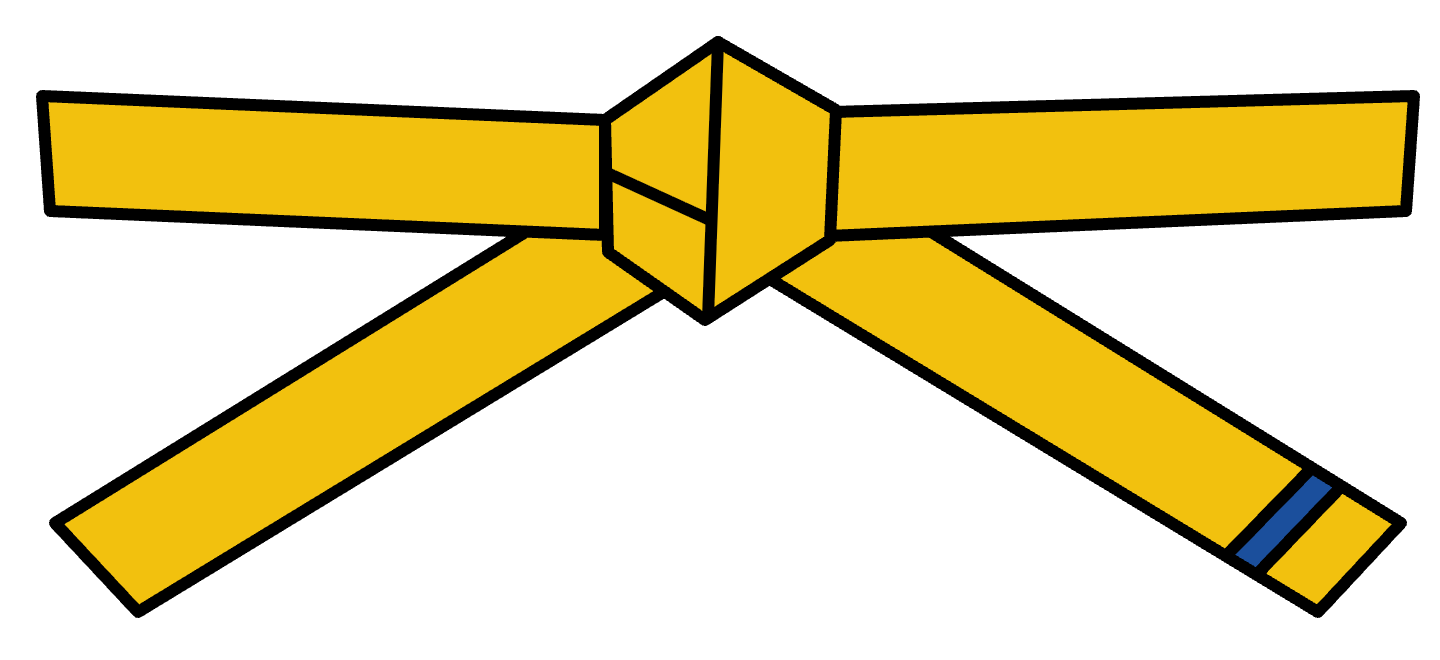 Yellow 1 (9th Gup 급)
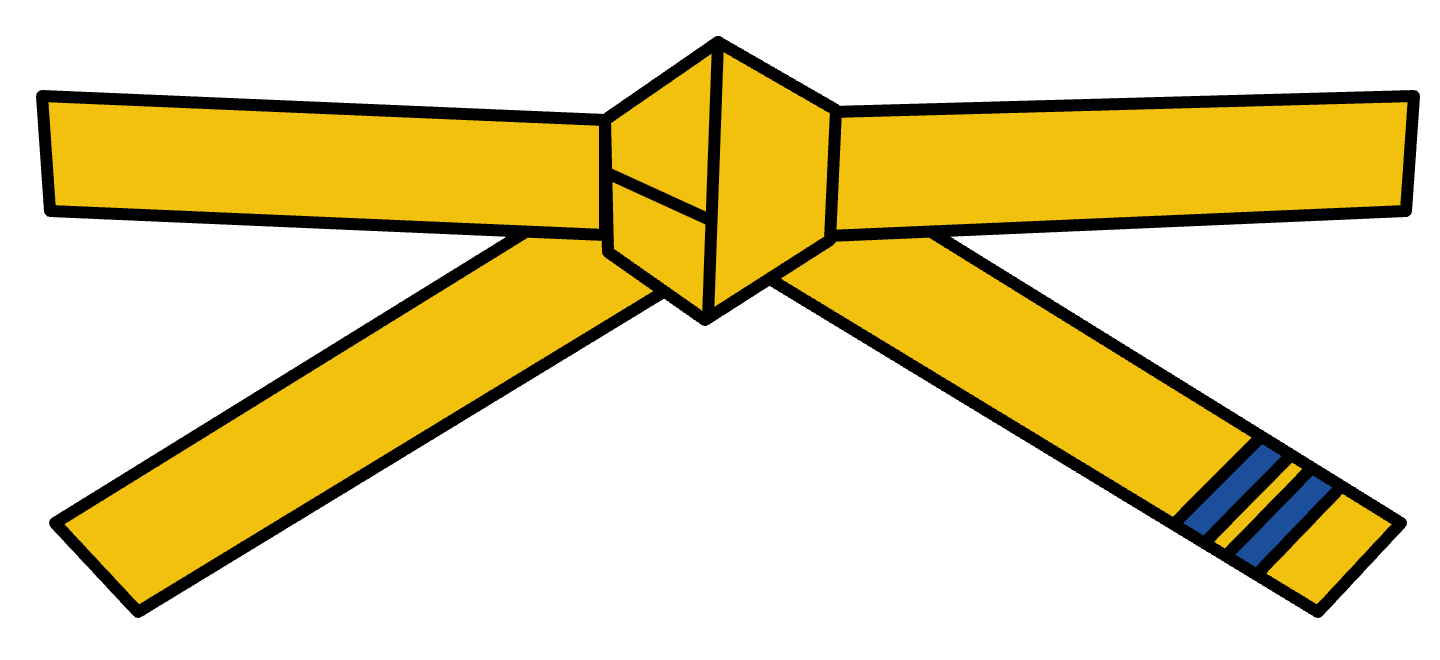 Yellow 2 (8th Gup 급)
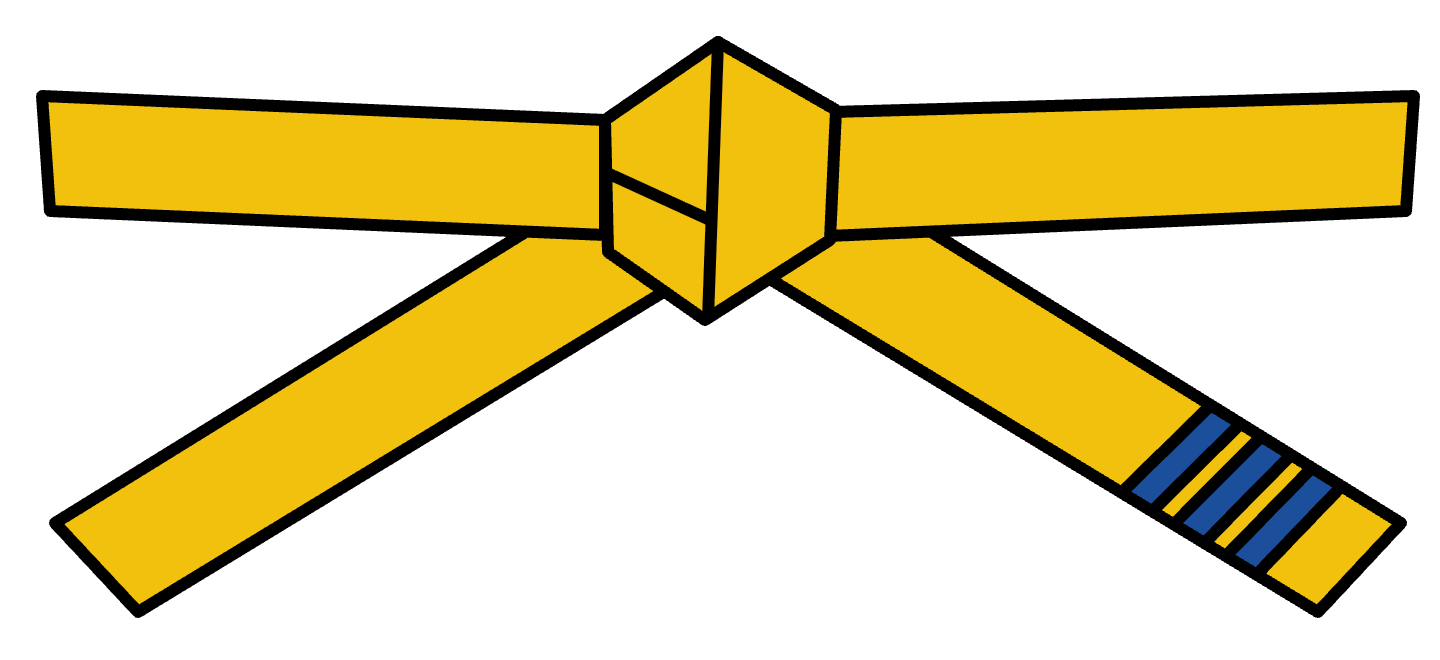 Yellow 3 (7th Gup 급)
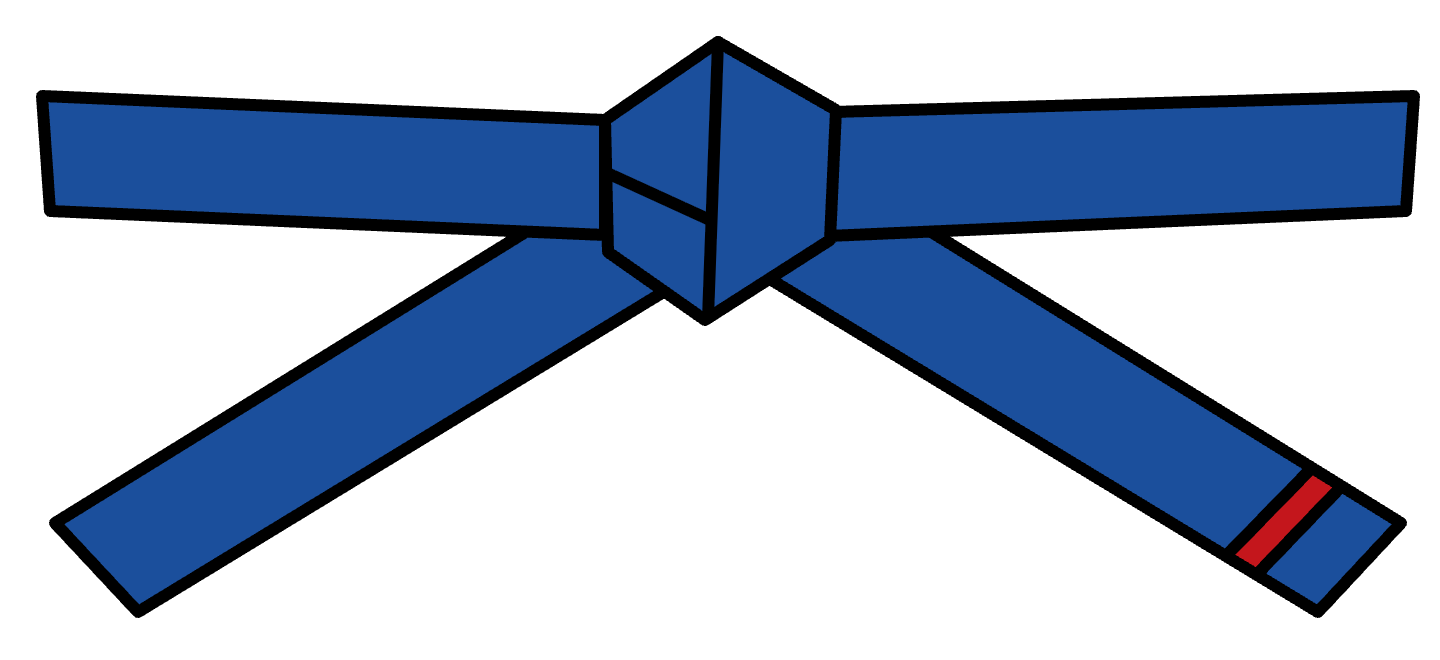 Blue 1 (6th Gup 급)
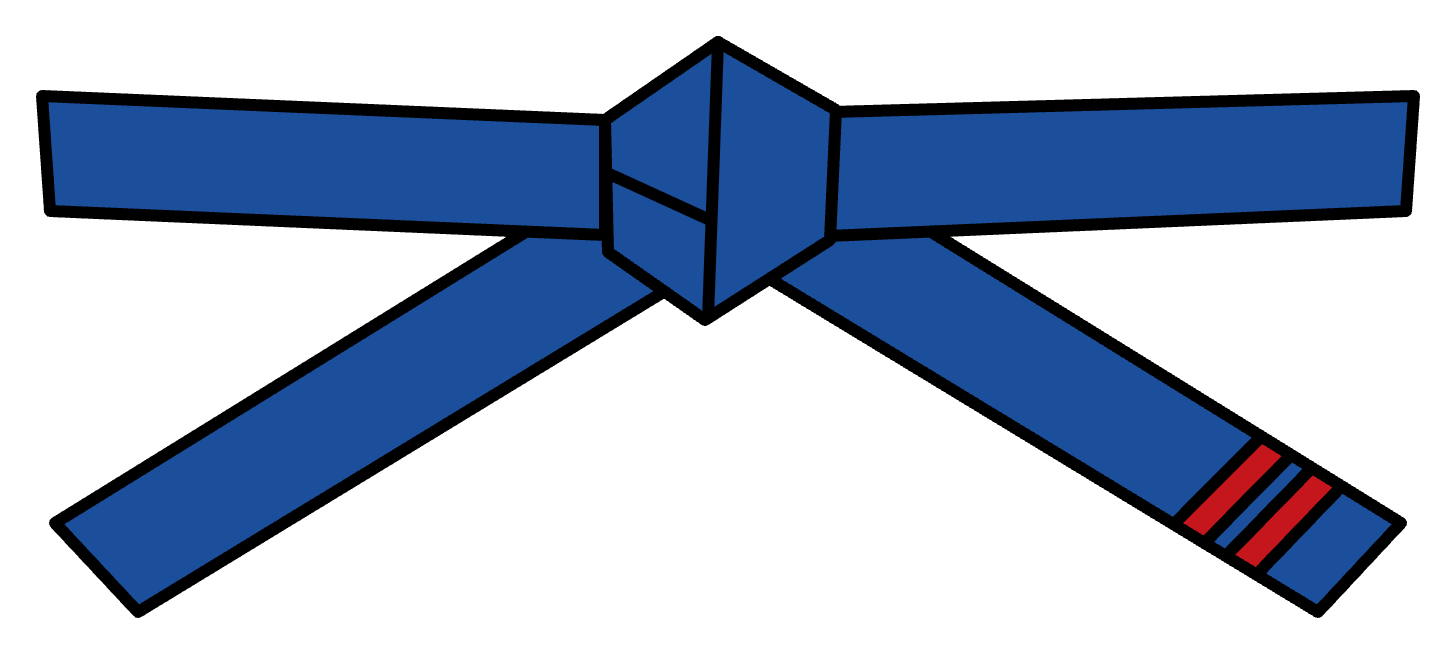 Blue 2 (5th Gup 급)
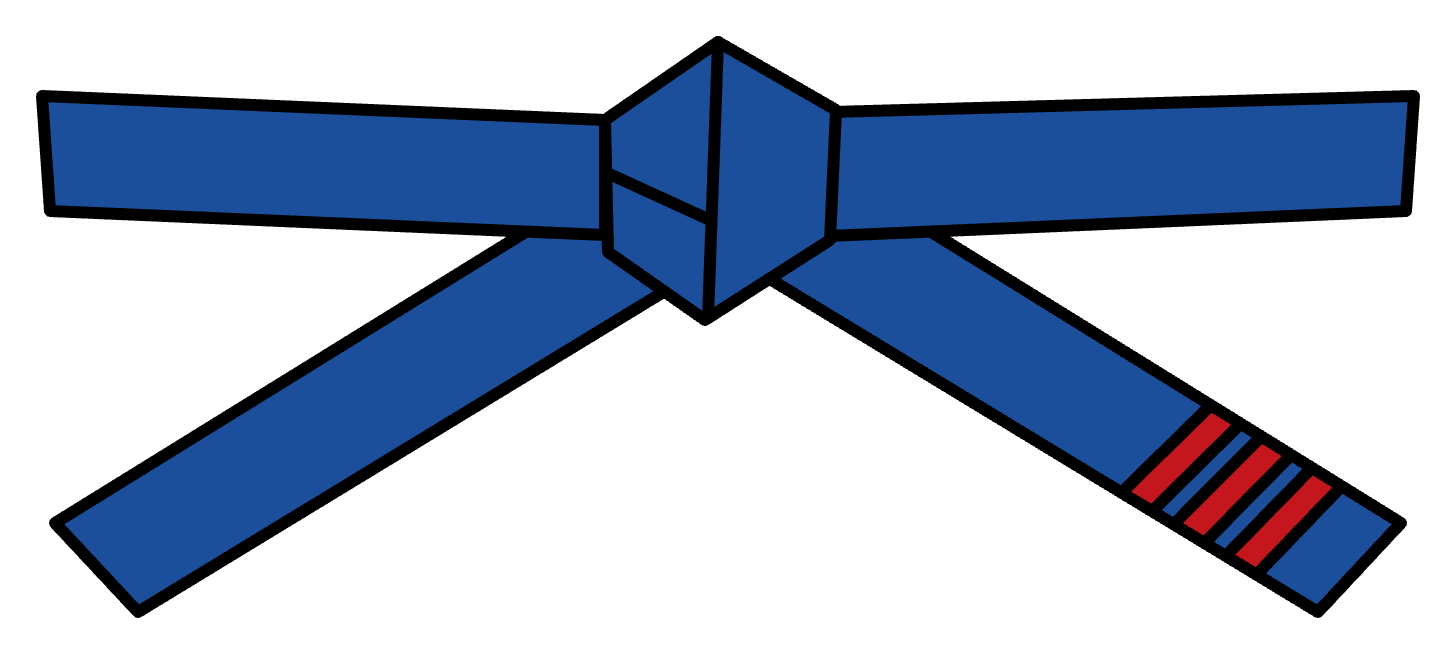 Blue 3 (4th Gup 급)
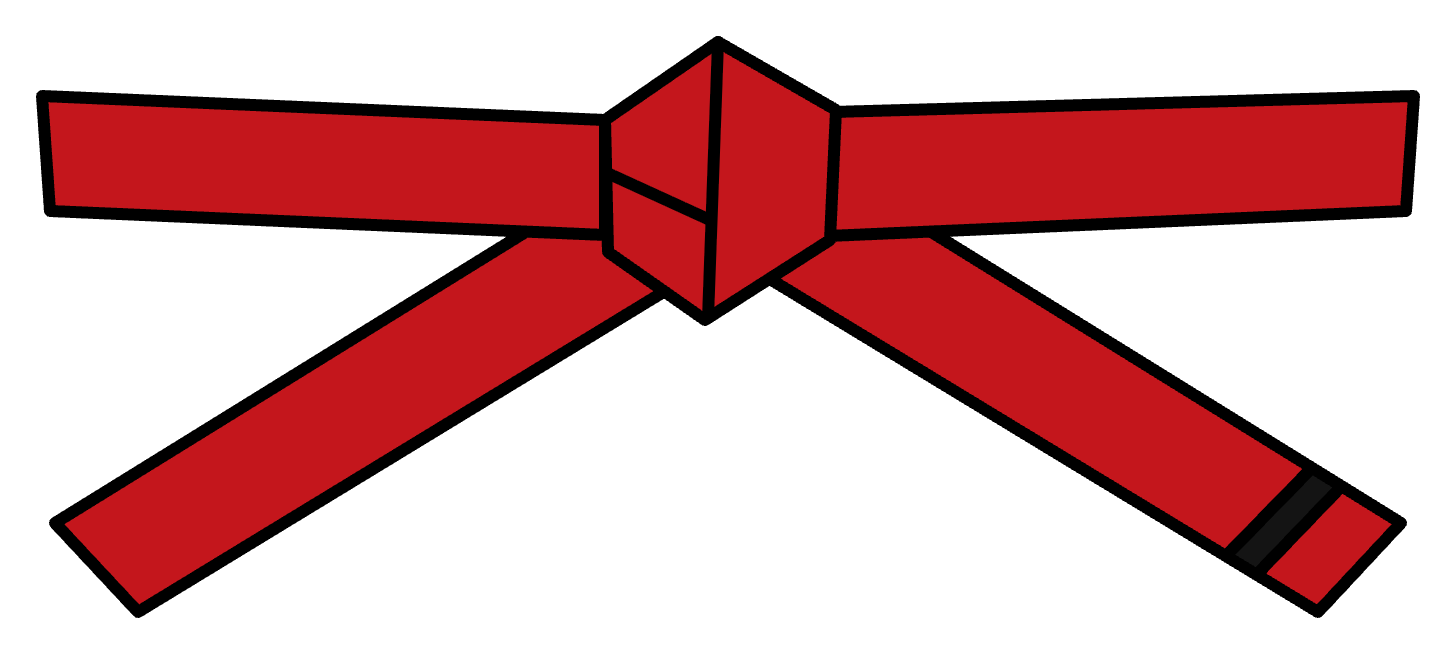 Red 1 (3rd Gup 급)
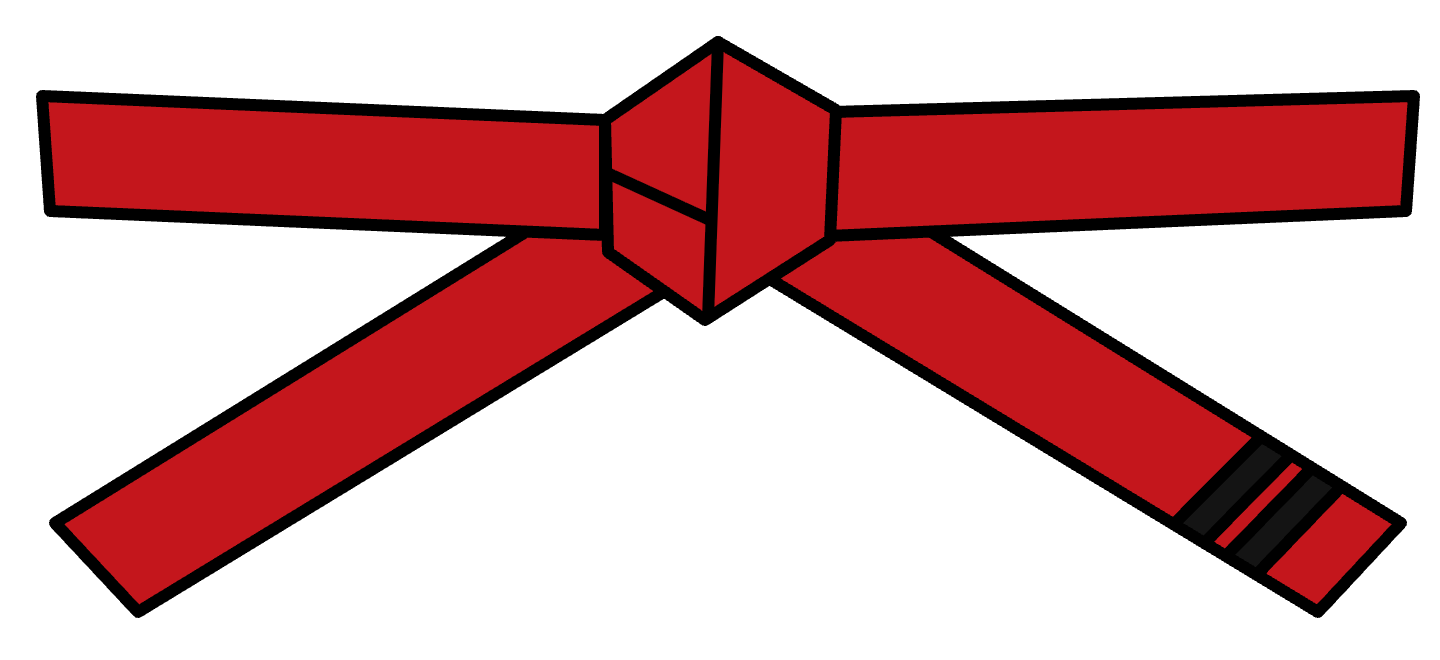 Red 2 (2nd Gup 급)
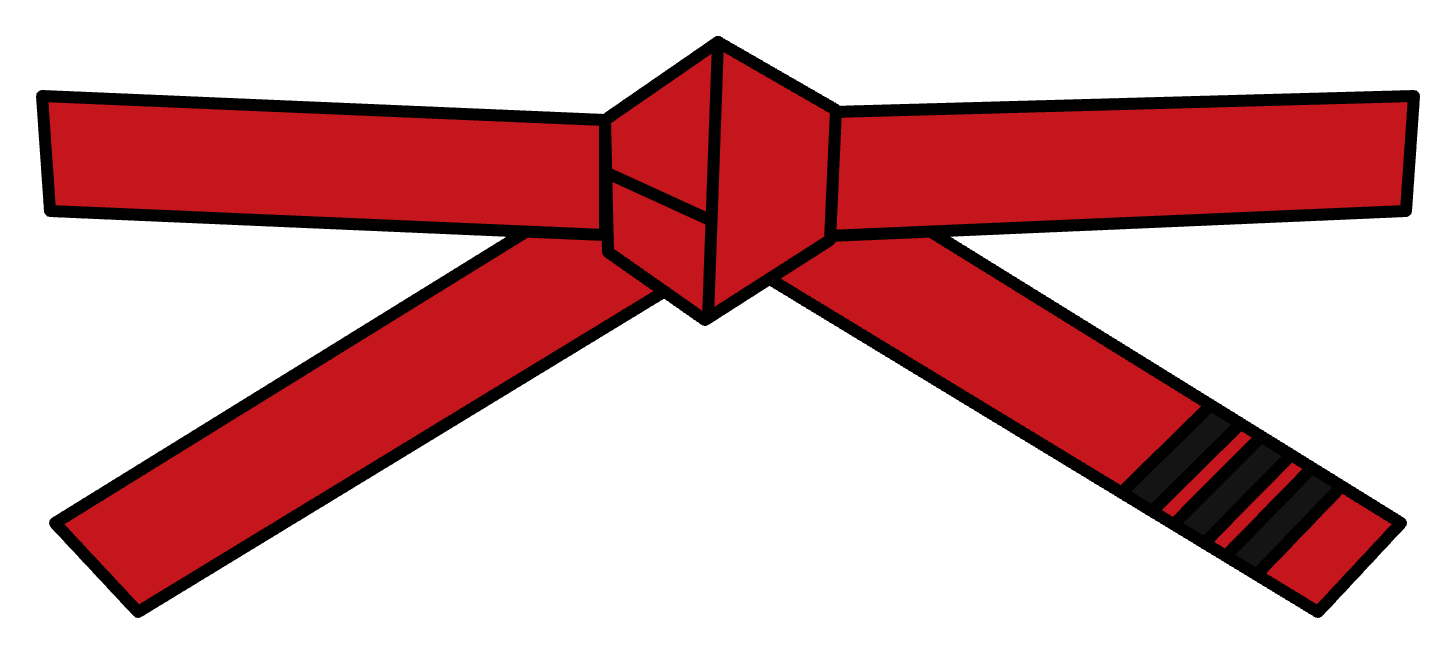 Red 3 (1st Gup 급)
Yellow belts carry blue stripes, Blue belts carry red stripes, and Red belts carry black stripes – marking your progress through each colour.
Black belt is where it really begins
The training wheels come off. You understand the system, so now you start learning it properly. Minimum age 16 for a full black belt.
- Junior Black Belt (12–15yrs)
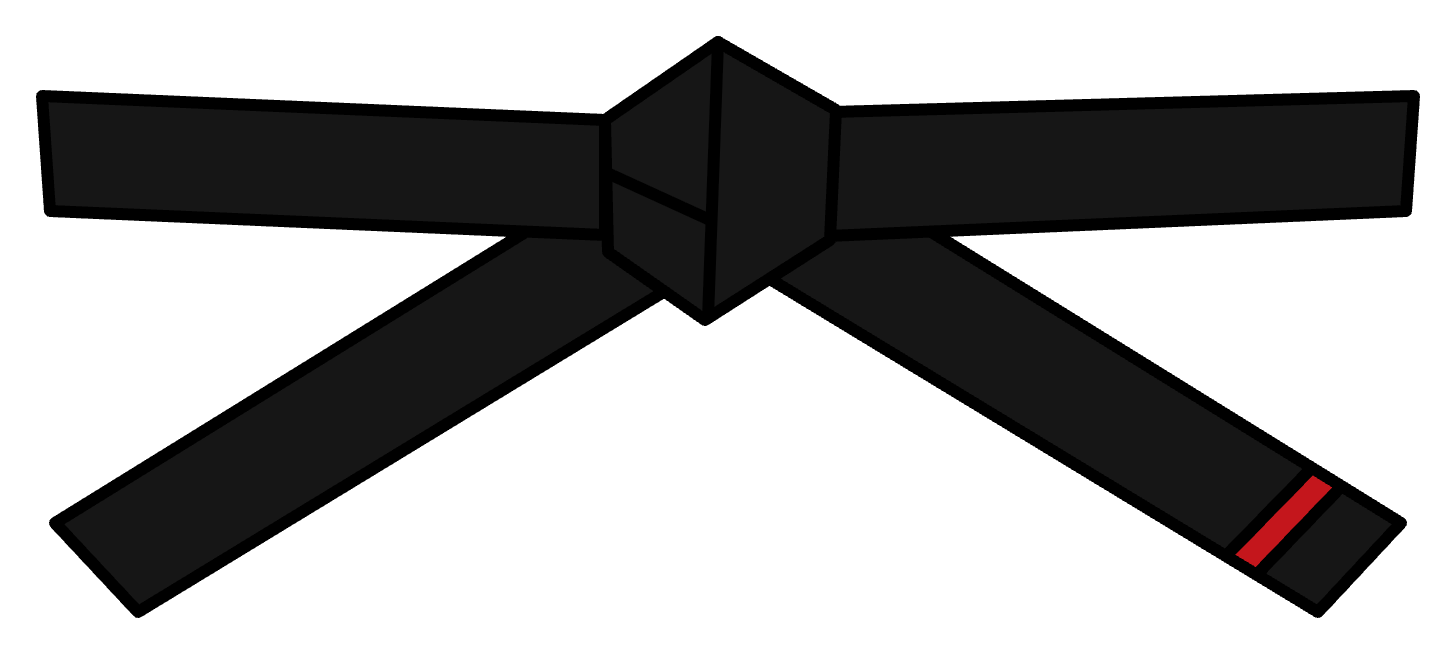 1st Dan (단) – Joh Kyo Nim
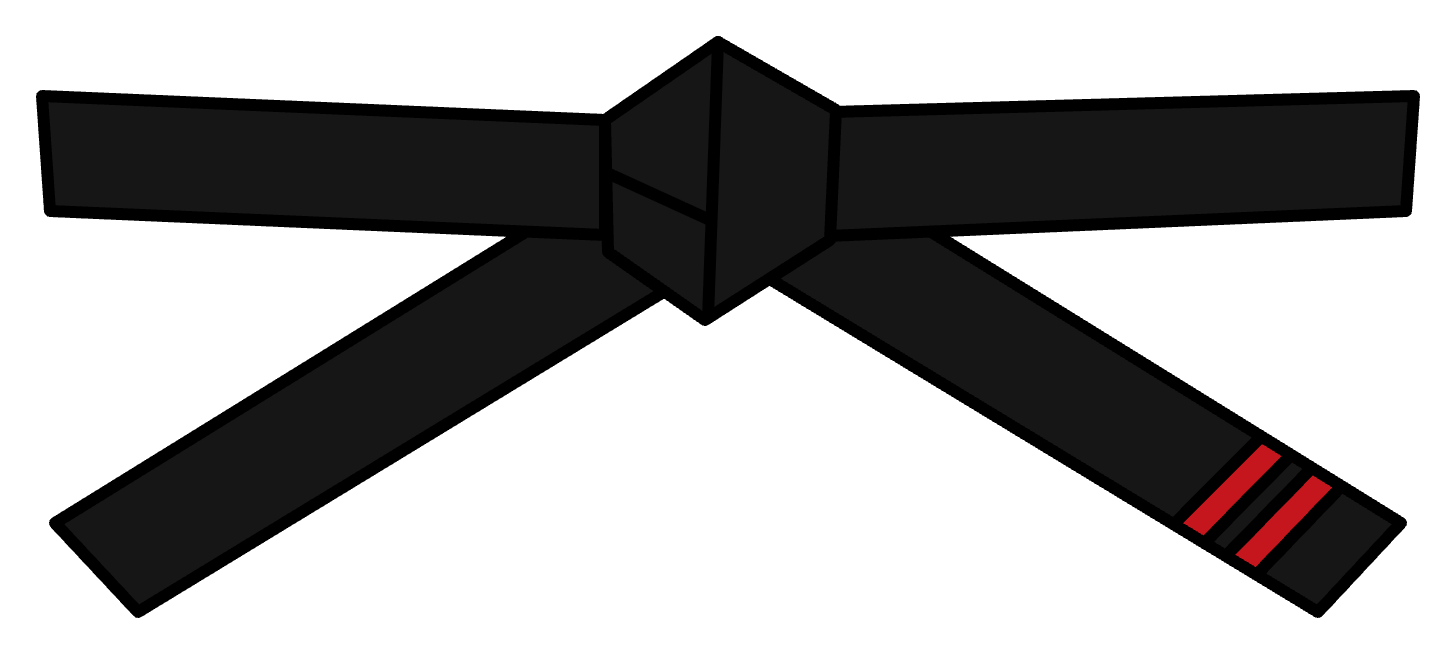 2nd Dan (단) – Kyo Sah Nim
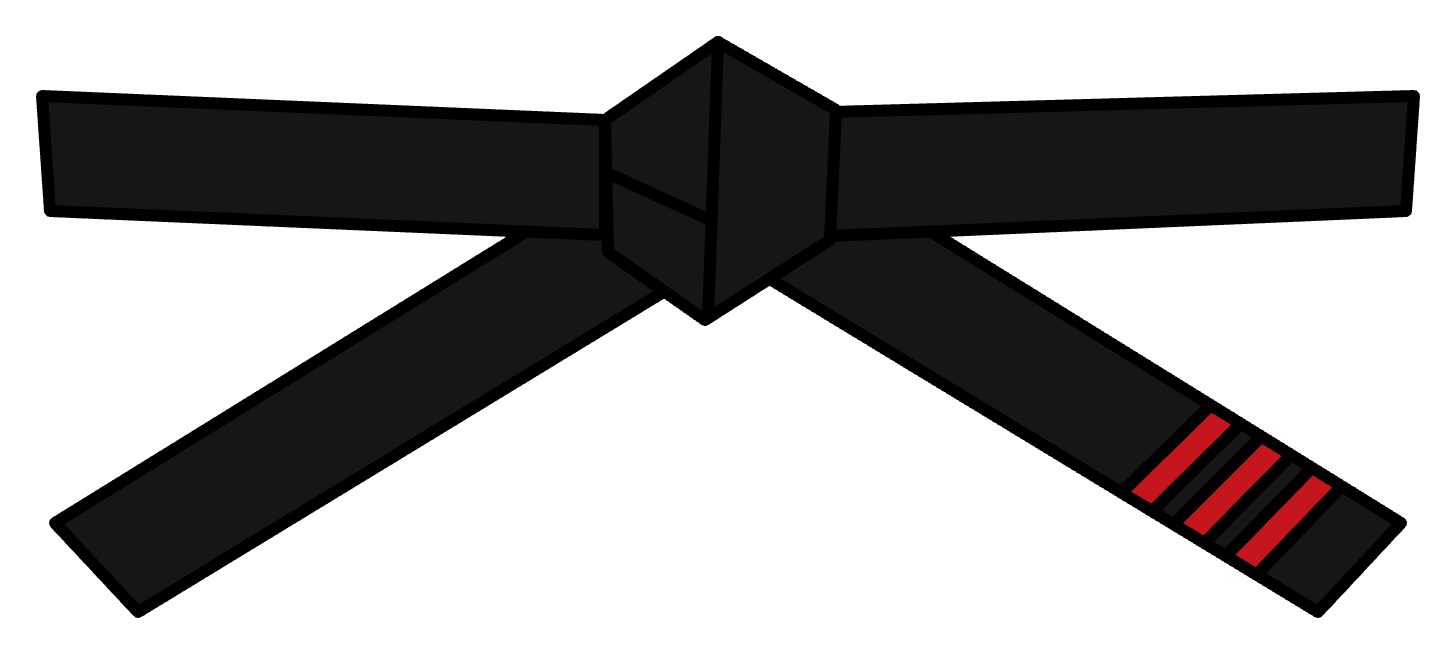 3rd Dan (단) – Po Sa Bum Nim
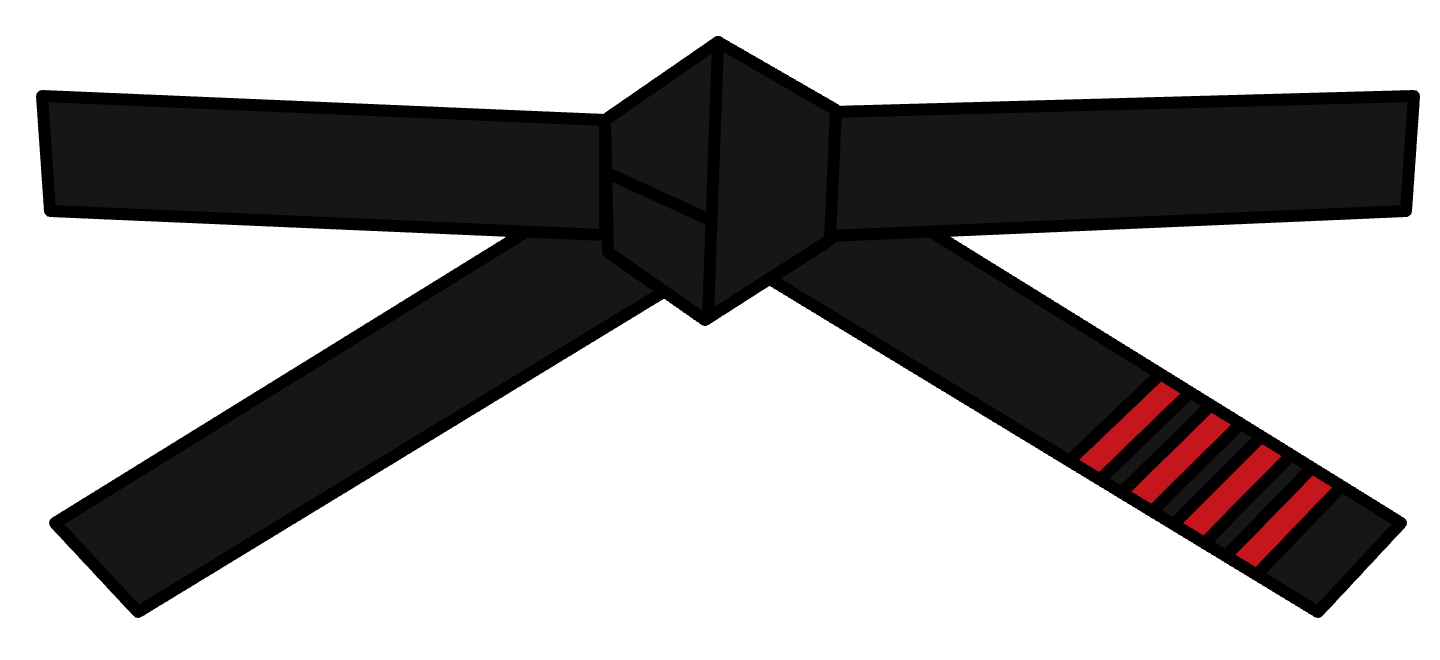 4th Dan (단) – Master (Sa Bum Nim)
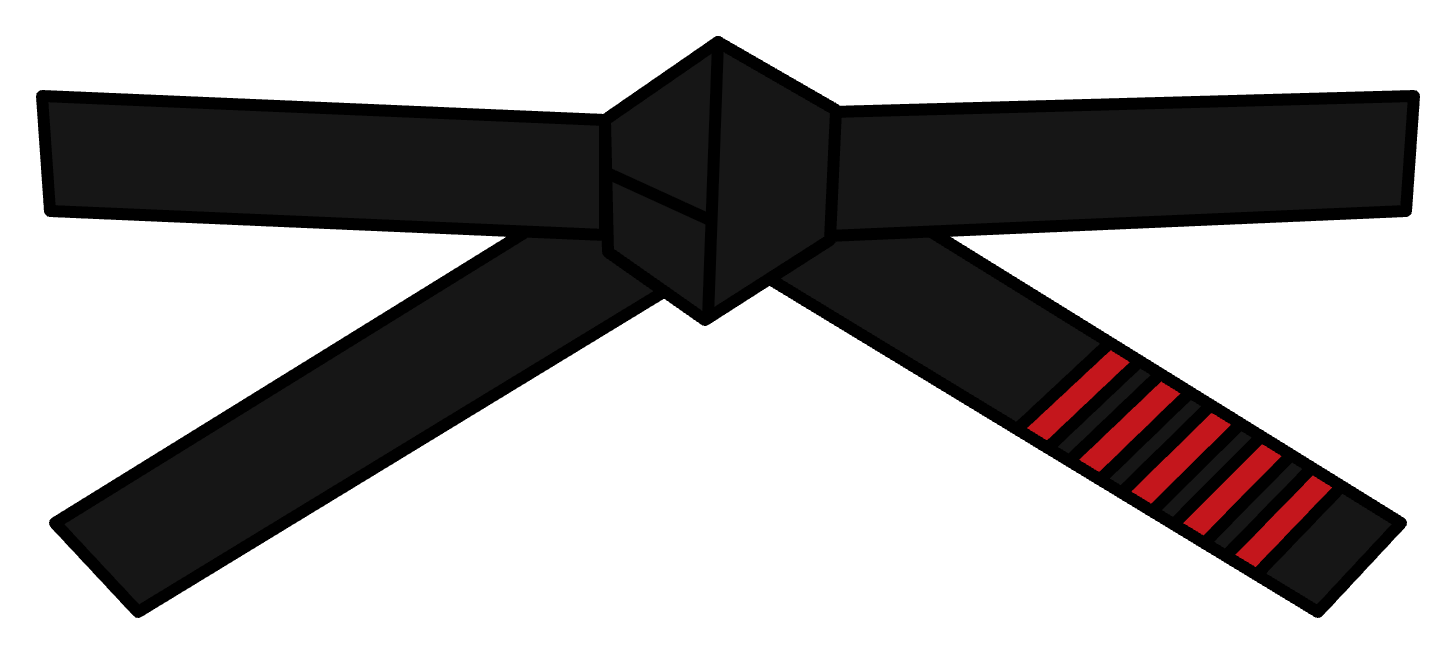 5th Dan (단) – Head Master (Joong Sa Bum Nim)
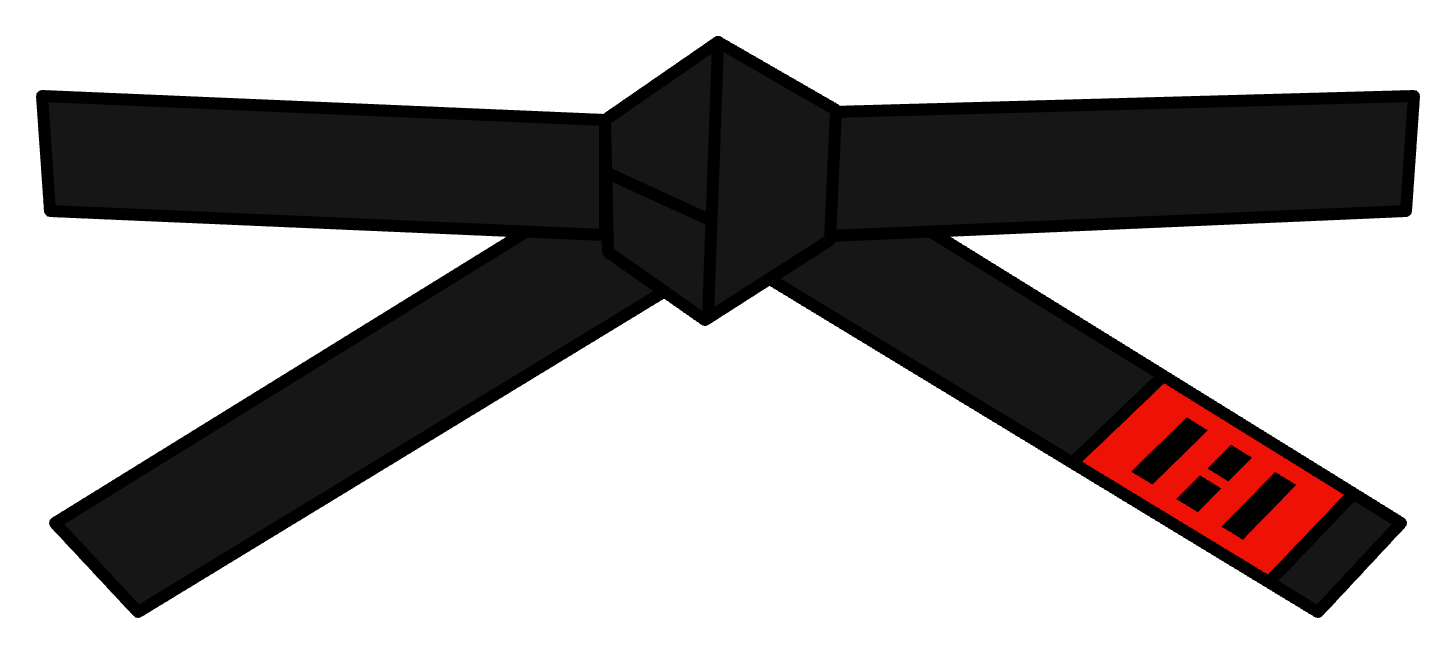 6th Dan (단) – Chief Master (Ko Sa Bum Nim)
- 7th Dan (단) – Senior Master (Dae Sa Bum Nim)
- 8th Dan (단) – Grand Master (Kwahn Jang Nim)
- 9th Dan (단) – Chief Grand Master (Ko Kwahn Jang Nim)
- 9th Dan (단) – Senior Grand Master (Dae Kwahn Jang Nim)
Brazilian JiuJitsu asks for patience and dedication. It is not simple to master – and it is a lot of fun along the way.
Before your first class
- A T-shirt and tracksuit pants. We train barefoot on rubber mats.
- Adult classes are for students aged 14 and up, with some allowances made for younger students who are ready.
What to Expect as a Beginner
- Focus on Fundamentals – you'll spend your early months learning basic positional escapes, survival, and foundational movements rather than complex flying submissions.
- The Pace of Thinking – expect physical exhaustion paired with mental puzzle-solving; coaches emphasise slowing down your reaction speed so you can think under pressure.
- Discomfort and Safety – you'll experience being pinned and controlled, but a good academy instils safety first: check your ego and tap early to avoid injuries.
Core Philosophy of the Lineage
- More Than a Sport – the Will-Machado network stresses traditional values (respect, discipline, humility, patience and perseverance), treating jiu-jitsu as a lifelong path rather than a quick trophy hunt.
- Concept Over Memorisation – rather than rote memorisation of single moves, teaching breaks techniques down into logical structural components, like leverage, framing and timing.
- Community Events – members share unique group milestones, such as regional seminars and annual community tournaments like the Will-Machado "Gathering".
Milestones Along the Journey
- Earning Your Belts – progression from white to blue, purple, brown and black takes years of compounding gains and mat time; it reflects internal personal change, not just physical capability.
- Becoming a Good Partner – you'll learn that your own growth relies on being the kind of safe, cooperative training partner everyone wants on their mat.
Belt & Rank System
No Stripes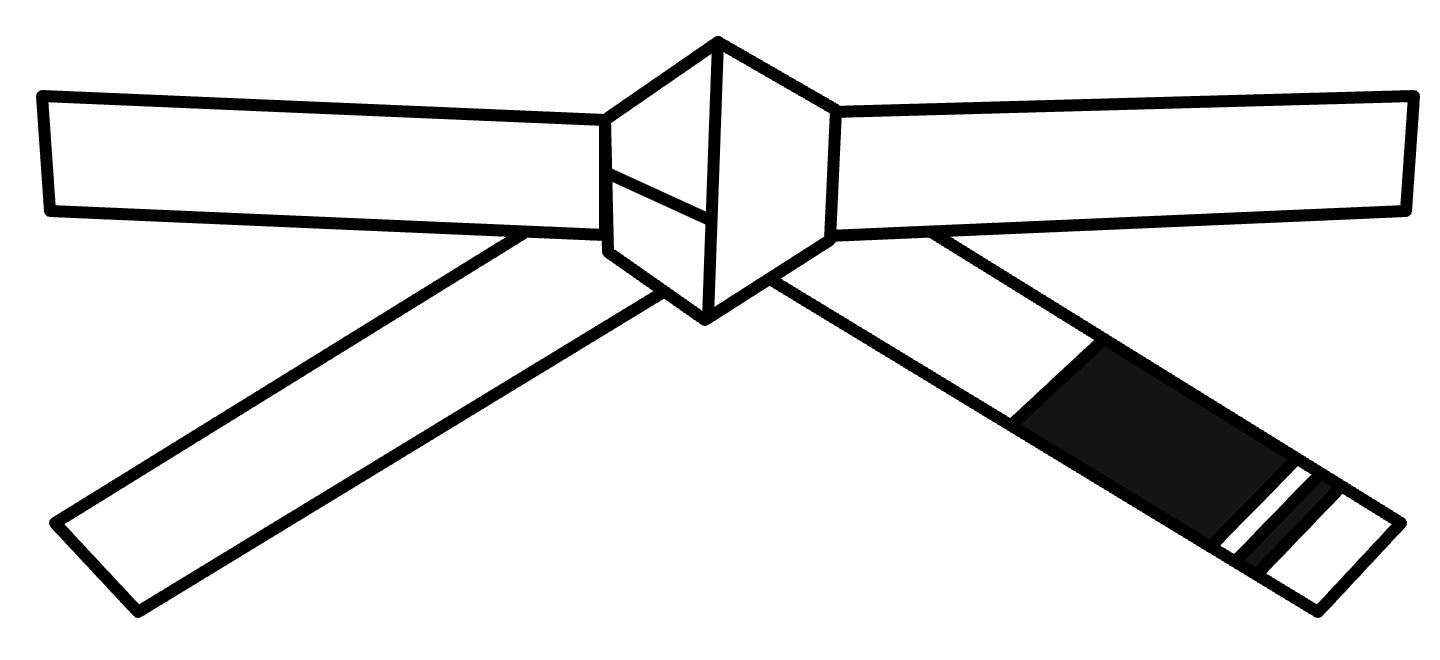 1 Stripe
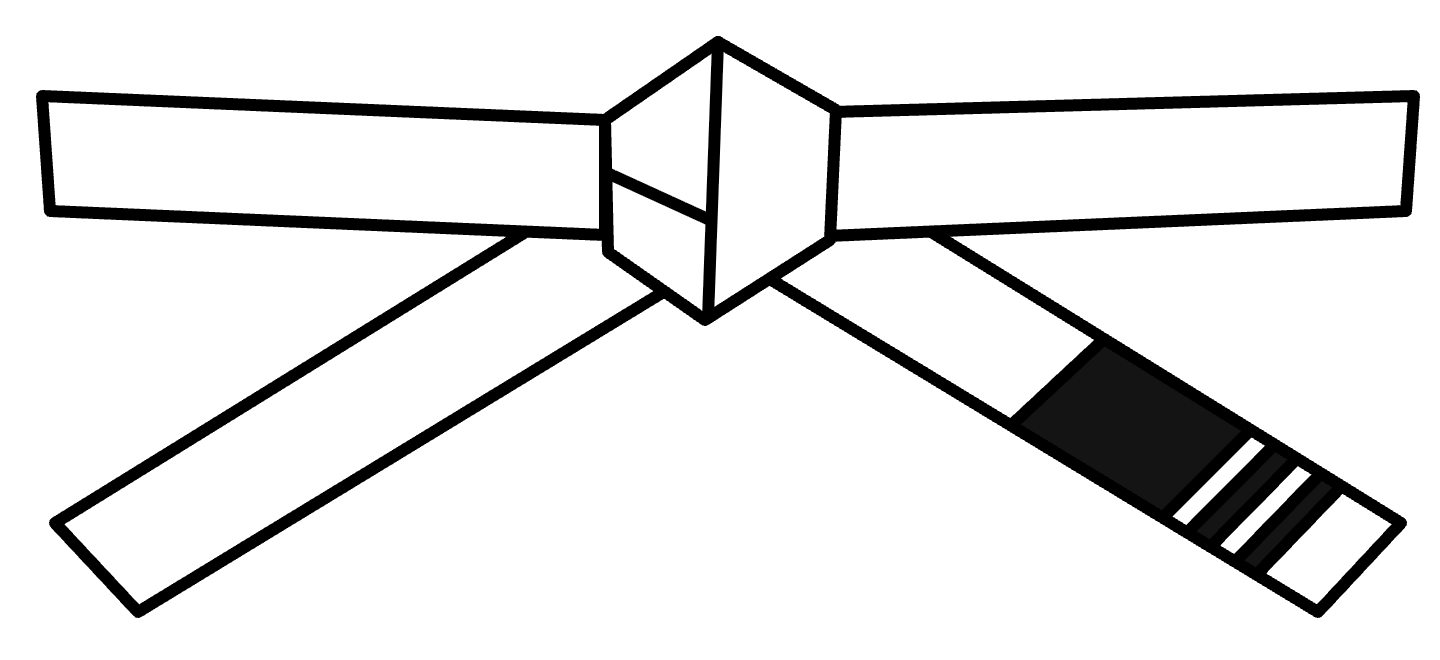 2 Stripes
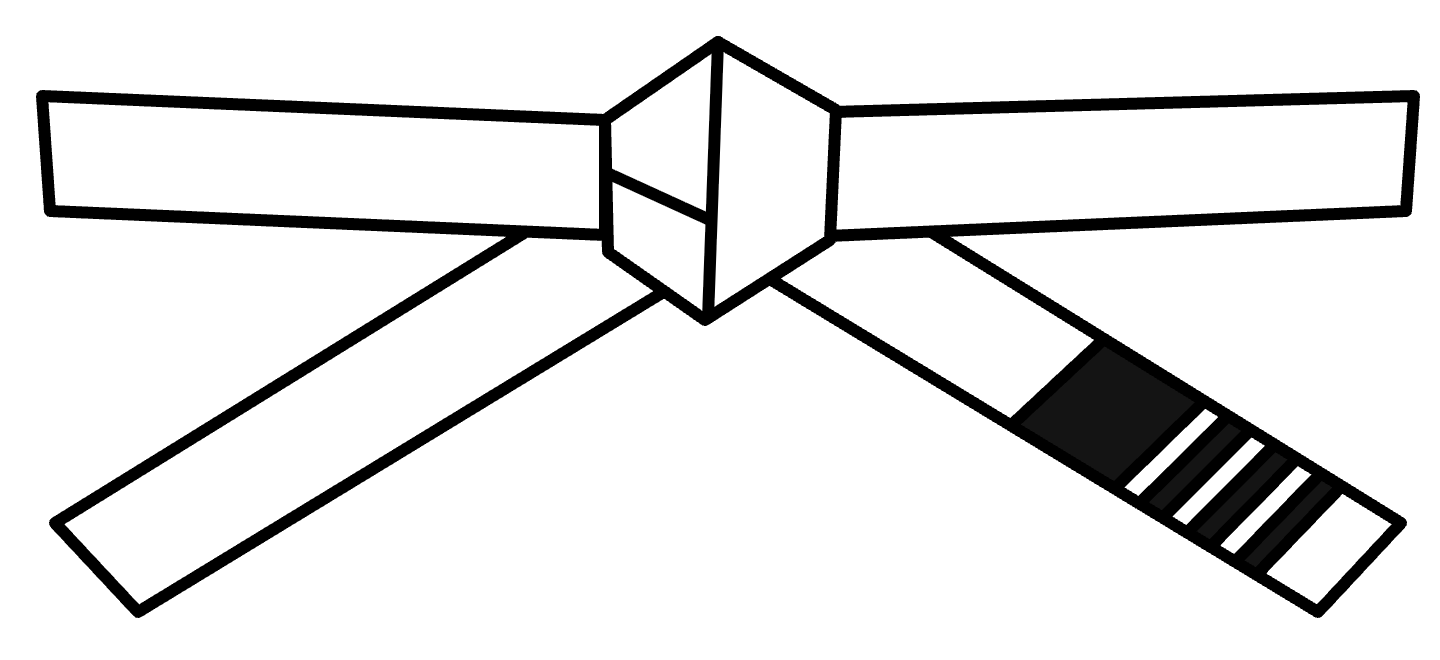 3 Stripes
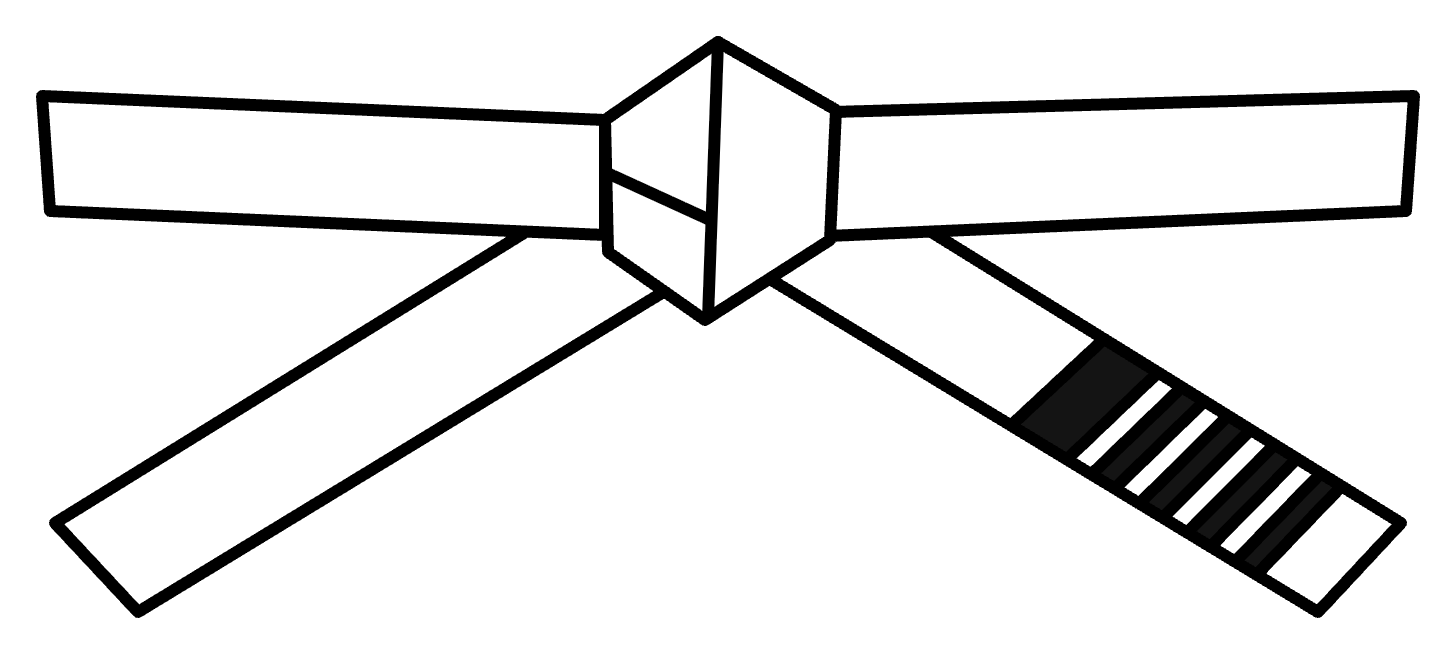 4 Stripes
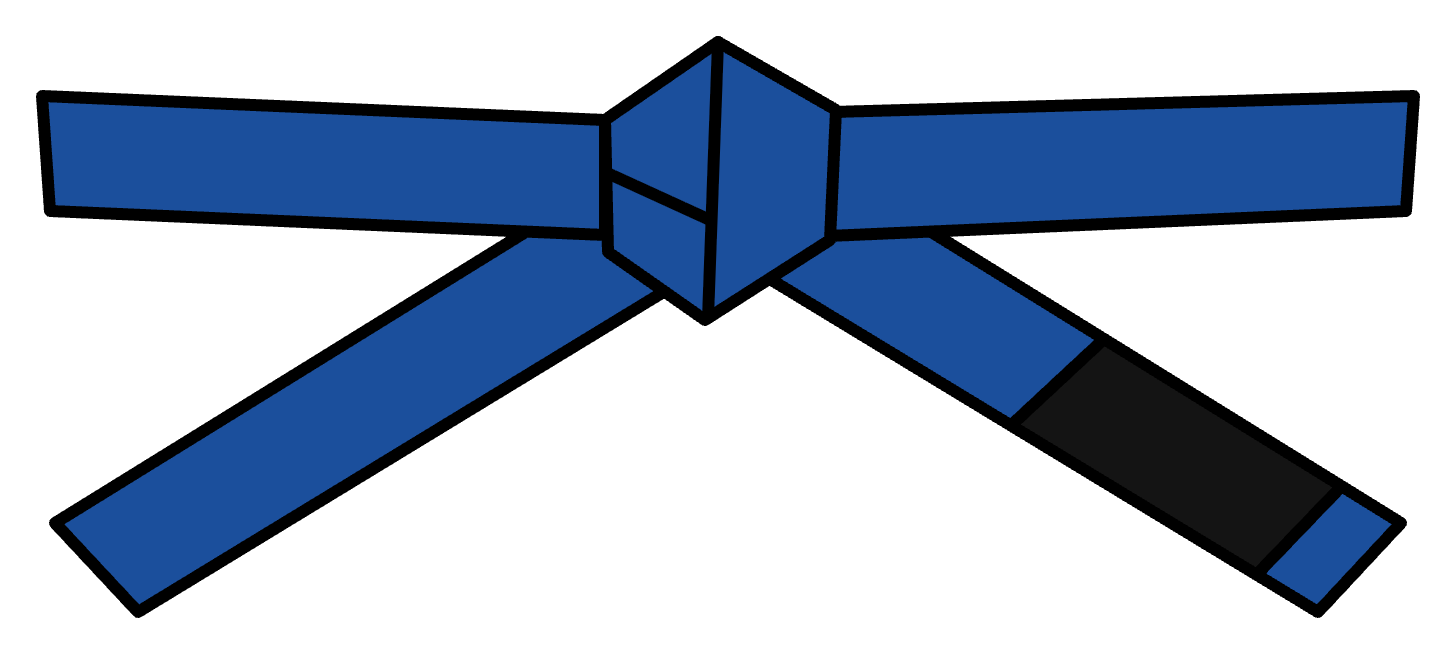 No Stripes
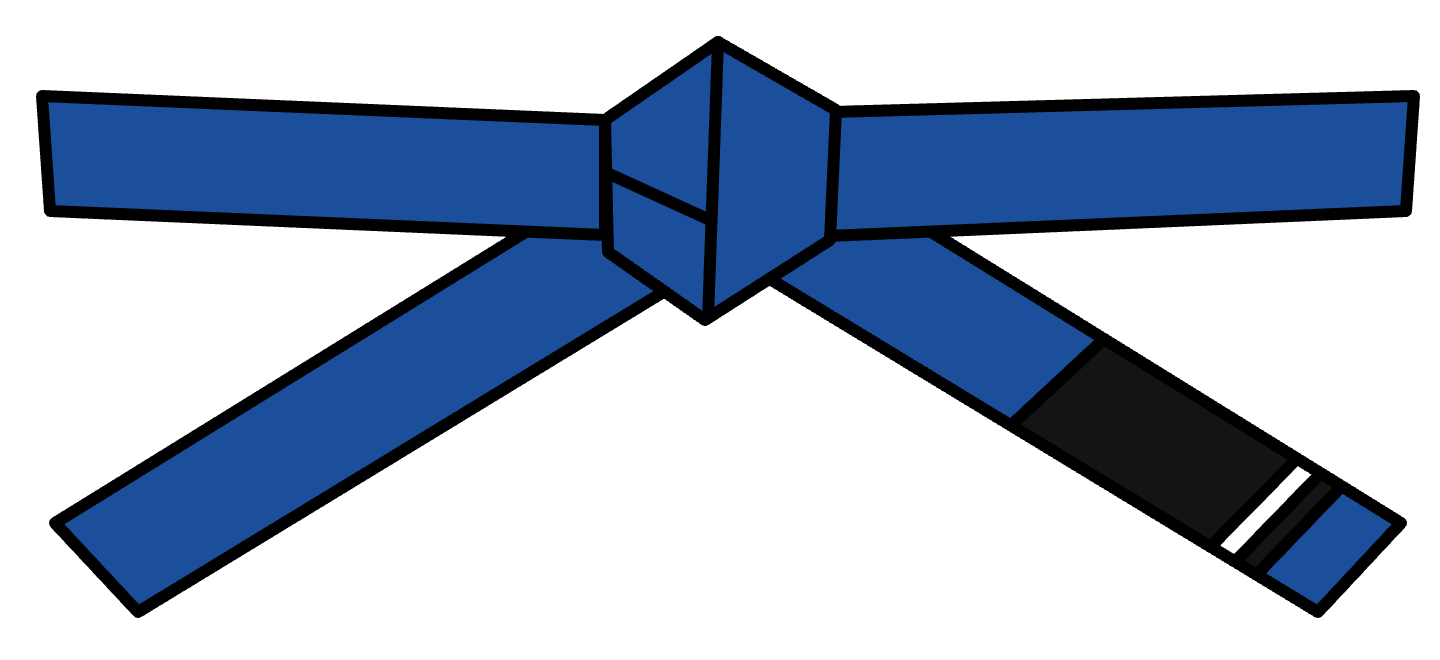 1 Stripe
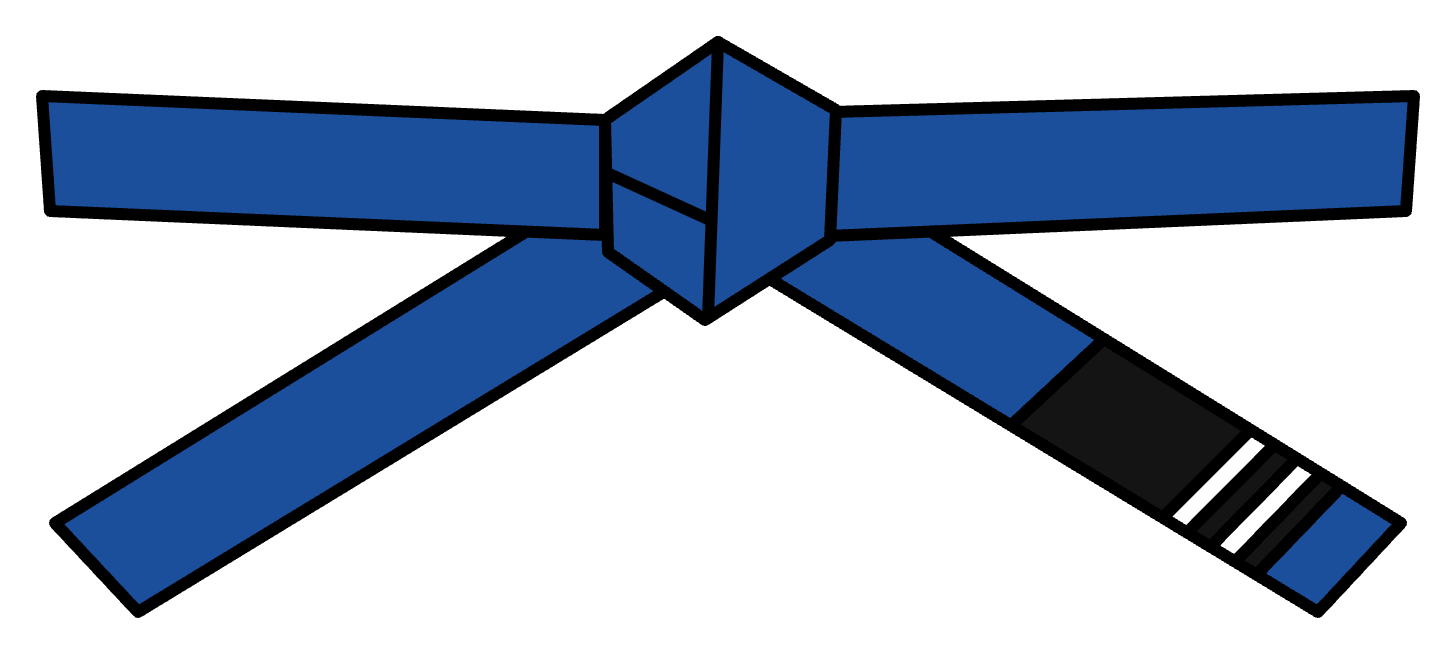 2 Stripes
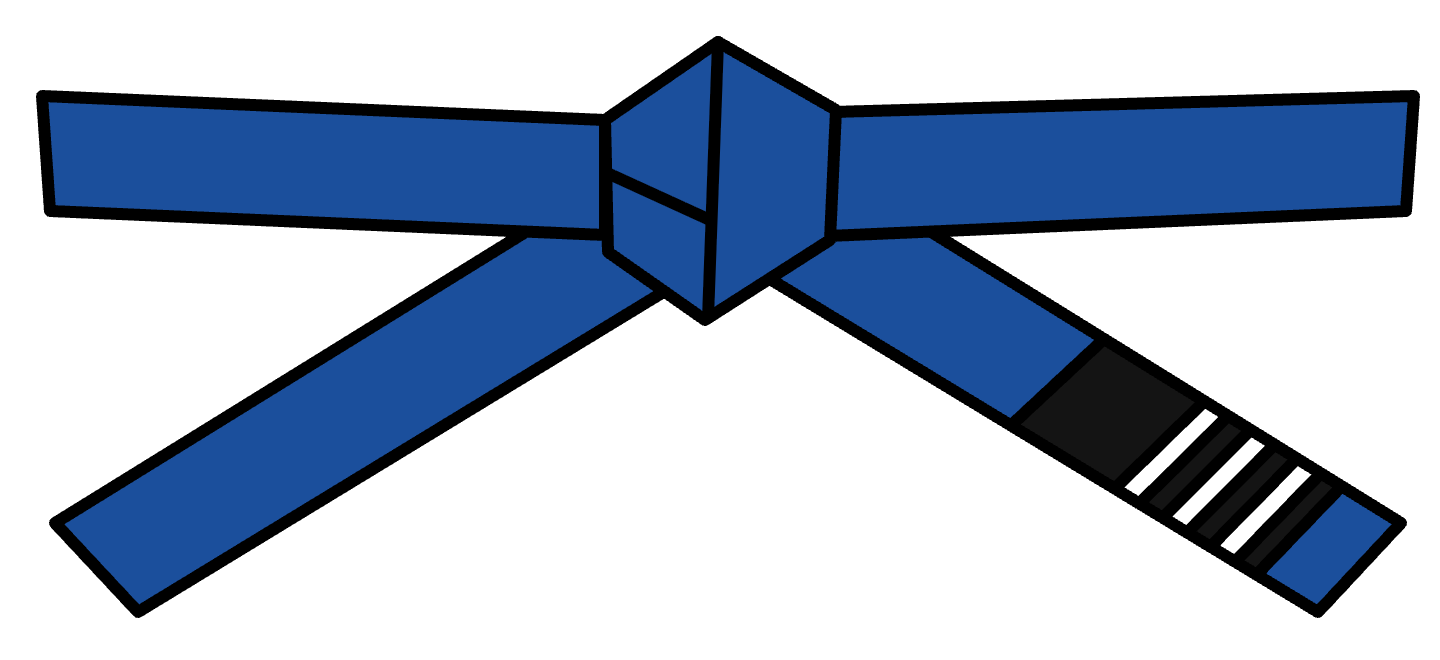 3 Stripes
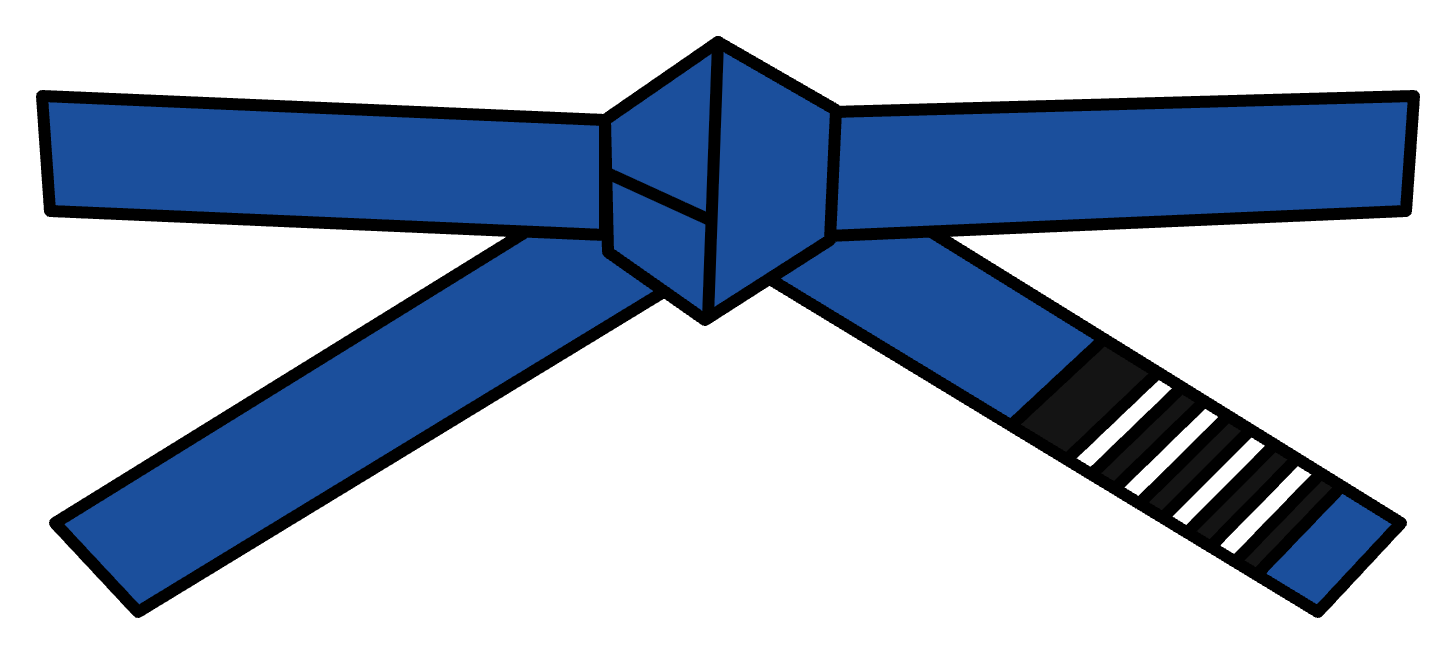 4 Stripes
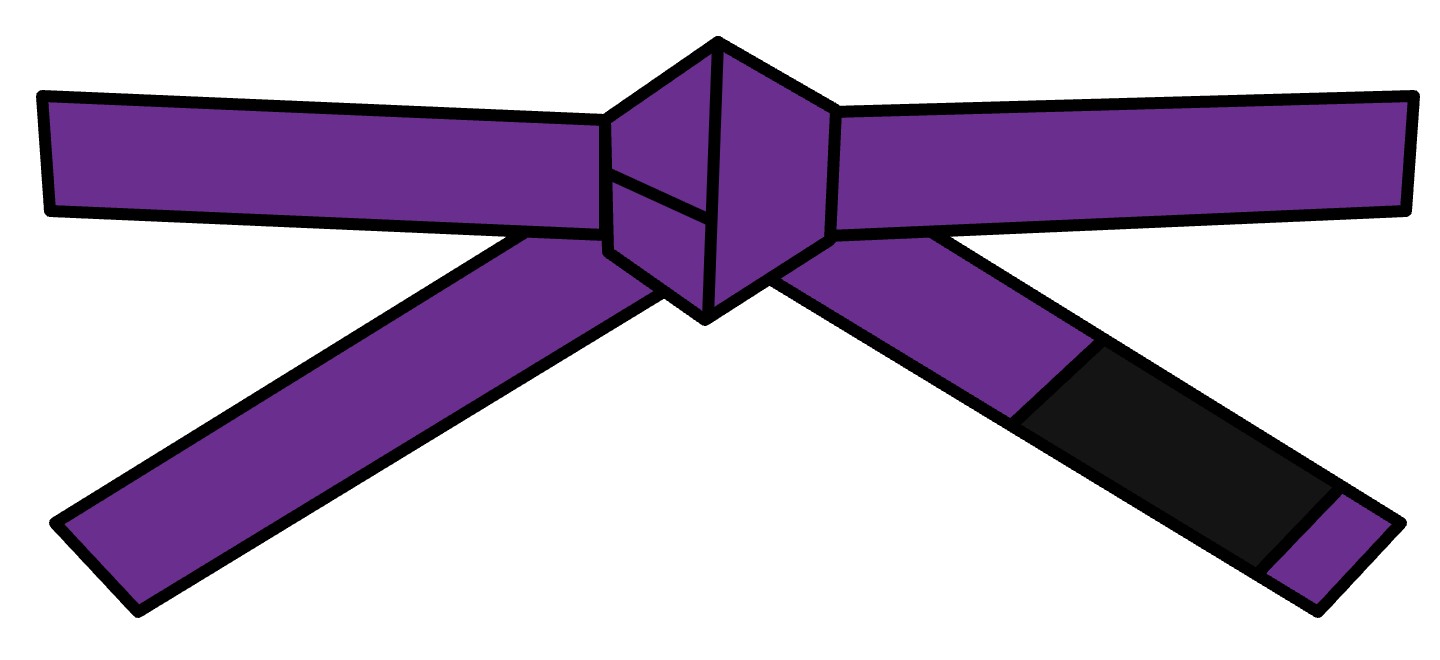 No Stripes
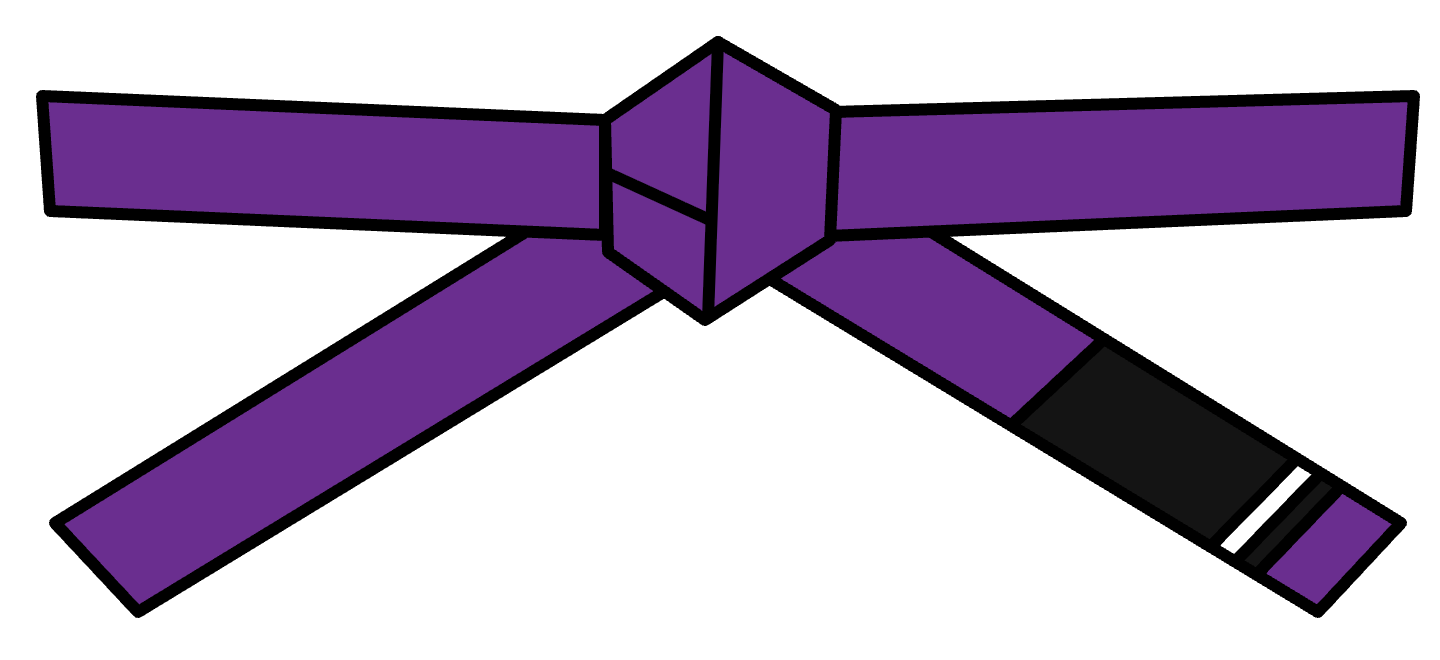 1 Stripe
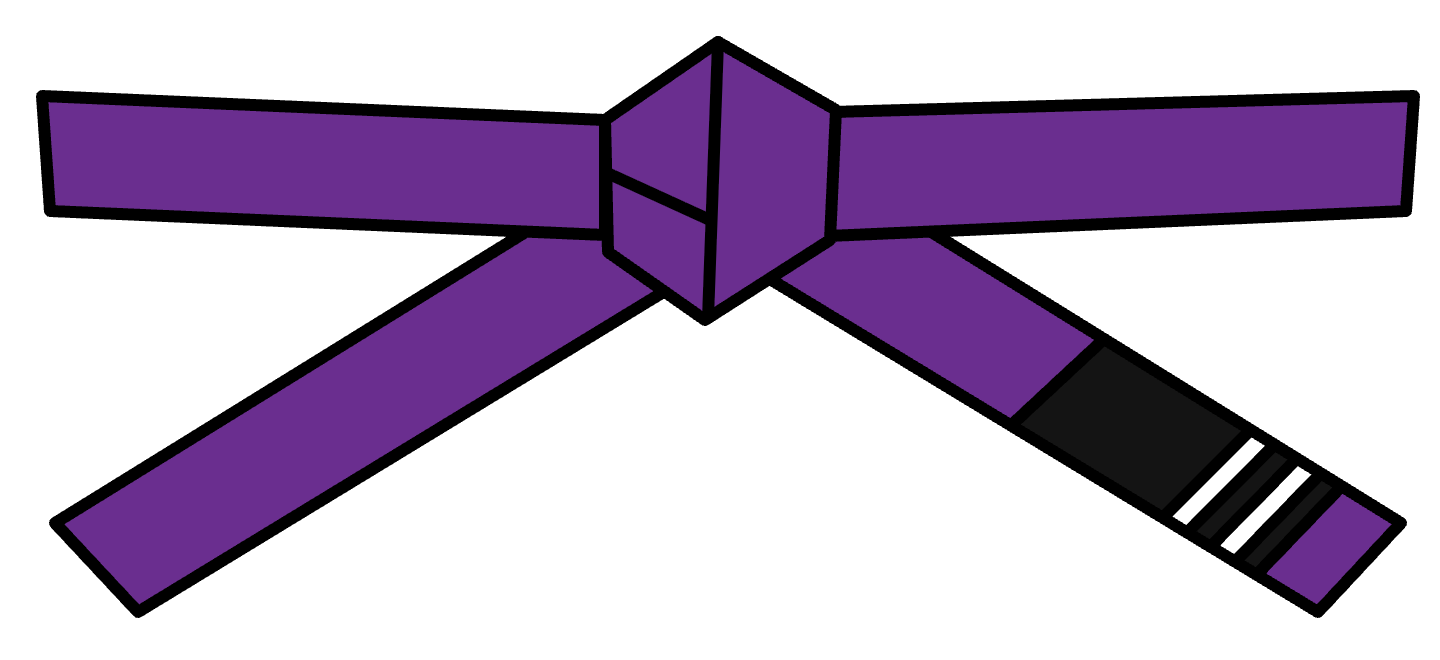 2 Stripes
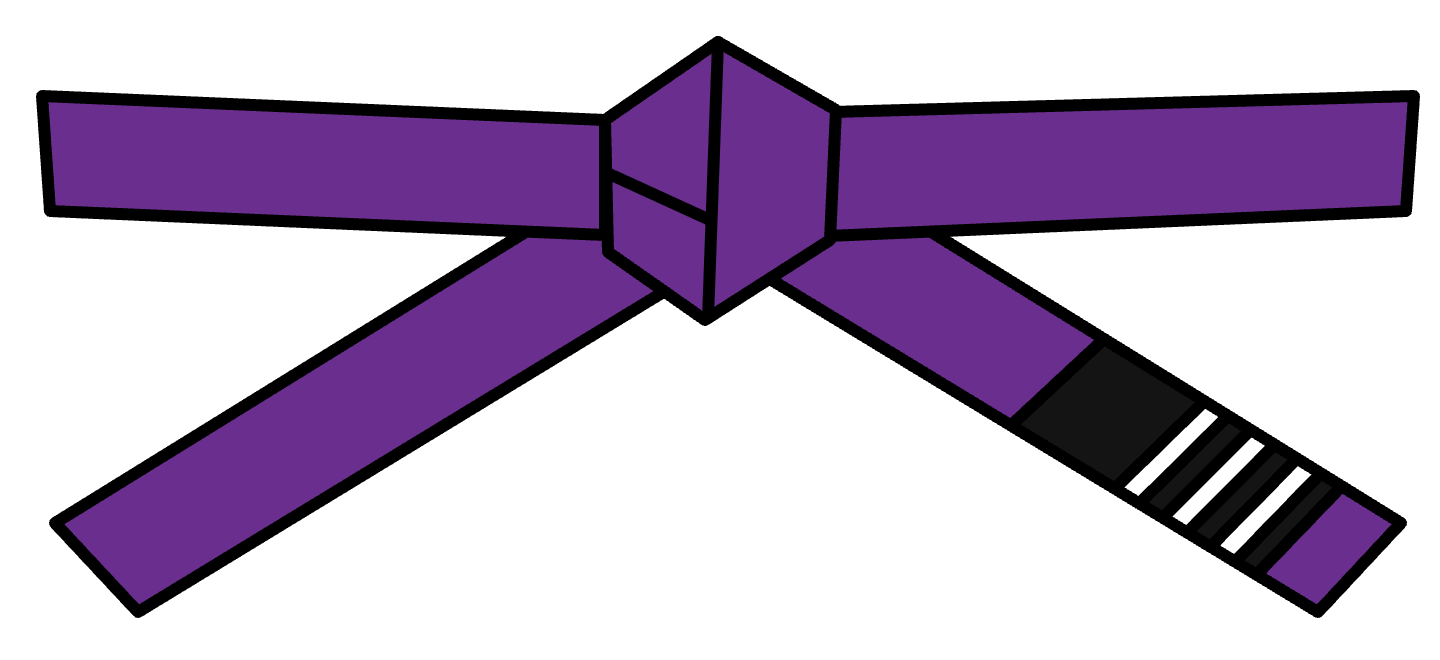 3 Stripes
 4 Stripes
 No Stripes
 1 Stripe
 2 Stripes
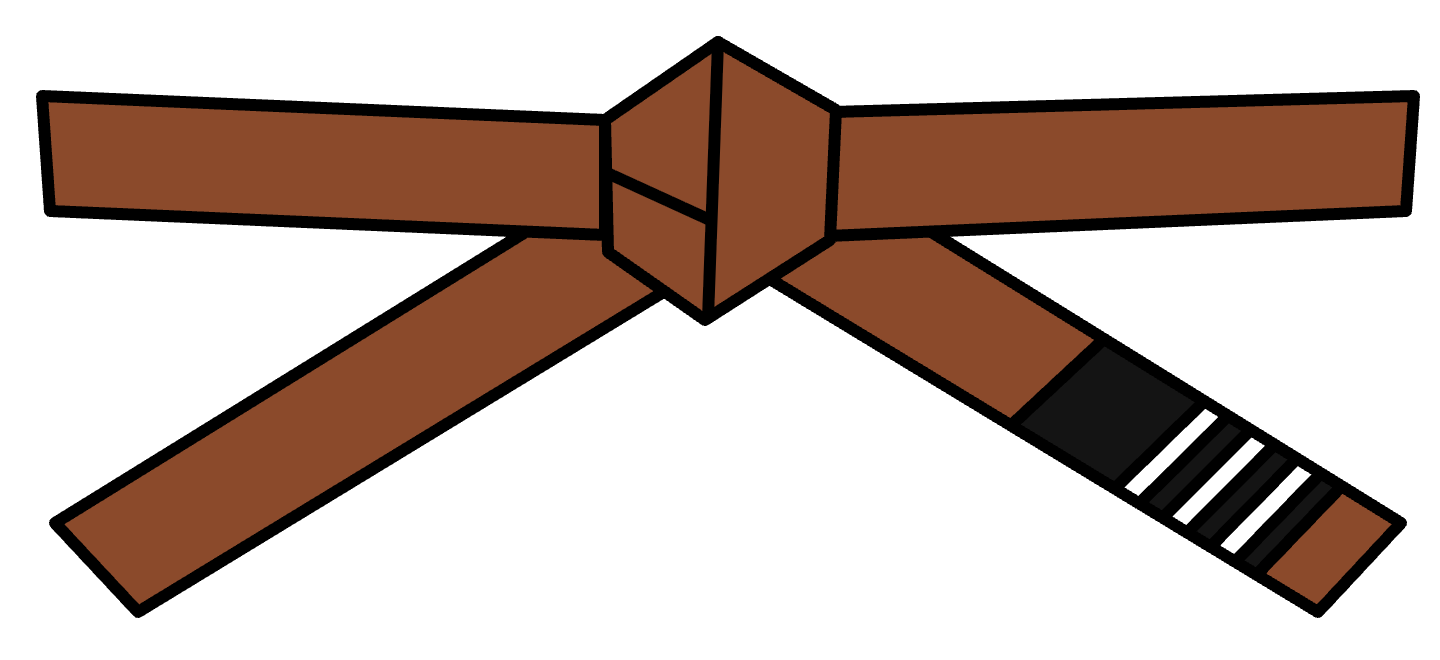 3 Stripes
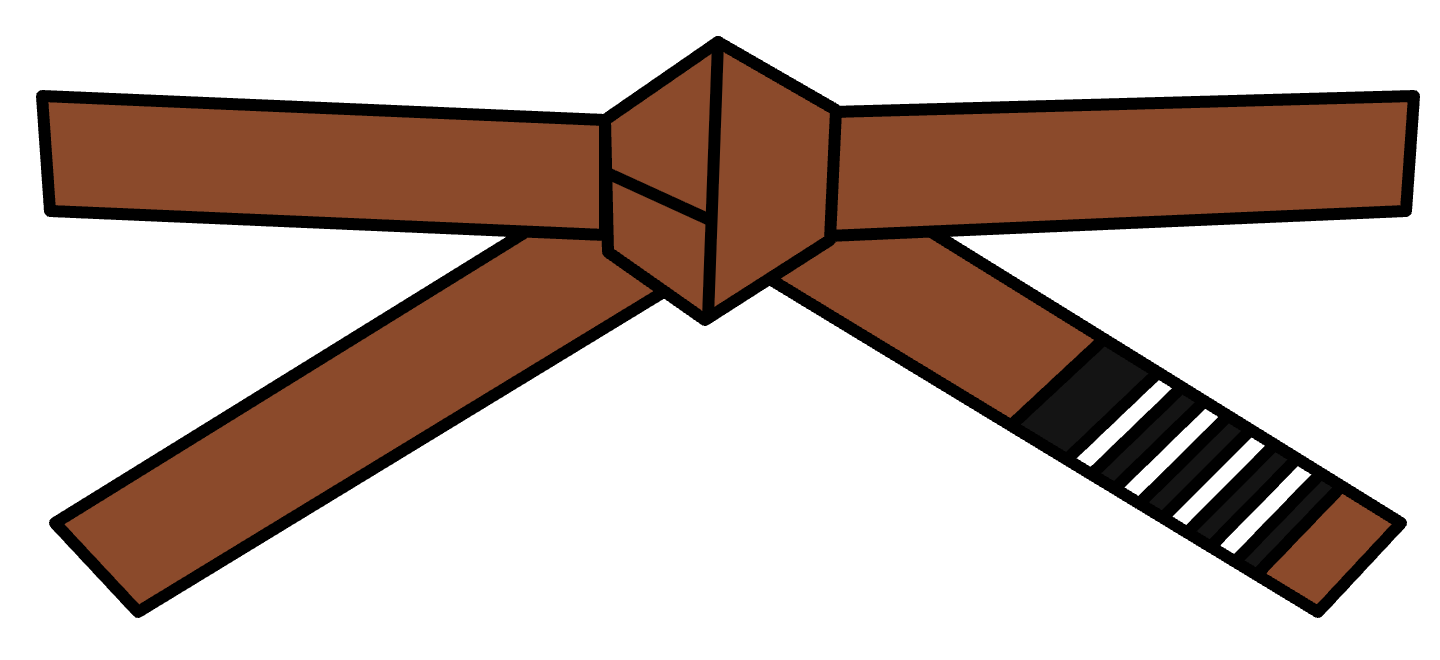 4 Stripes
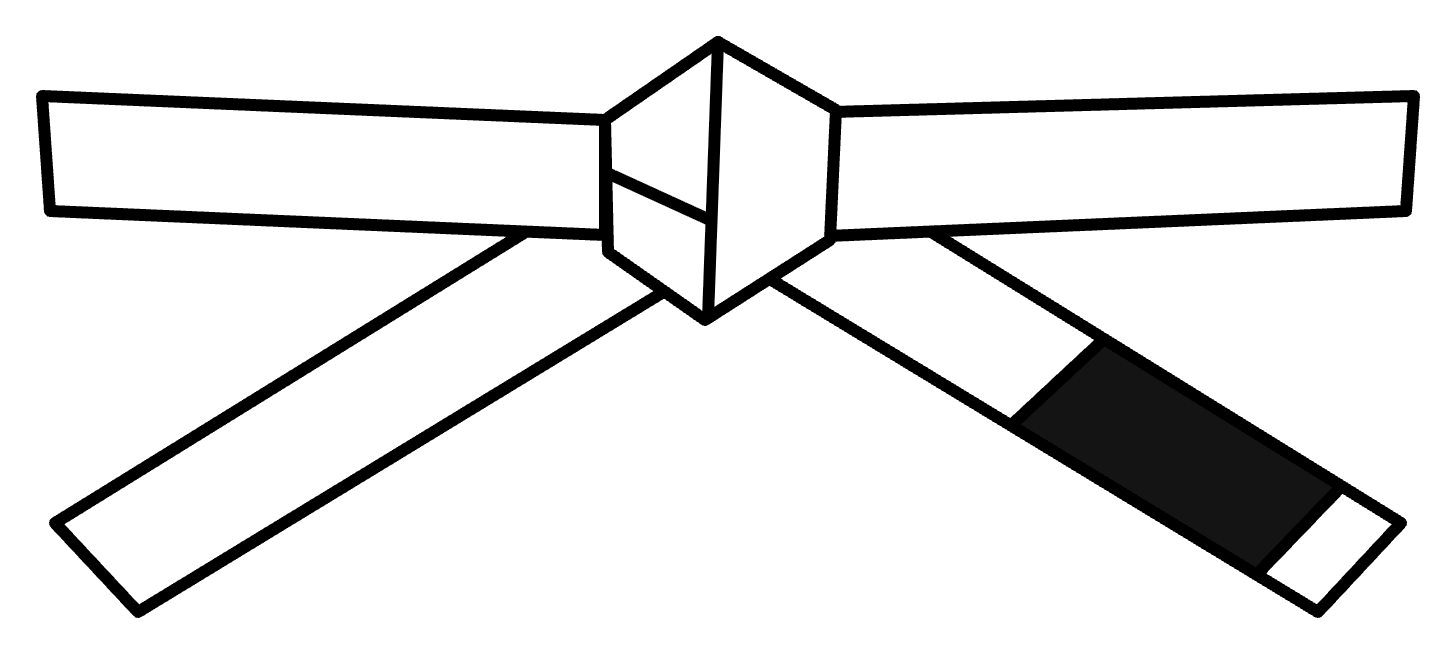
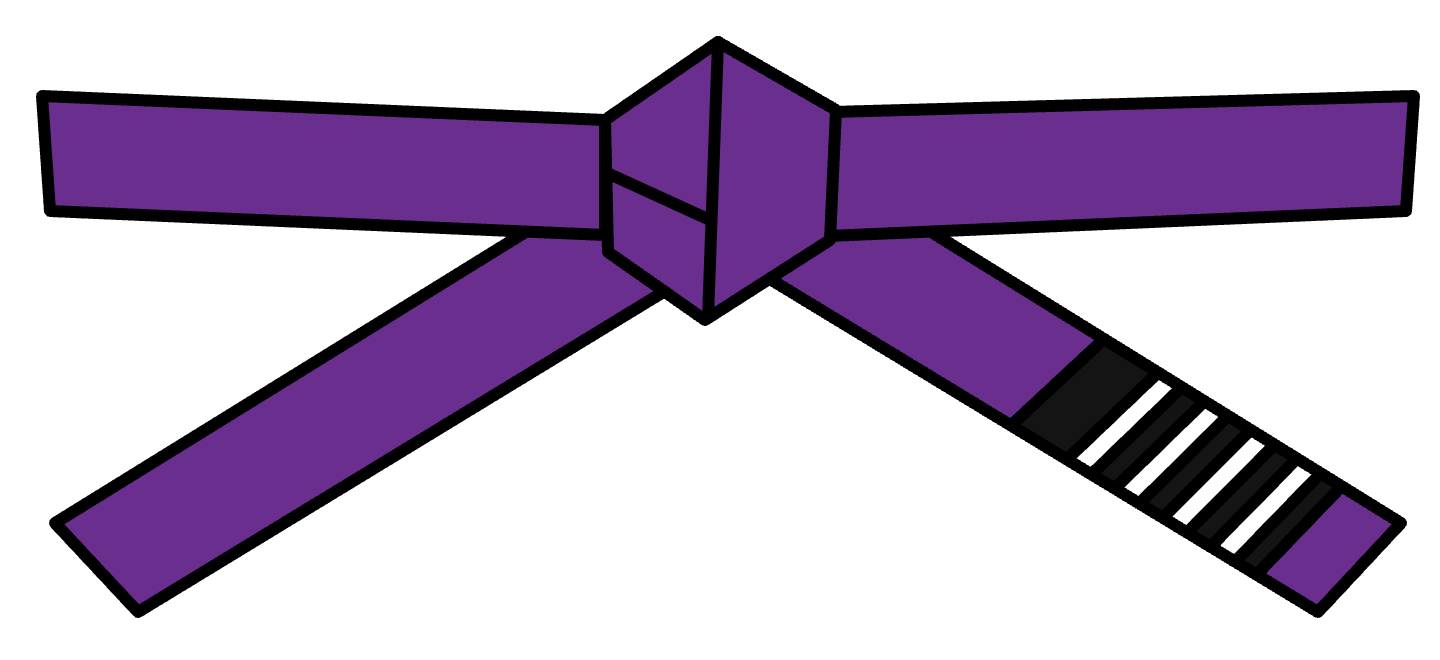
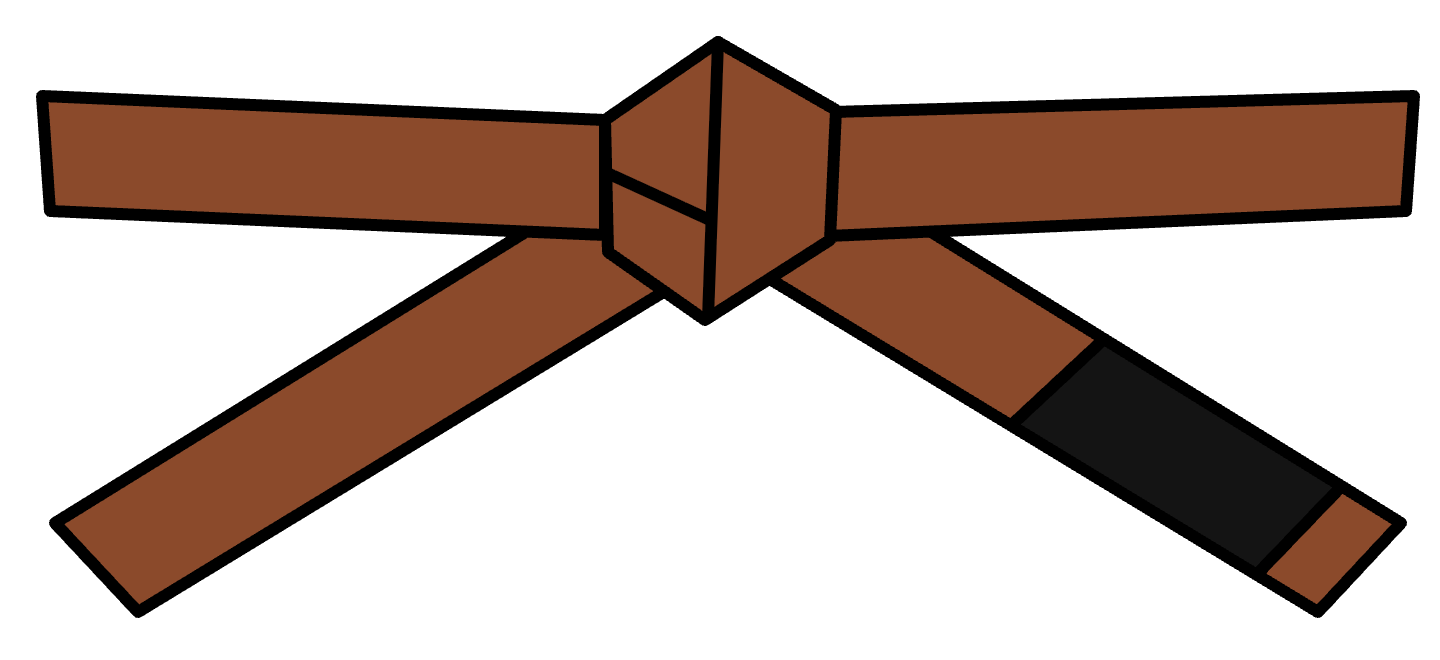
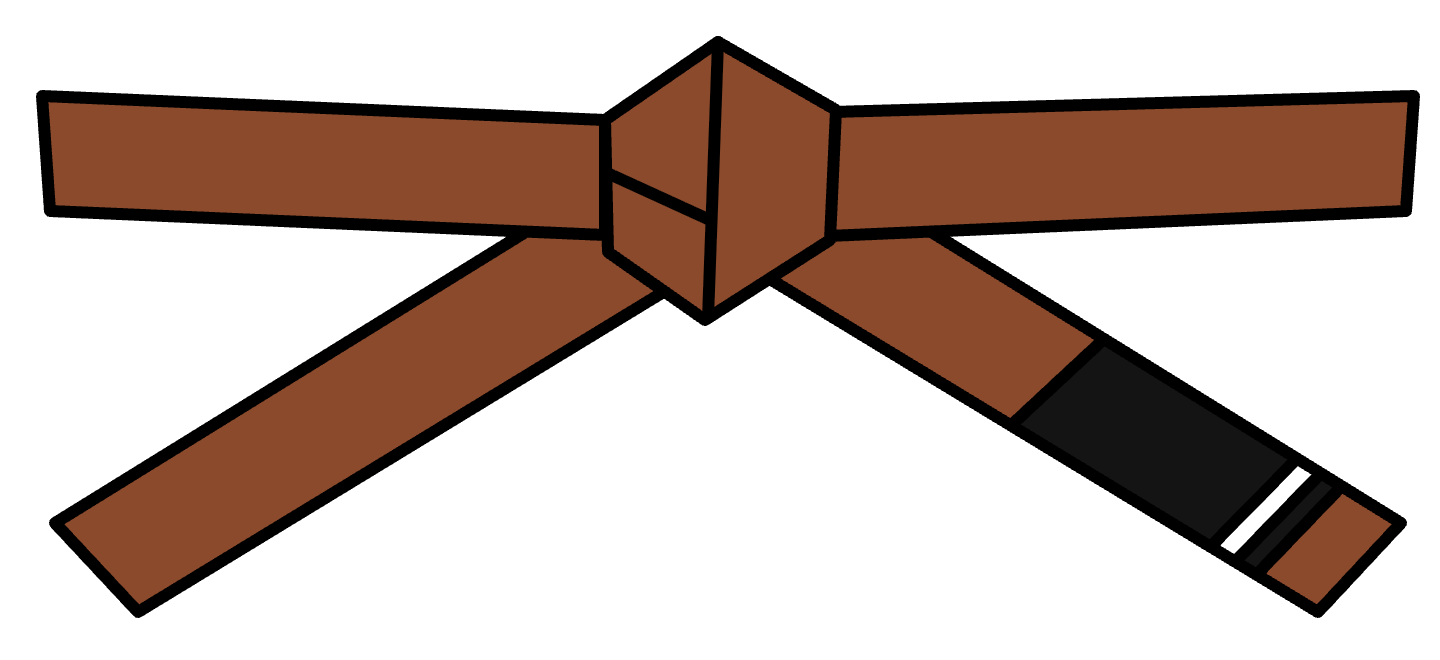
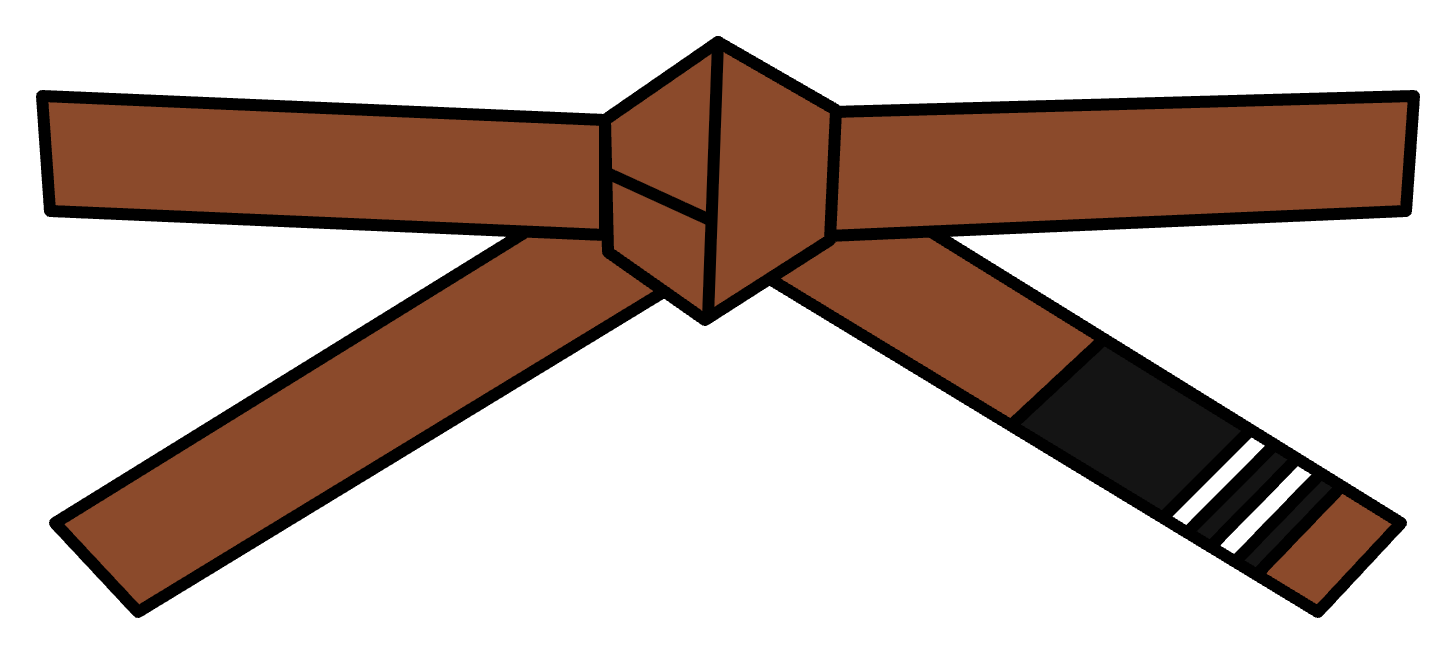
Every belt from White to Brown carries up to four stripes – recognising your progress before the next belt. Roughly 20 steps between white and black.
Black belt is where it really begins
2–4 years from brown. The training wheels come off. You understand the system, so now you start learning it properly. Beyond black, the edged red bar marks an Instructor/Professor.
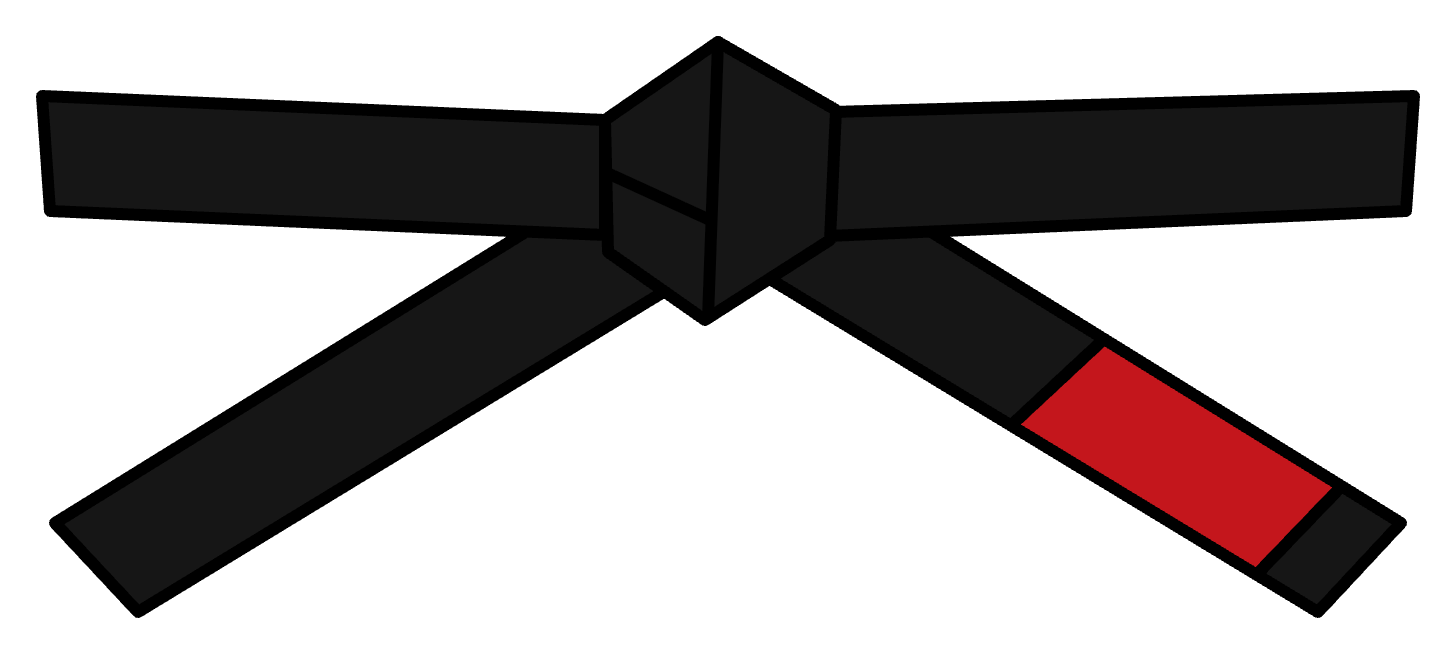 Black Belt
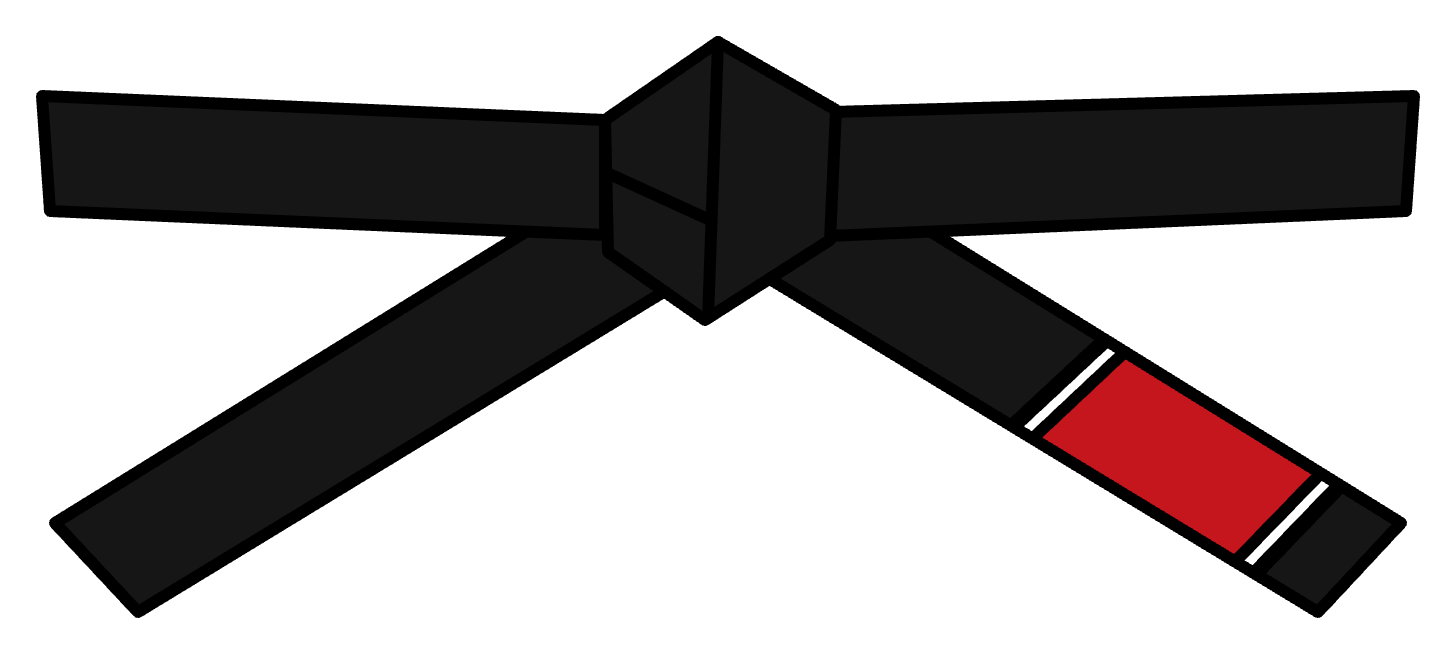 Instructor/Professor
Krav Maga is built for the real world. You are recognised for your effort as much as your skill, so there is always a next step in front of you.
Before your first class
- A T-shirt and tracksuit pants, tights or shorts. We train barefoot on rubber mats.
- Adult classes are for students aged 14 and up, with some allowances made for younger students who are ready.
- If you have protective gear (mouth-guard, box) and/or boxing gloves, bring them. You don't need them to start but will need them over time.
Belt & Rank System
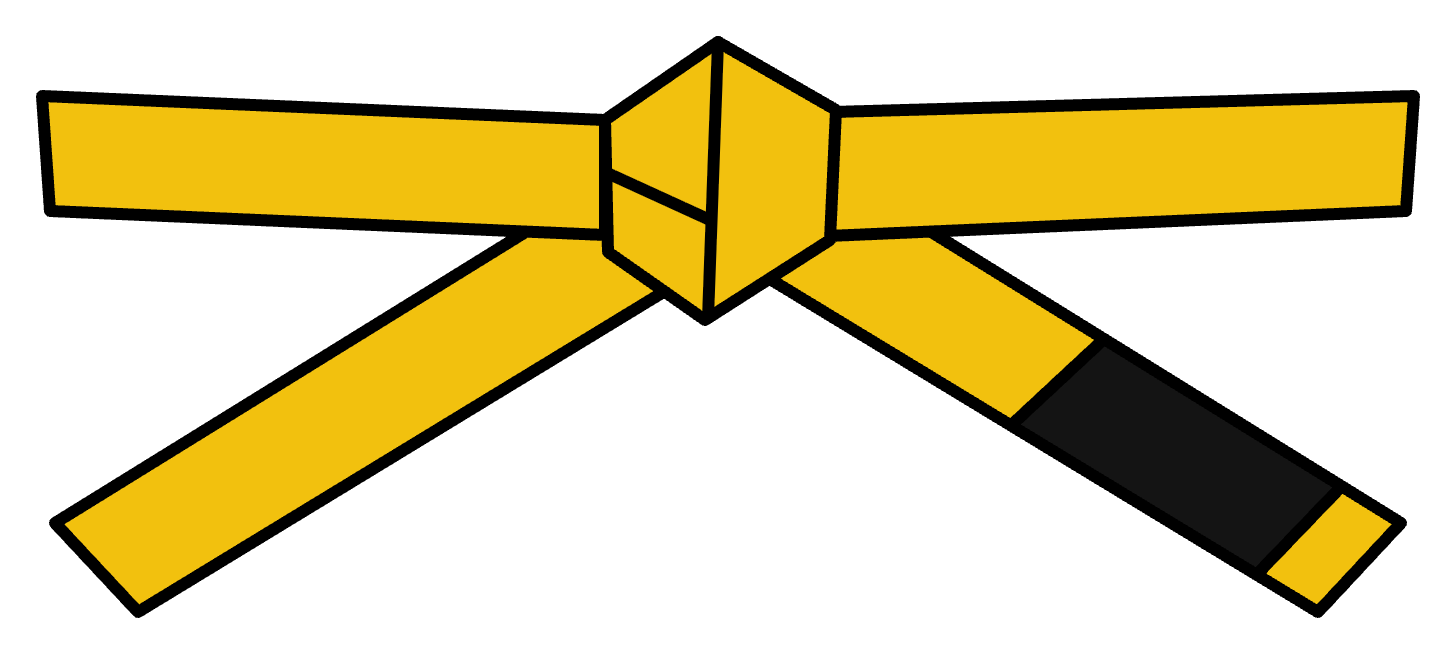 No Stripes
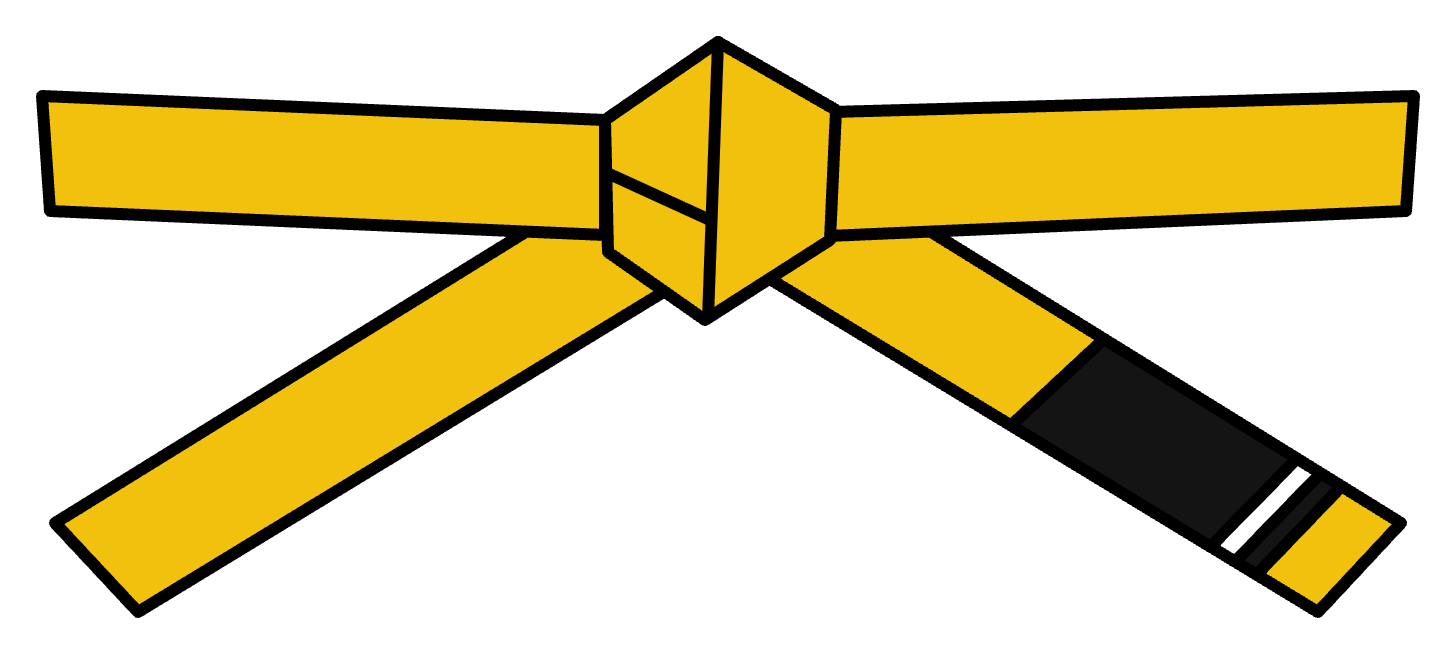 1 Stripe
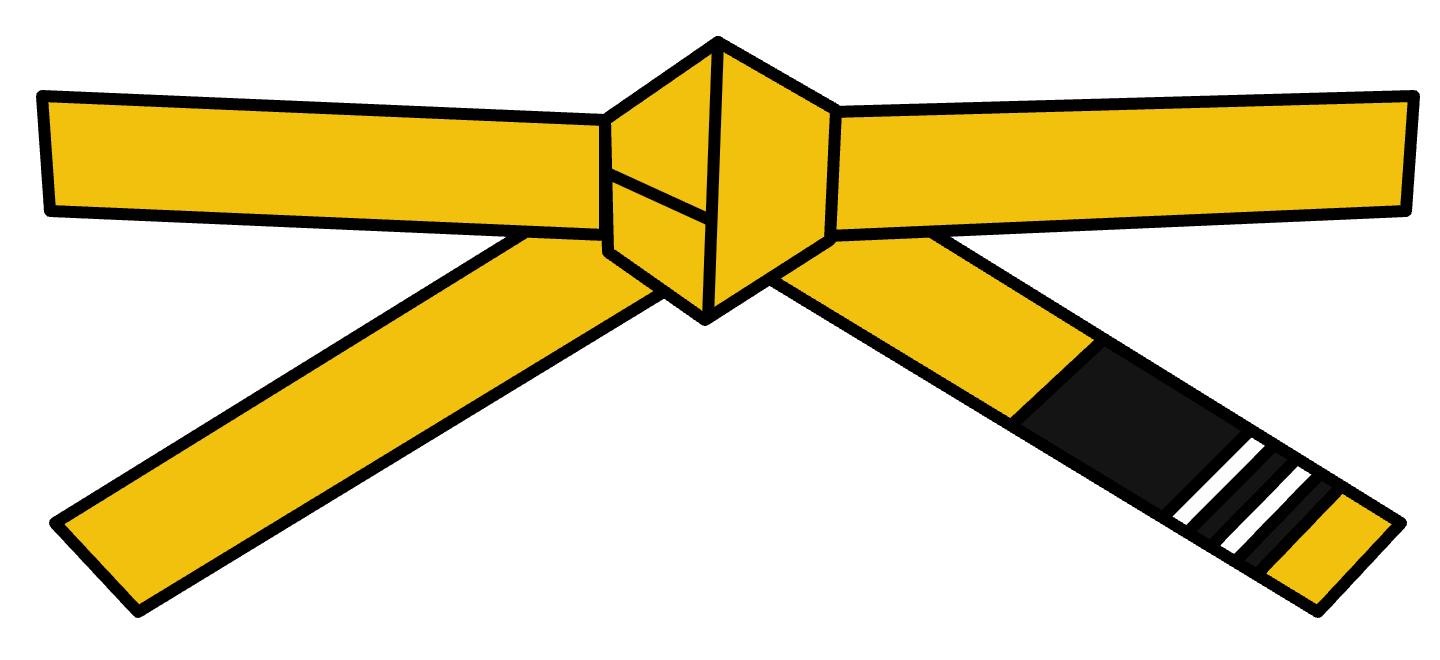 2 Stripes
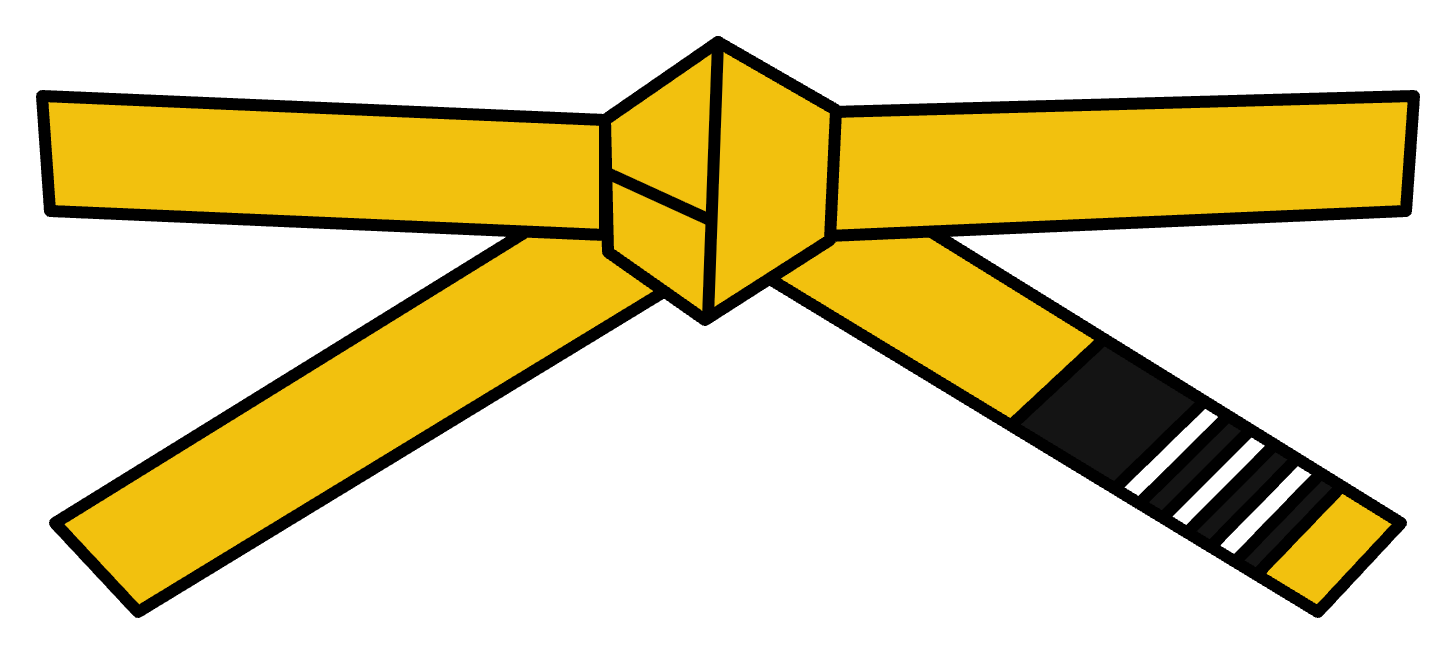 3 Stripes
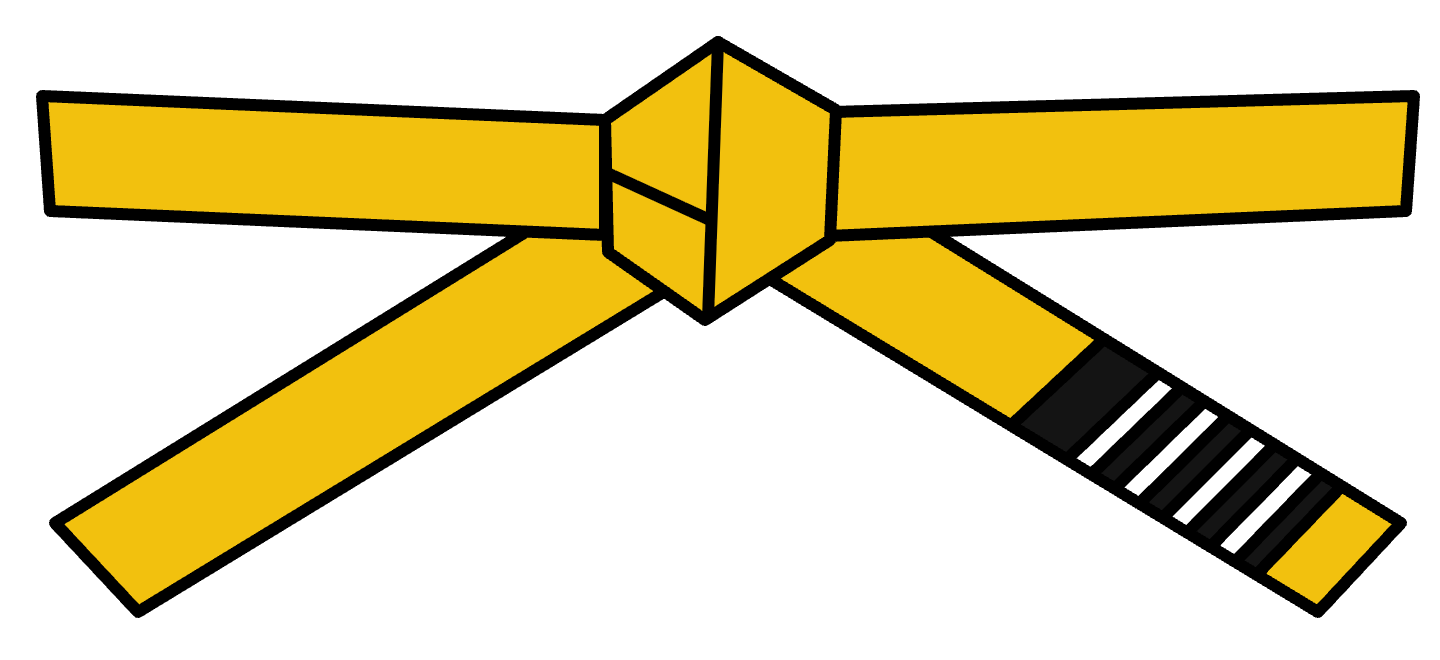 4 Stripes
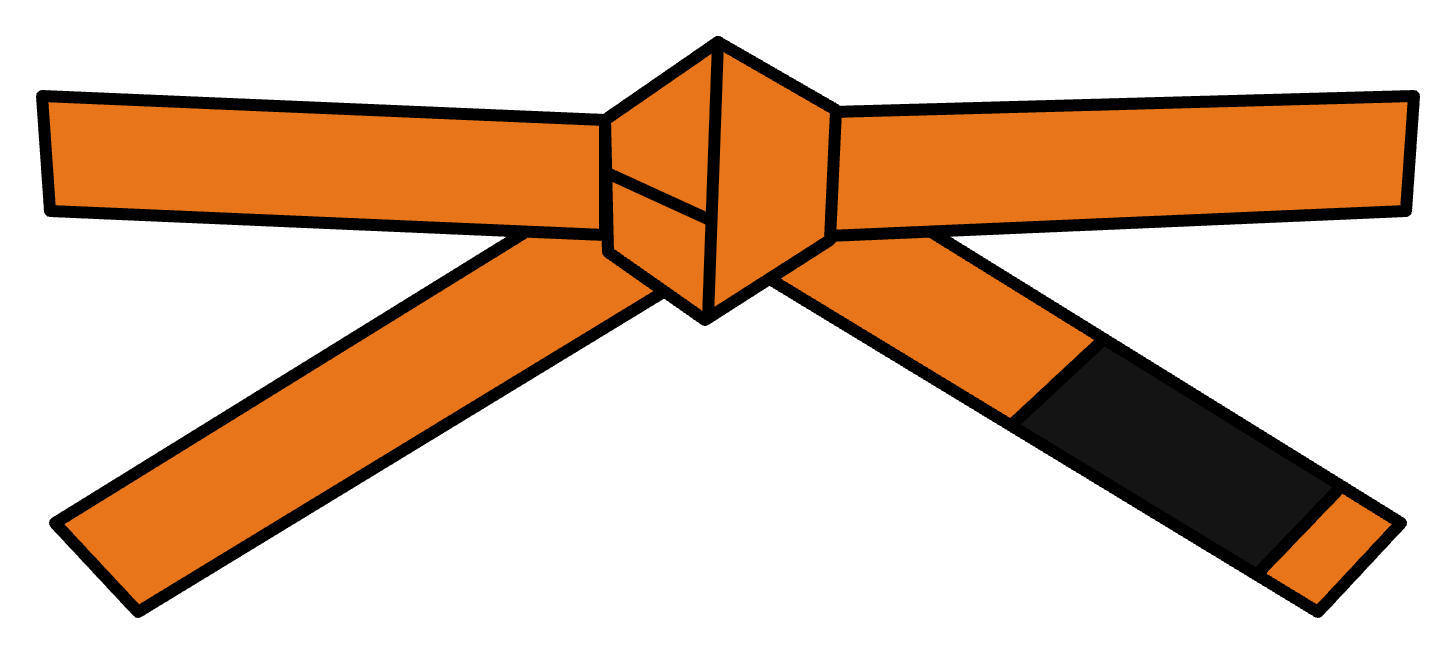 No Stripes
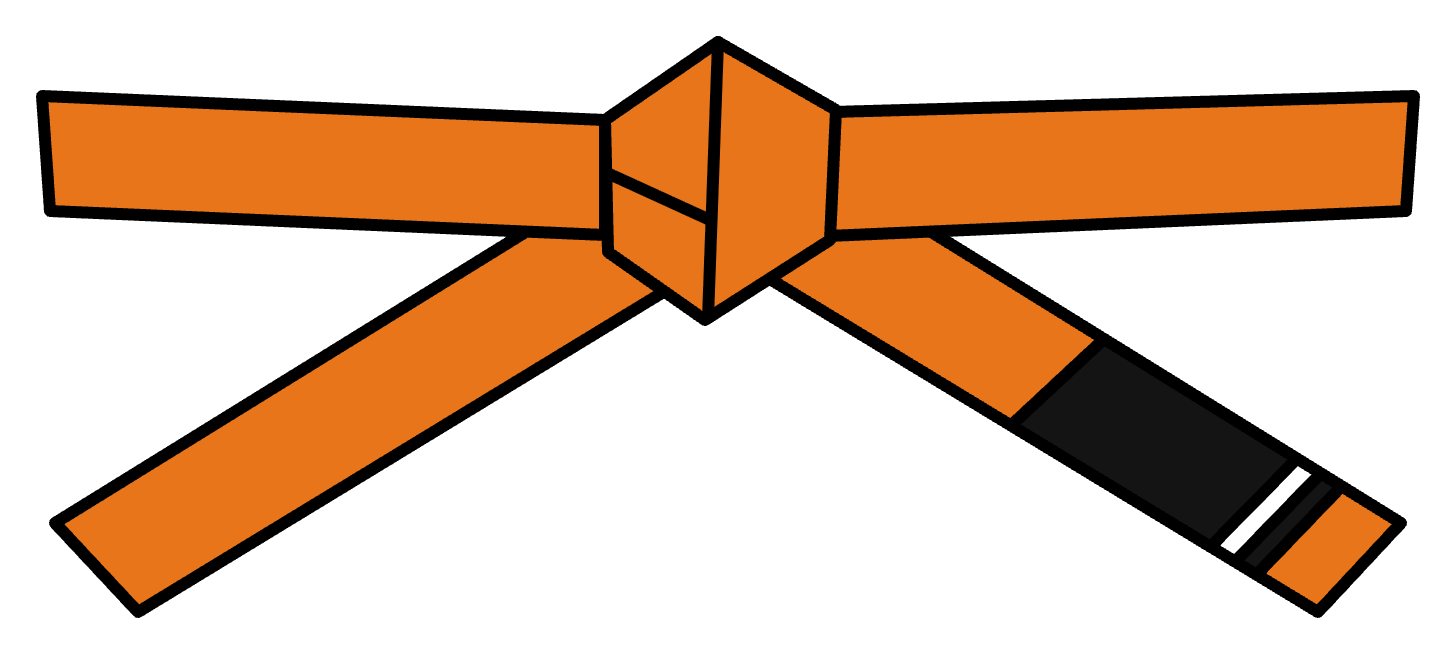 1 Stripe
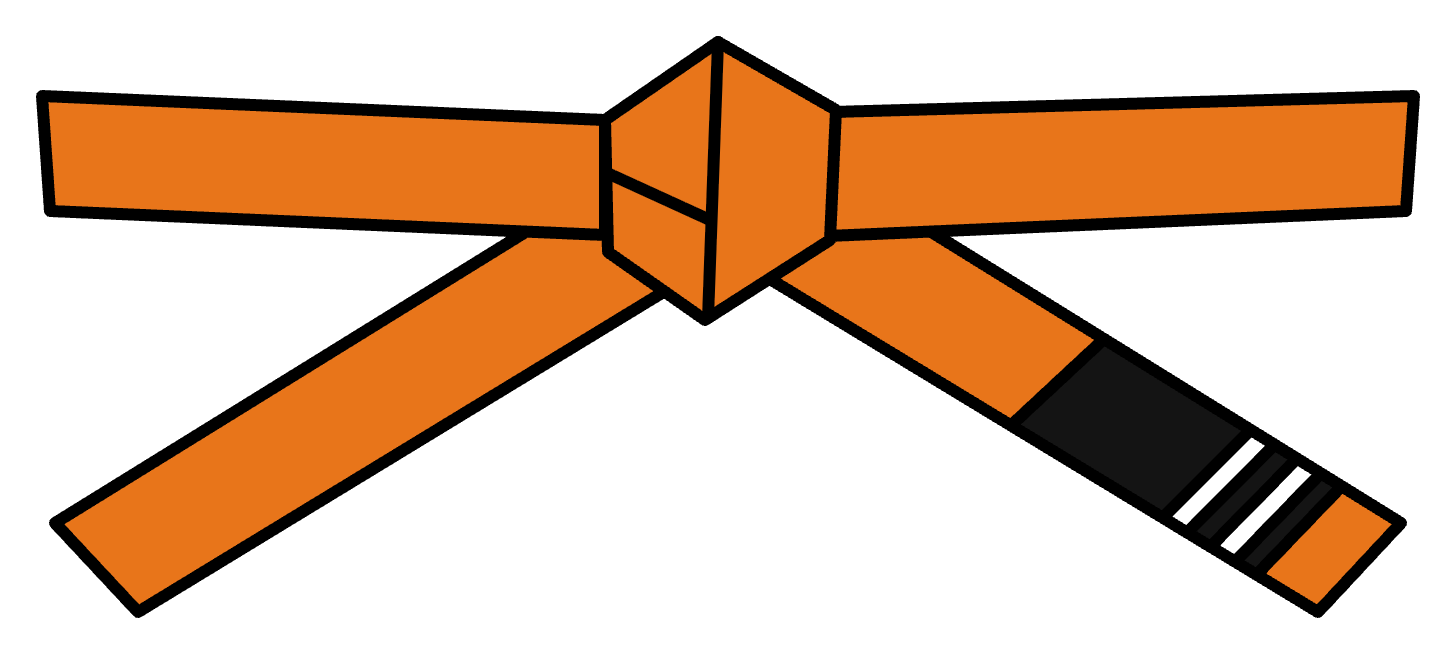 2 Stripes
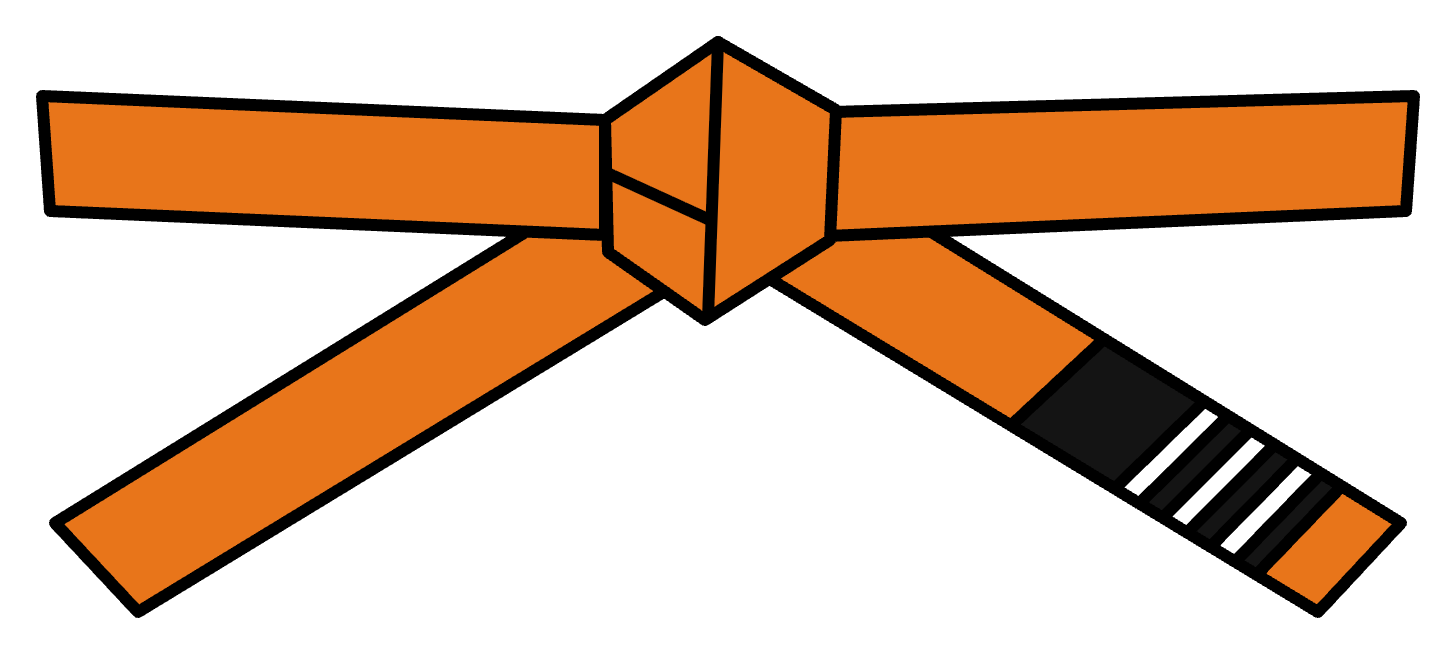 3 Stripes
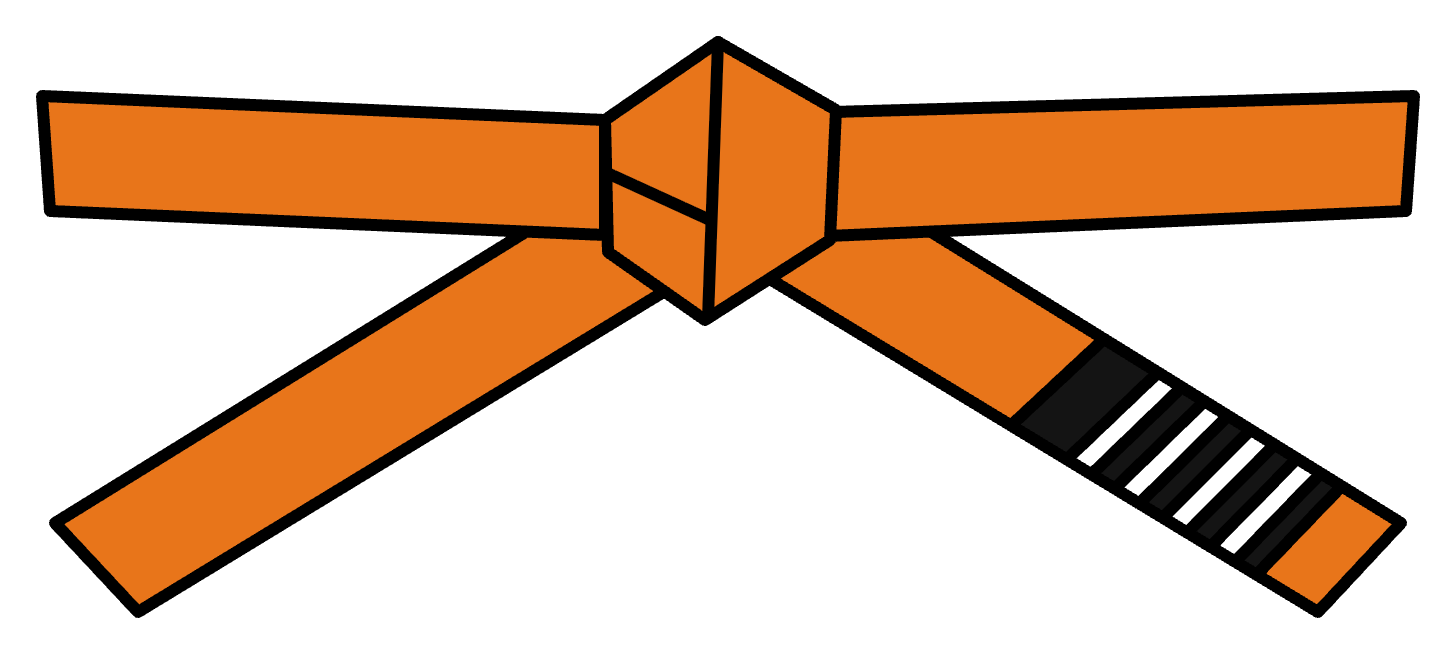 4 Stripes
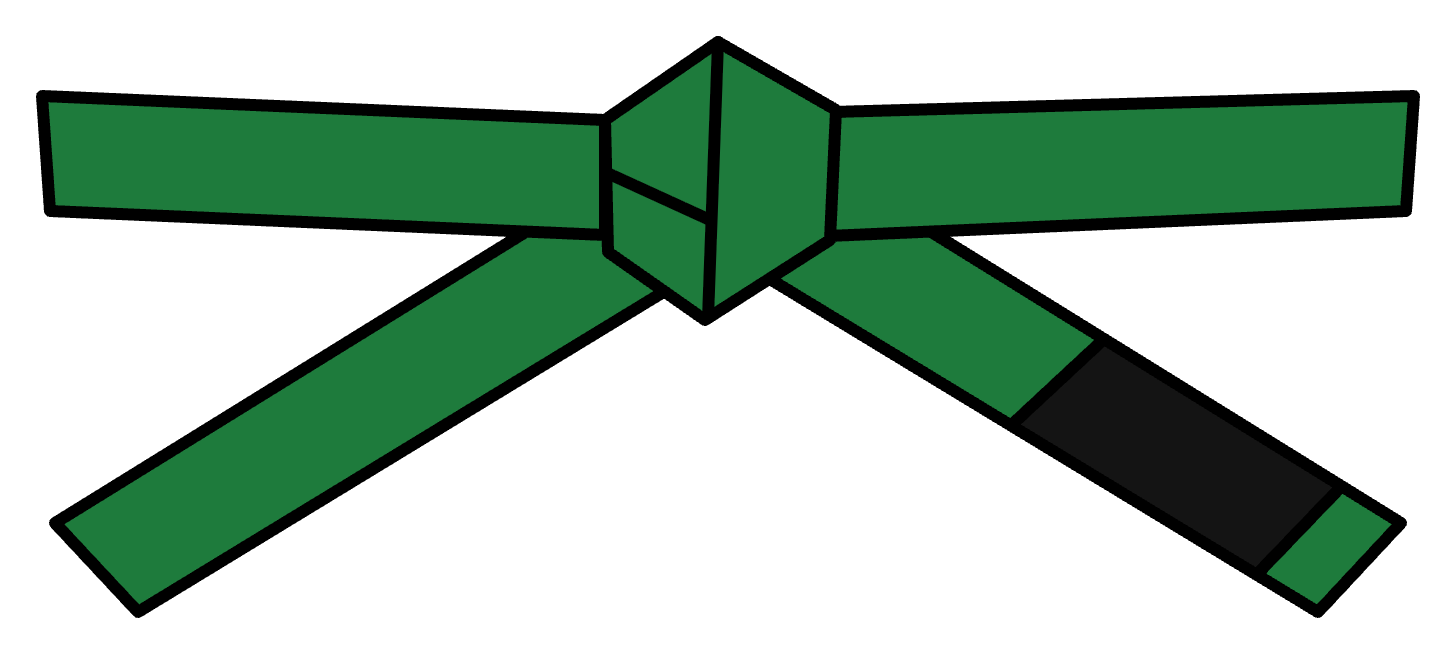 No Stripes
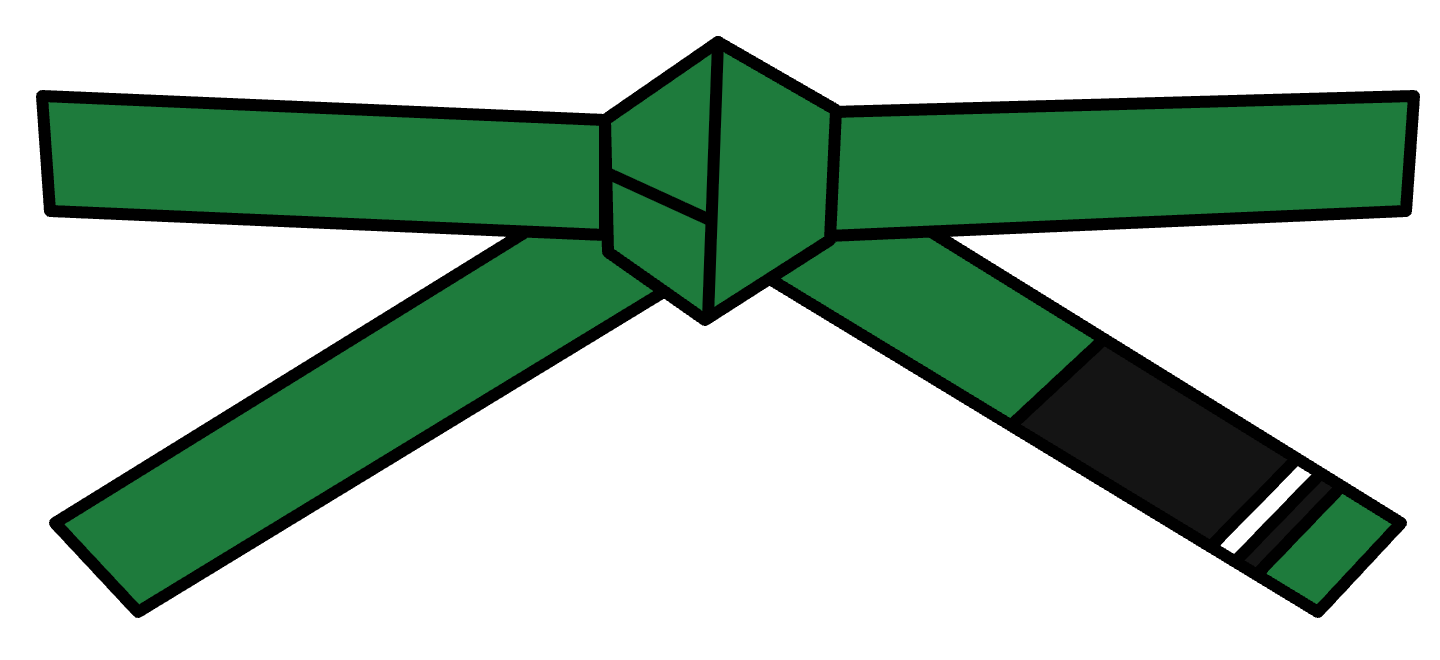 1 Stripe
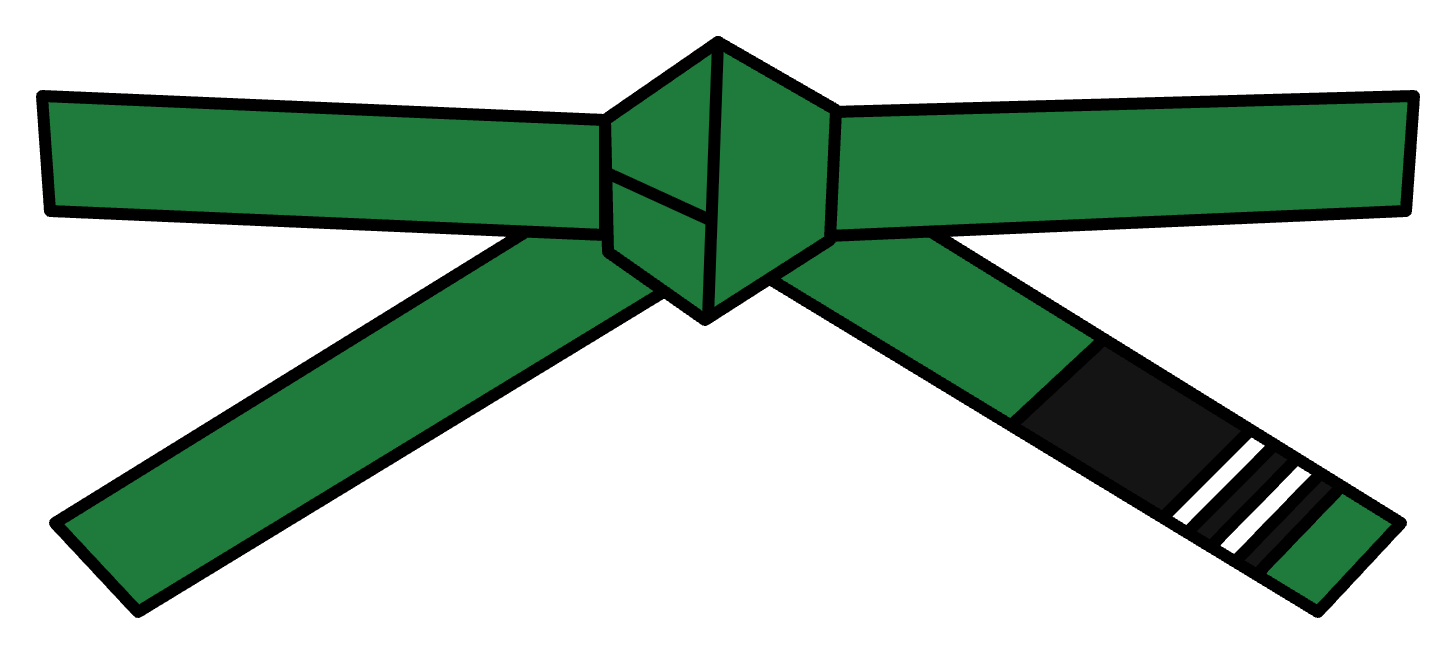 2 Stripes
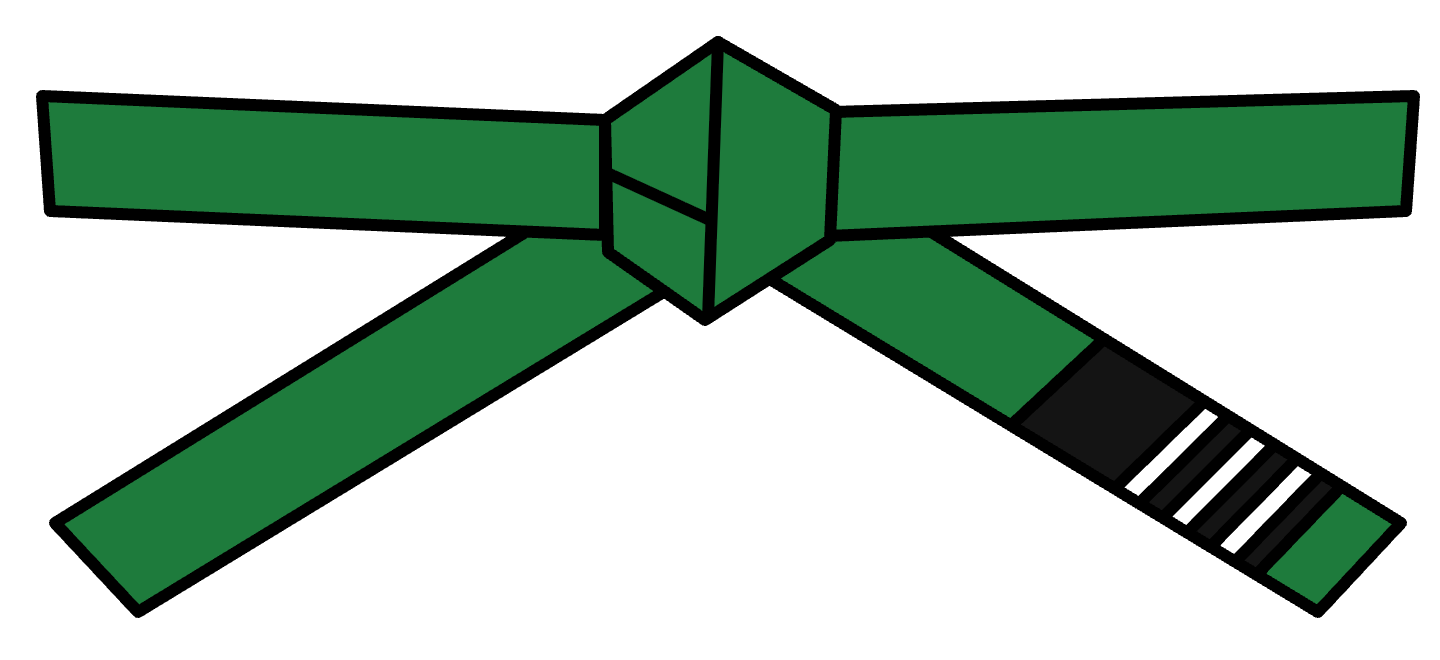 3 Stripes
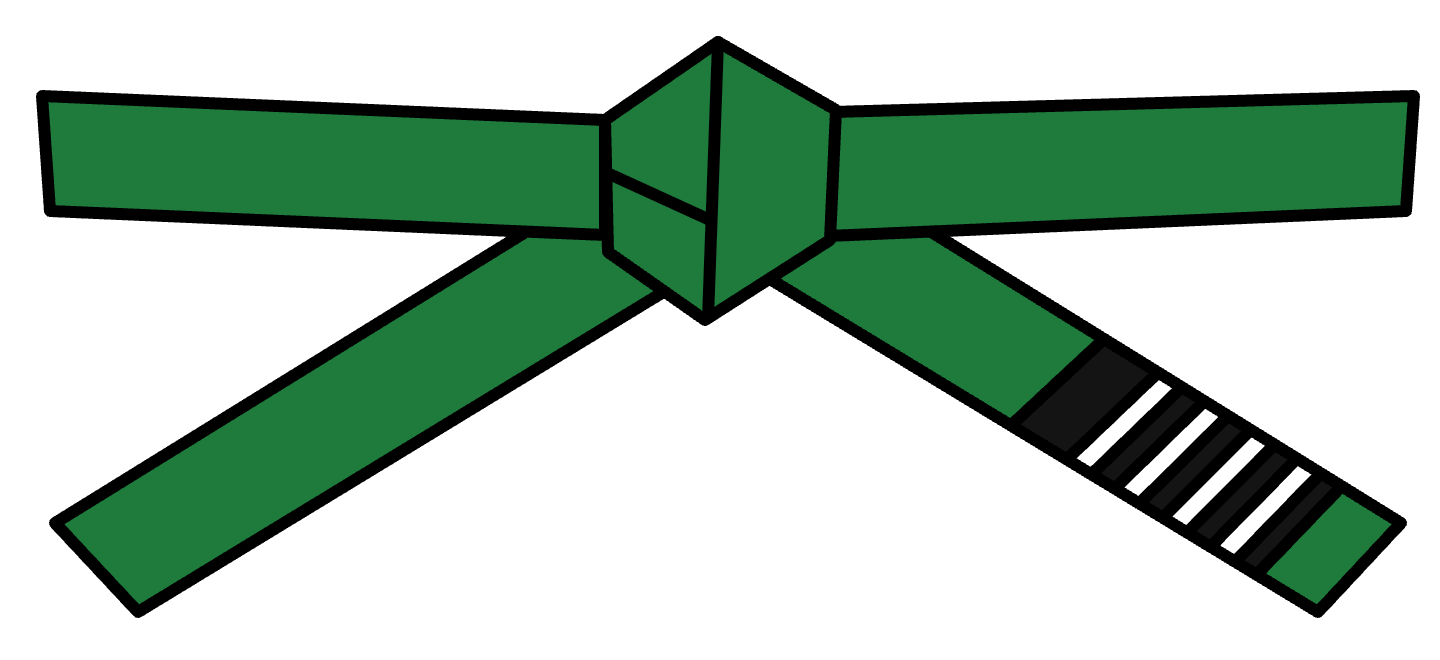 4 StripesNo Stripes1 Stripe2 Stripes3 Stripes4 StripesNo Stripes1 Stripe2 Stripes3 Stripes4 Stripes
Every belt from Yellow to Brown carries up to four stripes, marking progress along the way.
Black belt is where it really begins
A minimum of 6.5 years with consistent training of at least two hours a week. The training wheels come off – you understand the system, so now you start learning it properly. (Minimum age 18yrs).
Black Belt and Dans 2–3 are awarded by Krav Maga Israel HQ; Dans 4–5 are awarded by Committee.
- Black Belt
- 2nd Dan
- 3rd Dan
- 4th Dan
- 5th Dan
Taekwondo is built on kicking, forms and precision. You are recognised for your effort as much as your skill, so there is always a next step in front of you.
Before your first class
- A T-shirt and tracksuit pants. We train barefoot on rubber mats.
- The adult program is for students aged 13 and up.
- There is no uniform to buy before you start. Come as you are for your first class.
Coming from another martial art
- If you have trained in a different martial art you still start at white belt, but you may progress faster – the basic principles are similar across a number of martial arts.
- If you have trained at another taekwondo school, depending on how similar the techniques are, you may be assessed and given a rank above white belt.
How grading works
- Four gradings a year, roughly 12 weeks apart.
- Three to four years to black belt with dedicated training. Adult black belt applicants must be at least 16.
Belt & Rank System
Yellow – 9th Kup (급)Yellow with Green Tip – 8th Kup (급)Green – 7th Kup (급)Green with Blue Tip – 6th Kup (급)Blue – 5th Kup (급)Blue with Red Tip – 4th Kup (급)Red – 3rd Kup (급)Red with Black Tip – 2nd Kup (급)Each full coloured belt moves to the next through a tipped belt – so there is a step to work on between every full colour.
Black belt is where it really begins
3–4 years with dedicated training. Adult black belt applicants must be at least 16. Beyond 1st Dan, training continues in regular classes, with special black belt sessions run about four times a year.
- 1st Dan (단) Black Belt
- 2nd Dan (단)
- 3rd Dan (단)
- 4th Dan (단)
- 5th Dan (단)
- 6th Dan (단)
Korean sword. Kummooyeh rewards control and precision – you are recognised for your effort as much as your skill, so there is always a next step in front of you.
Before your first class
- A T-shirt and tracksuit pants. We train barefoot on rubber mats.
- The adult program is for students aged 14 and up.
- Swords are provided while you find your feet – there is nothing to buy before your first class.
Coming from another martial art
- If you have trained in a different martial art you still start at white belt, but you may progress faster – the basic principles are similar across a number of martial arts.
How grading works
- Four gradings a year, roughly 12 weeks apart.
- Three to four years to black belt with dedicated training. Adult black belt applicants must be at least 16.
Belt & Rank System
YellowGreenBluePurpleBrownRedRed with BlackBlack with WhiteKummooyeh belts do not carry midpoint stripes – each grading moves you to the next full belt.
Black belt is where it really begins
3–4 years with dedicated training. Adult black belt applicants must be at least 16. Beyond 1st Dan, training continues in regular classes, with special black belt sessions and yearly seminars with the Grand Master.
- 1st Dan Black Belt
- Instructor
- 2nd Dan
- 3rd Dan
- 4th Dan
- Senior Instructor
Shin Saito Ryu JuJutsu is a complete system – striking, grappling, weapons, and in time, teaching. Progress runs in bands, and each band asks something different of you.
Before your first class
- Comfortable clothing, preferably without zips, and no jewellery. There is no uniform required on day one.
- The minimum age to begin training is 16, due to the intensity of the training material and the methods used.
How grading works
- Gradings are held when a suitable number of students are ready. There is no minimum time between grades.
- Four to seven years of consistent training to black belt.
Belt & Rank System
Yellow – 6th Kyu (級)Orange – 5th Kyu (級)Green – 4th Kyu (級)Blue – 3rd Kyu (級)Purple – 2nd Kyu (級)Brown – 1st Kyu (級)Black – 1st Dan (段)Black – 2nd Dan (段)Black – 3rd Dan (段)Black – 4th Dan (段)Black – 5th Dan (段)Black – 6th Dan (段)Black – 7th Dan (段)Black – 8th Dan (段)There are no stripes, tabs or two-colour belts in this system – each grading moves you to the next full belt.
A traditional Japanese jujutsu system. The syllabus runs in three bands – Nyumon for beginners, Mudansha for the kyu grades below black belt, and Yudansha for the dan grades.
Before your first class
- Minimum age 14.
- Wear a t-shirt and tracksuit pants.
- Bring a drink bottle.
How grading works
- Gradings are held when students are ready, in the same way as Shin Saito Ryu JuJutsu. There is no fixed grading calendar.
- Ten kyu grades from your first grading through to black belt.
- Four to five years to black belt with consistent training – twice a week, every week that CMA&F is open during the calendar year.
Belt & Rank System
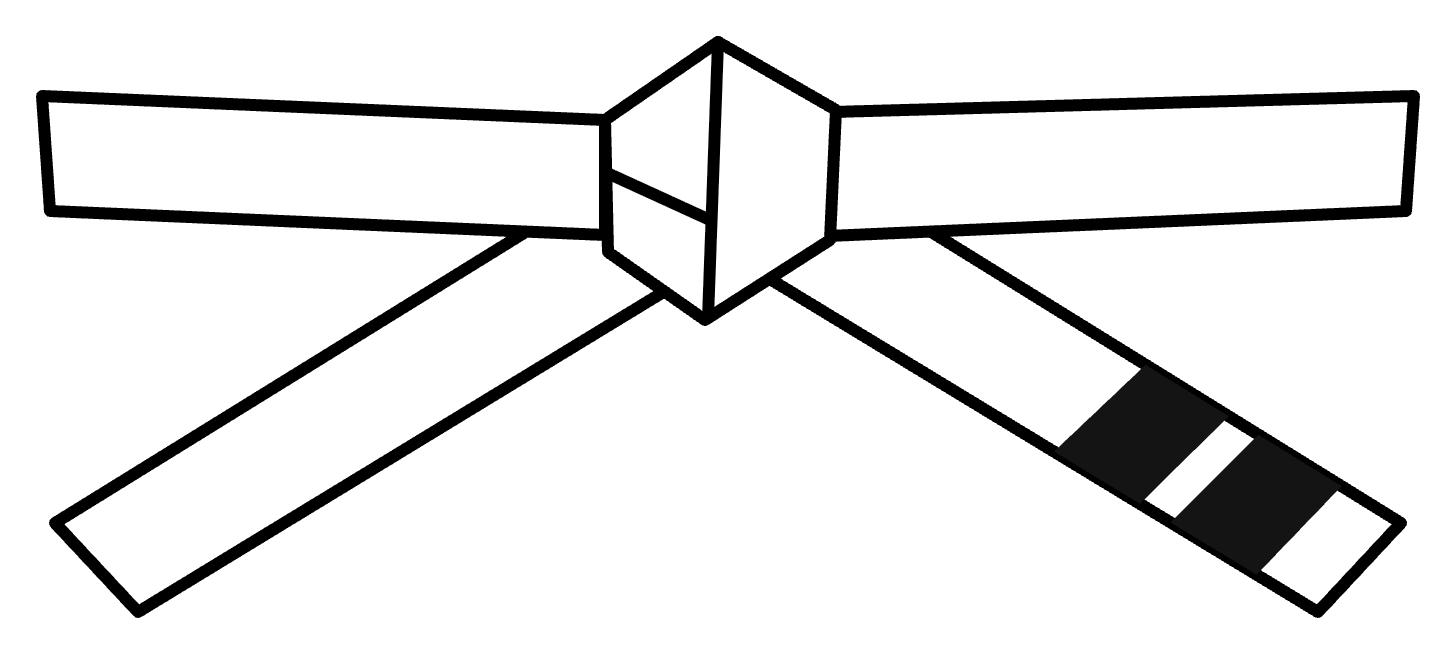
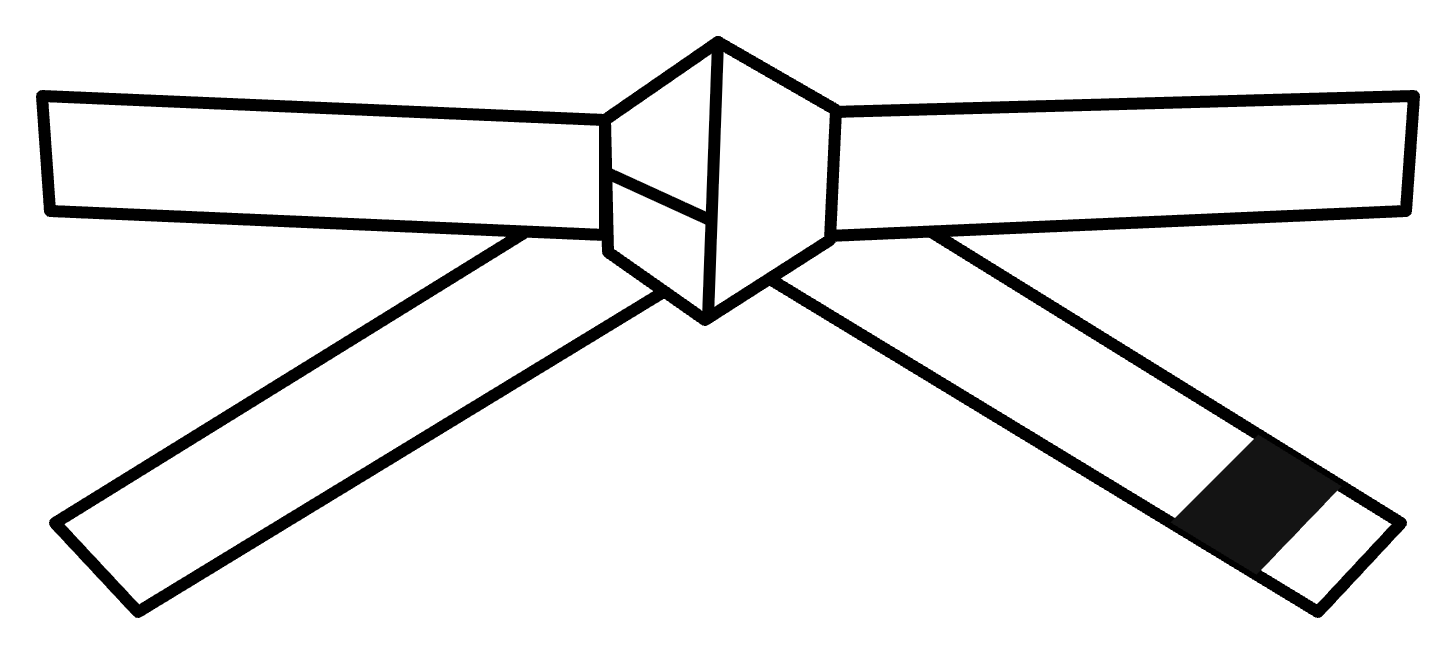 Jukyu – 10th Kyu (級)
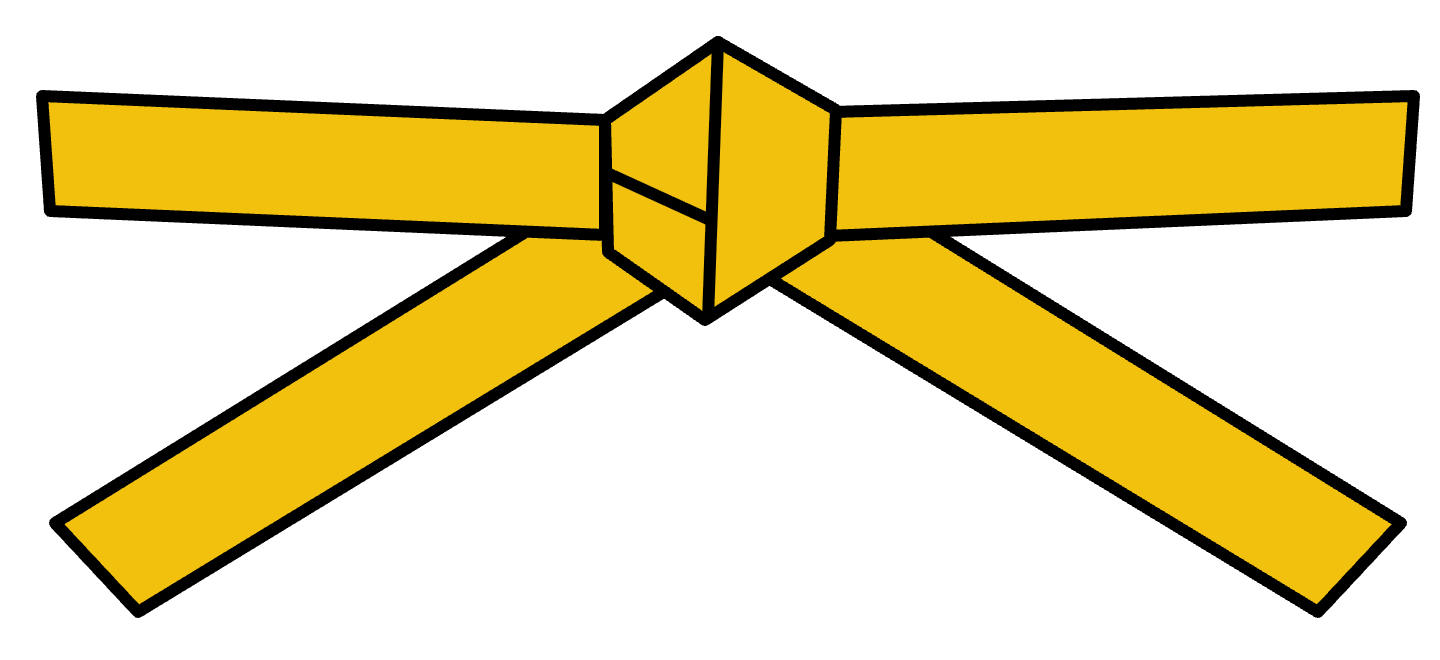
 Kukyu – 9th Kyu (級)
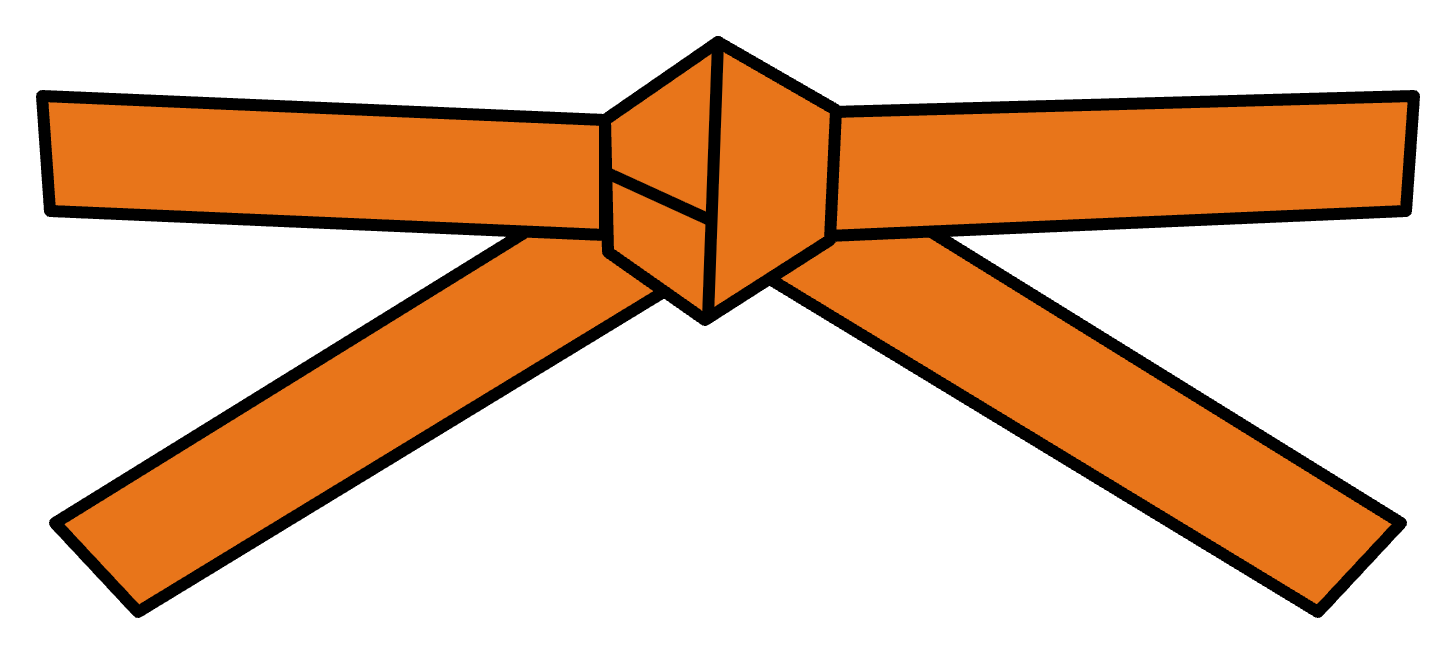
 Hachikyu – 8th Kyu (級)
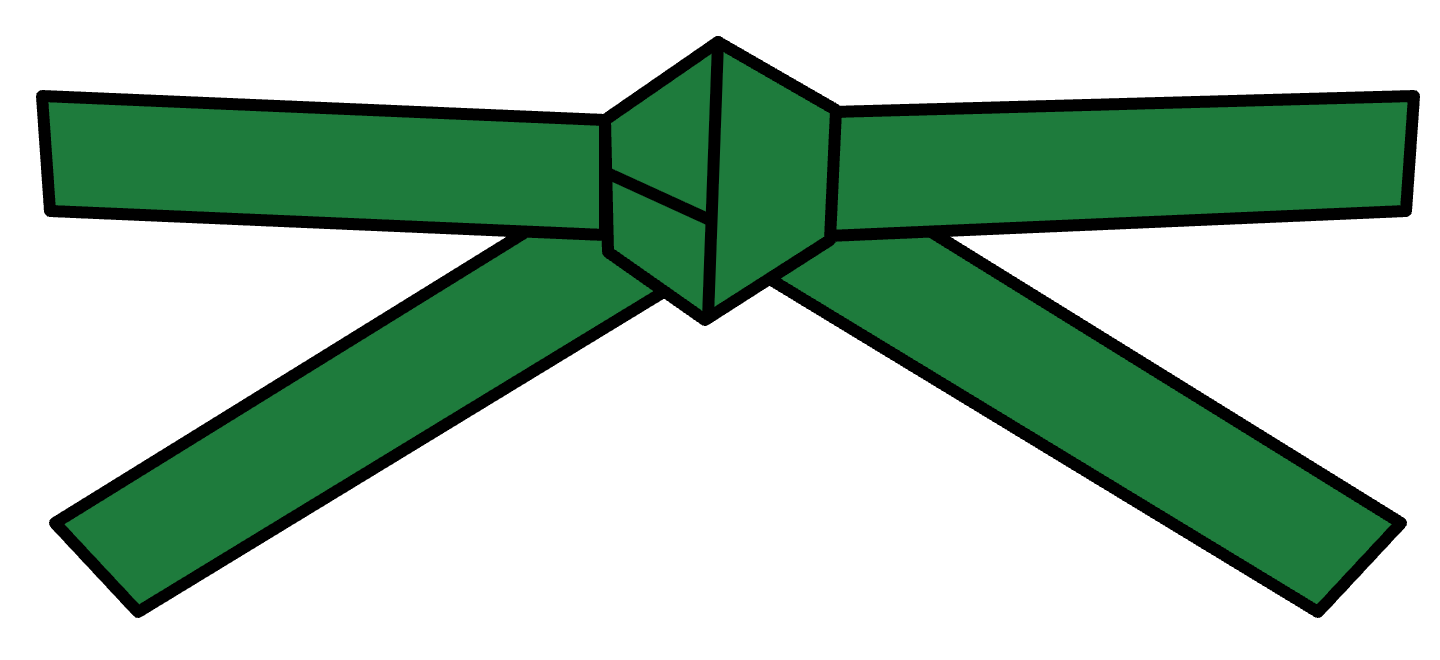
 Nanakyu – 7th Kyu (級)
 Rokukyu – 6th Kyu (級)
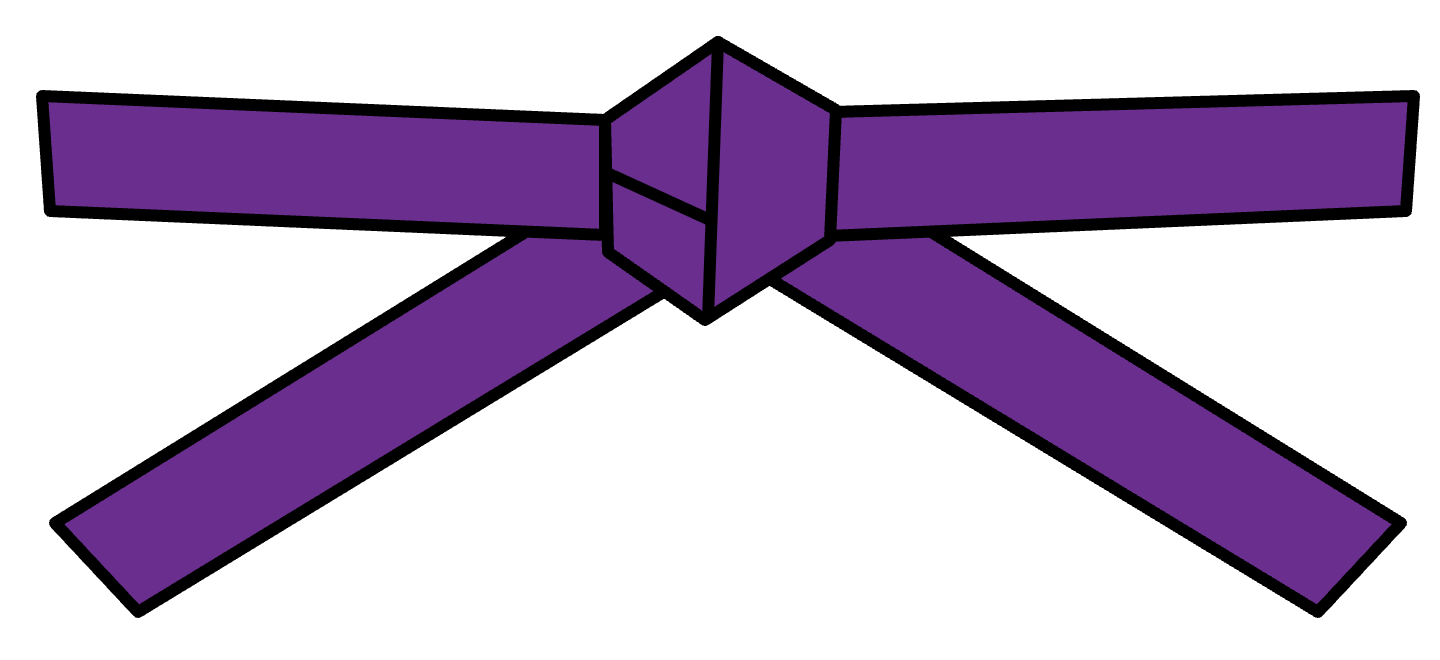 Gokyu – 5th Kyu (級)
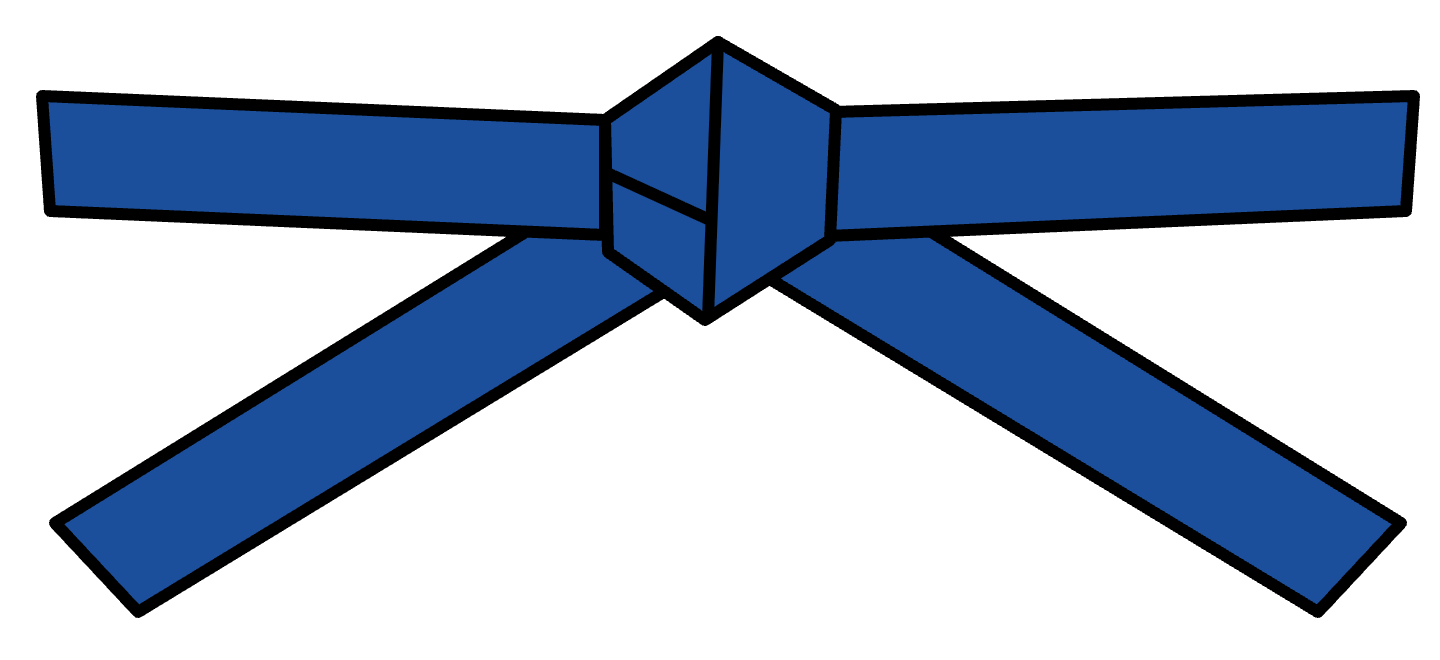 Yonkyu – 4th Kyu (級)
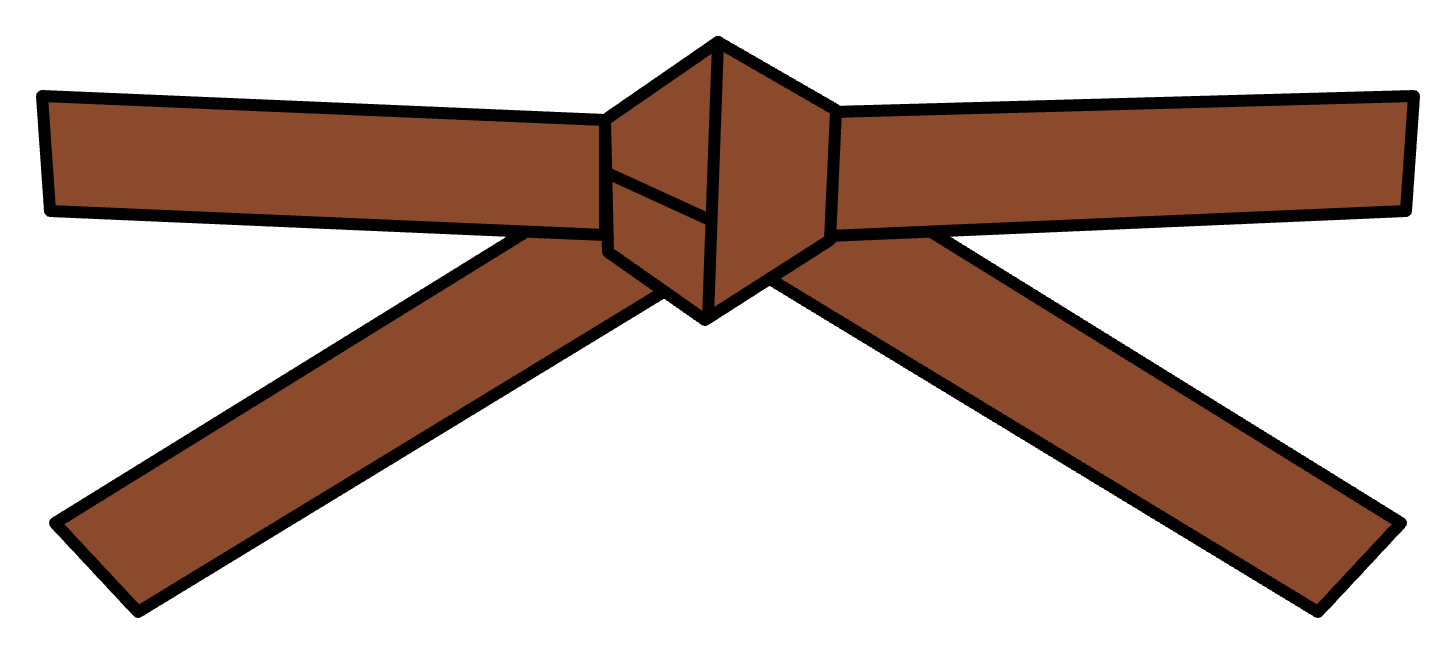 Sankyu – 3rd Kyu (級)
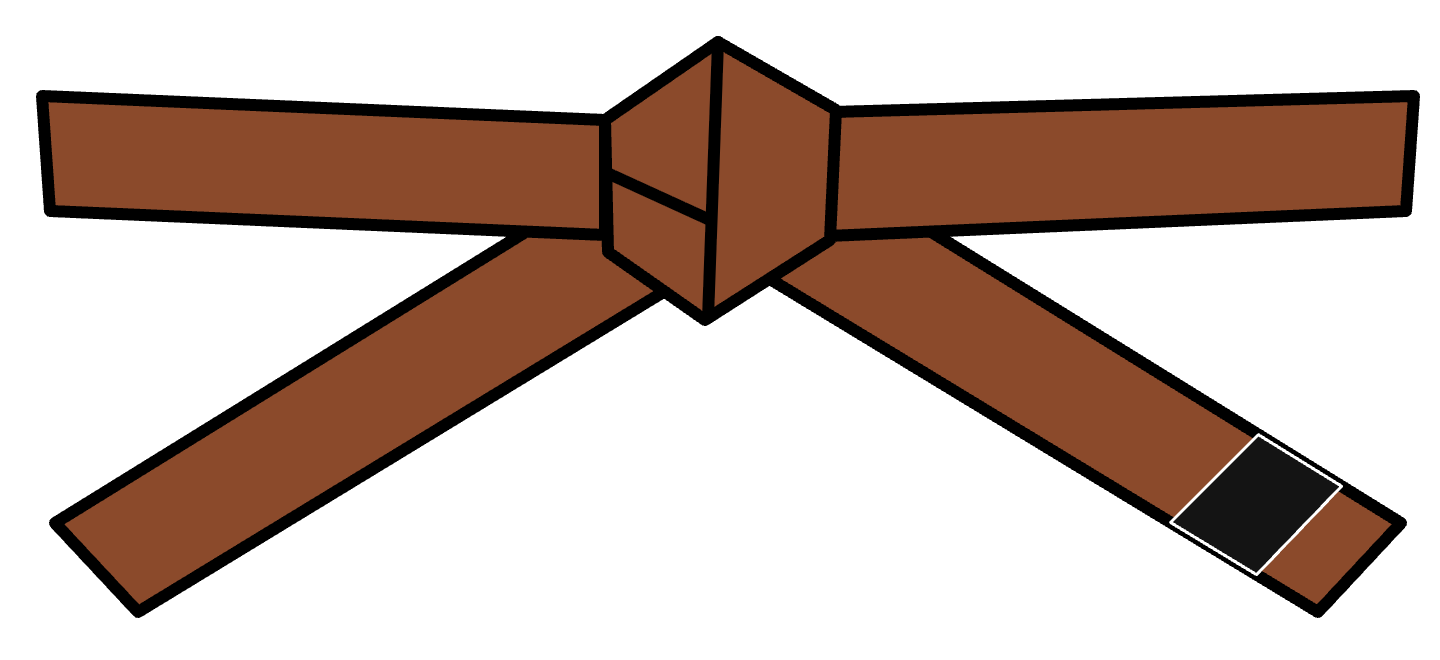 Nikyu – 2nd Kyu (級)
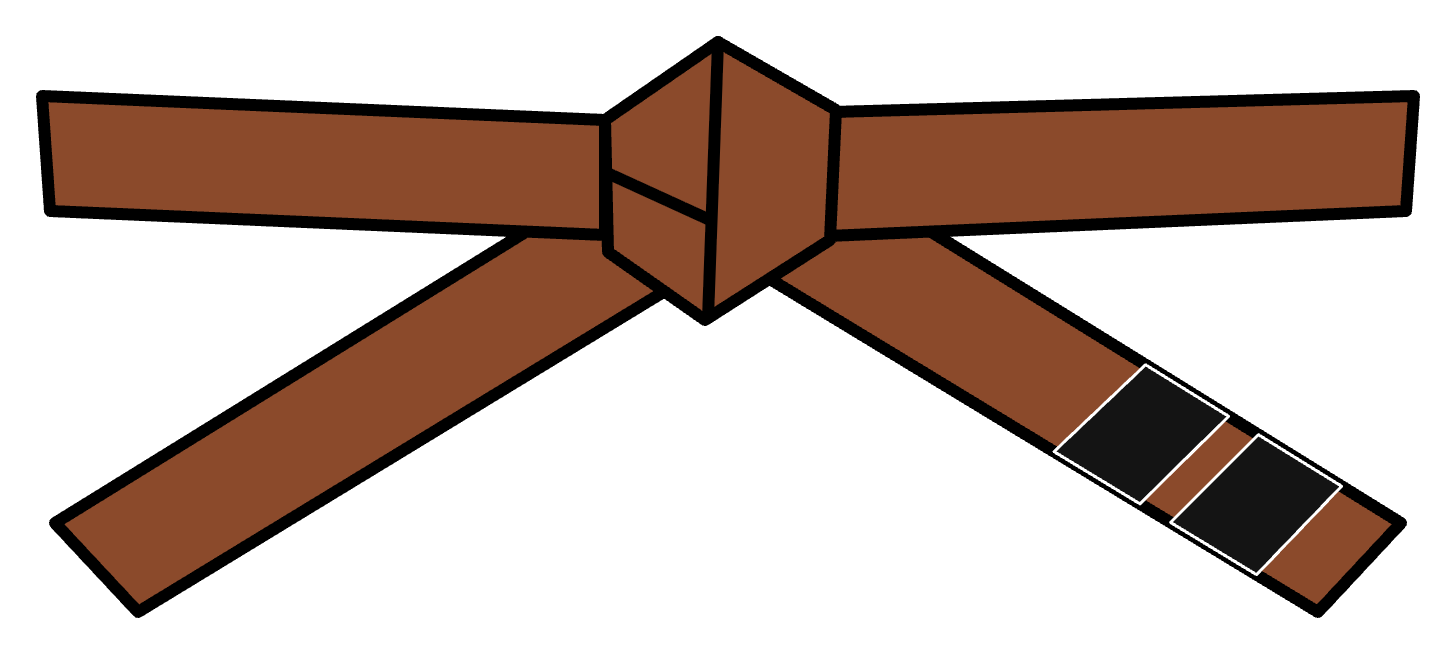 Ikkyu – 1st Kyu (級)
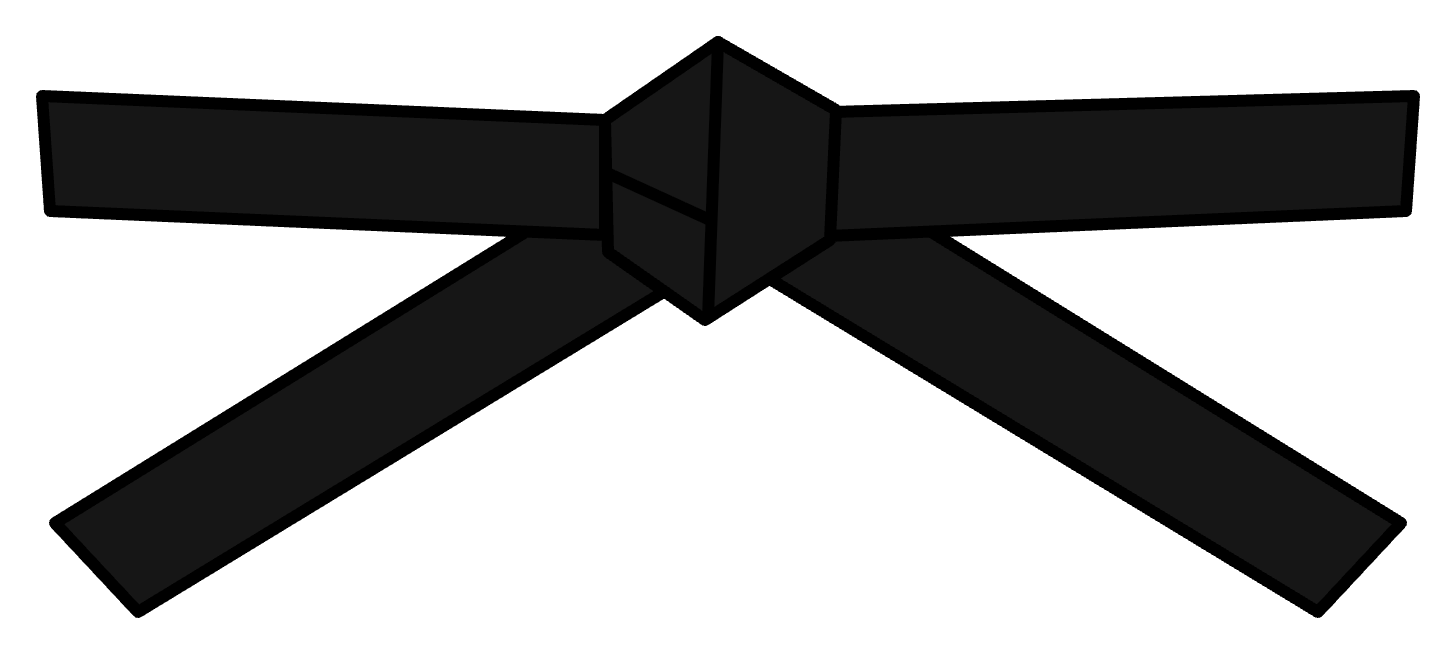 Shodanho – Black Belt
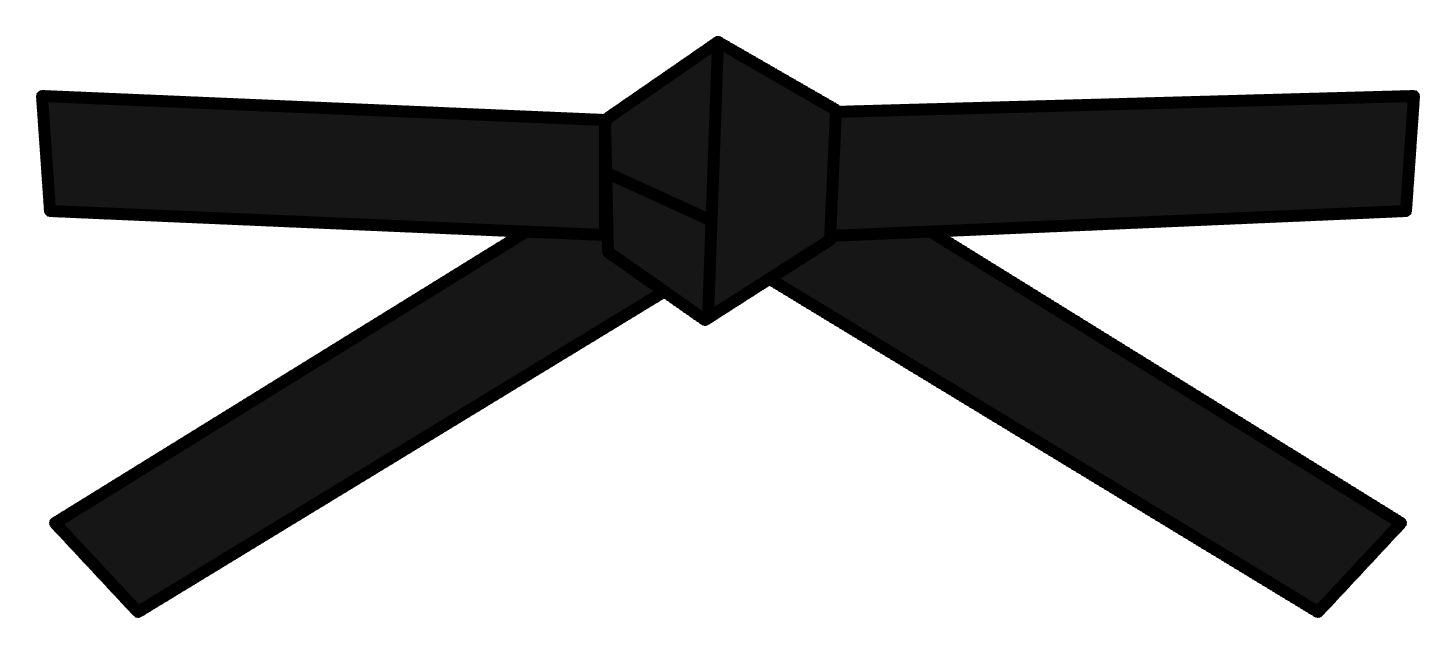 Shodan – 1st Dan (段)
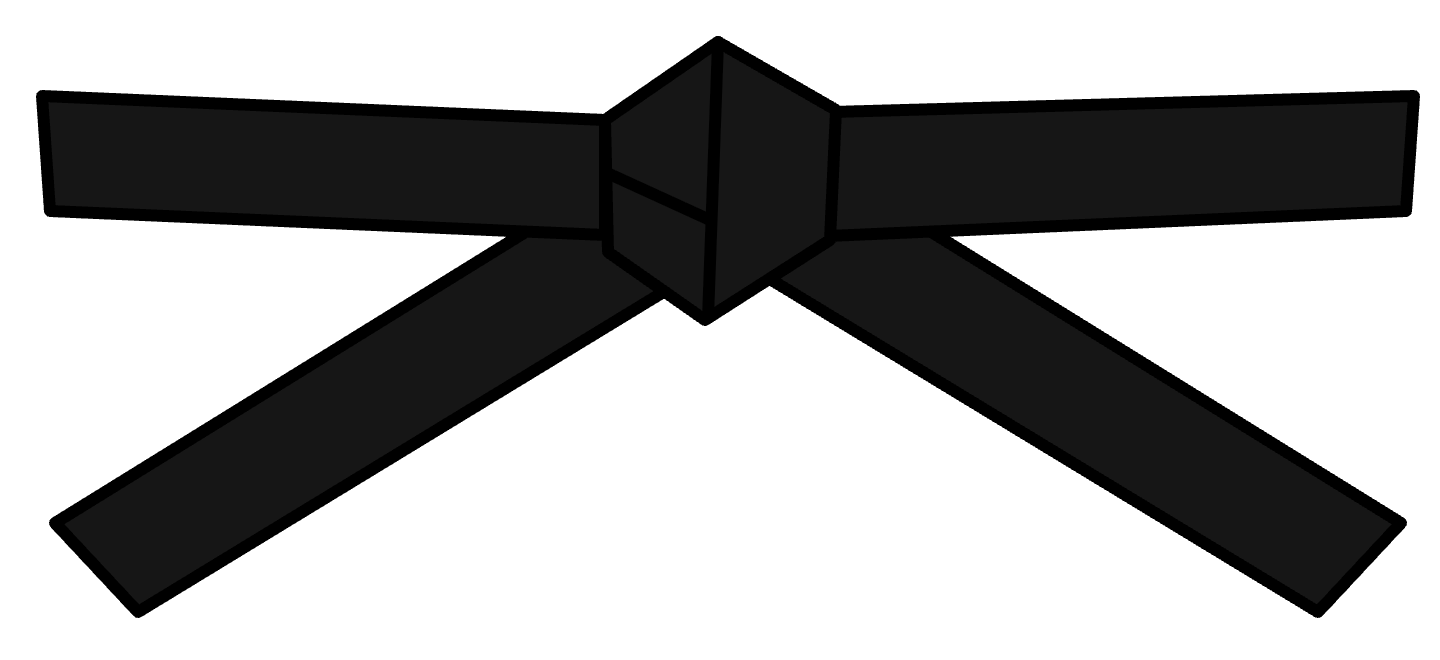 Nidan – 2nd Dan (段)
 Sandan – 3rd Dan (段)
 Yondan – 4th Dan (段) – Sensei
 Godan – 5th Dan (段) – Sensei
 Rokudan – 6th Dan (段) – Sensei
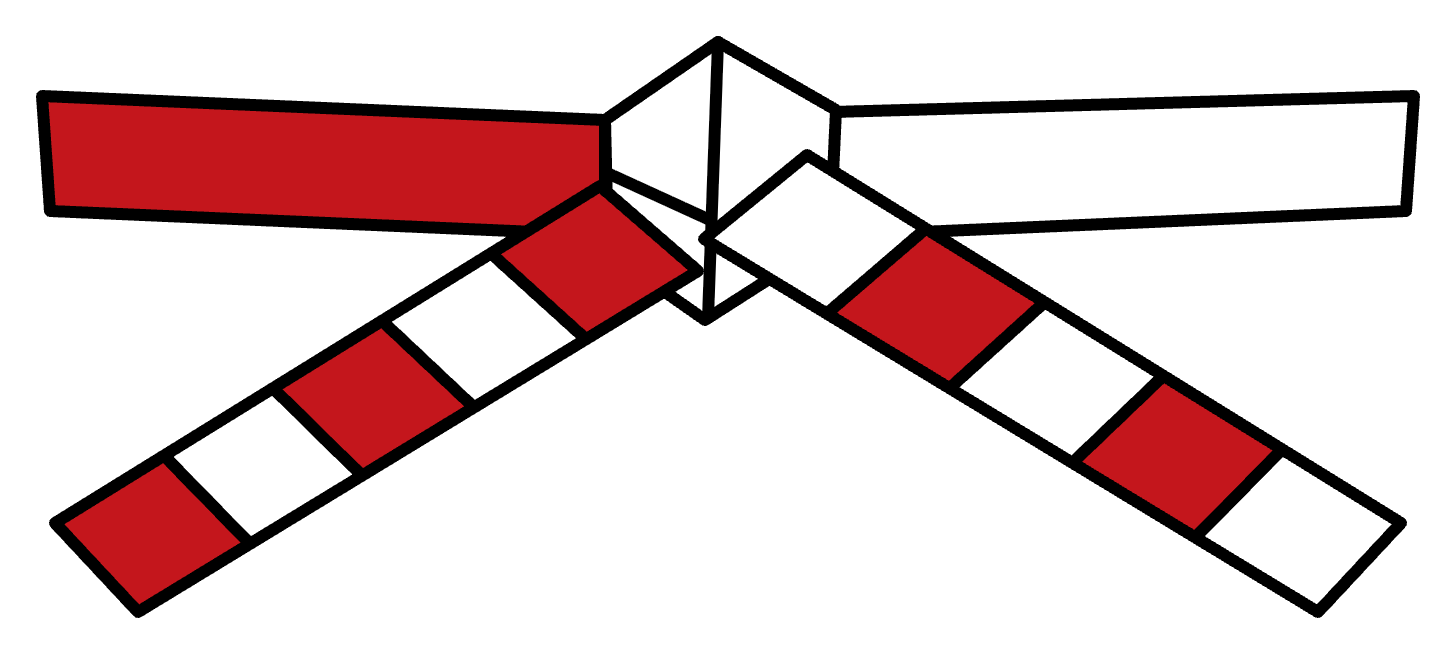 Nanadan – 7th Dan (段) – Sensei
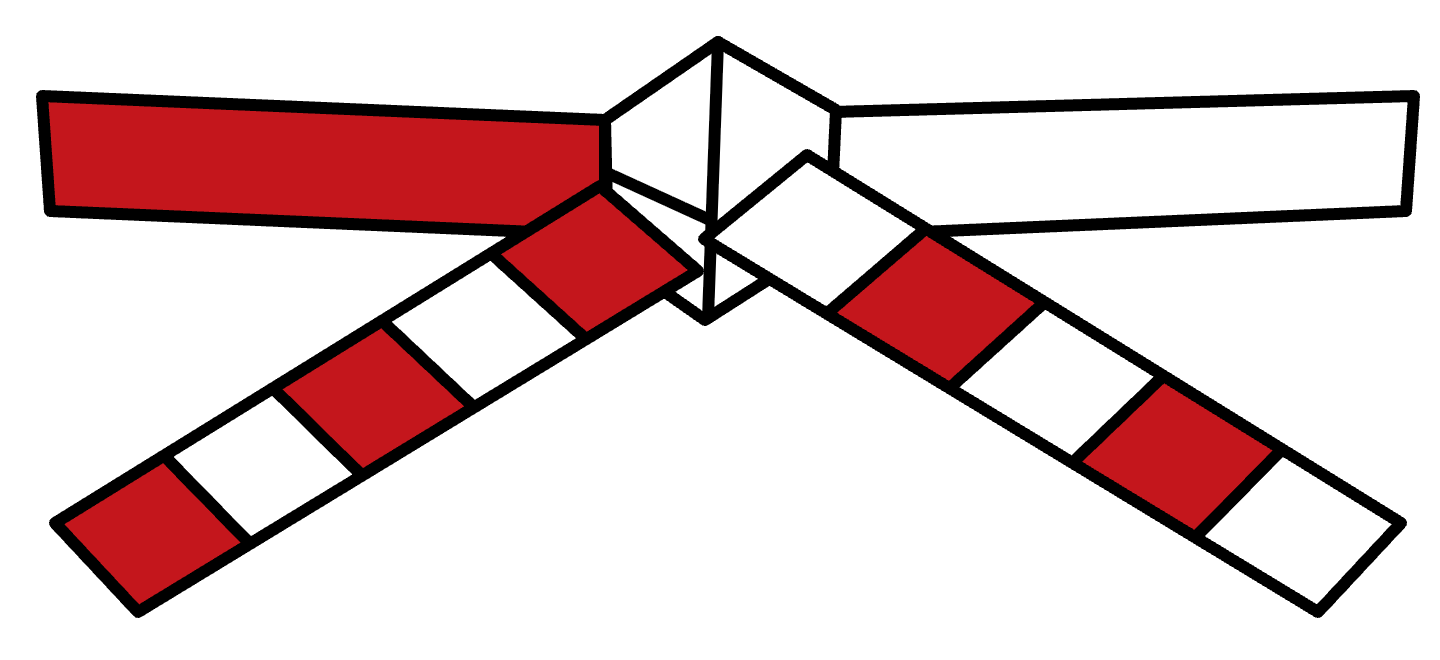 Hachidan – 8th Dan (段) – Sensei
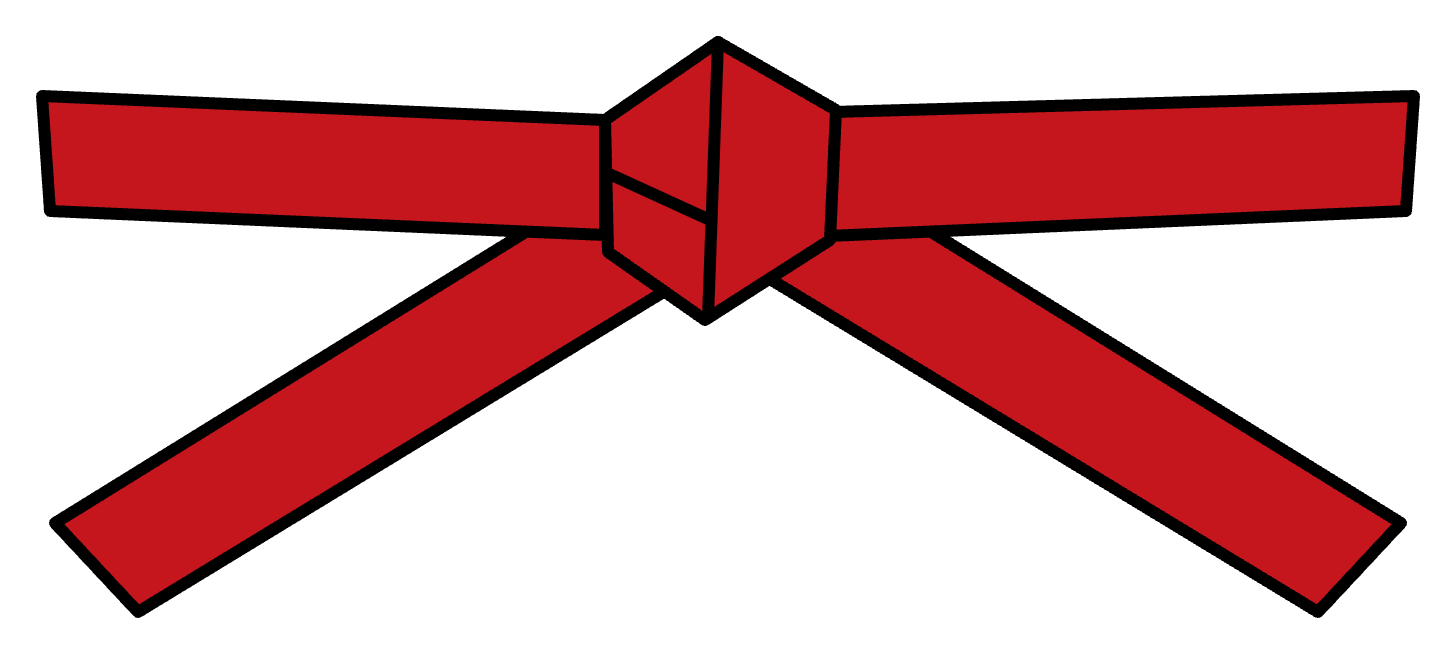 Kudan – 9th Dan (段) – Sensei
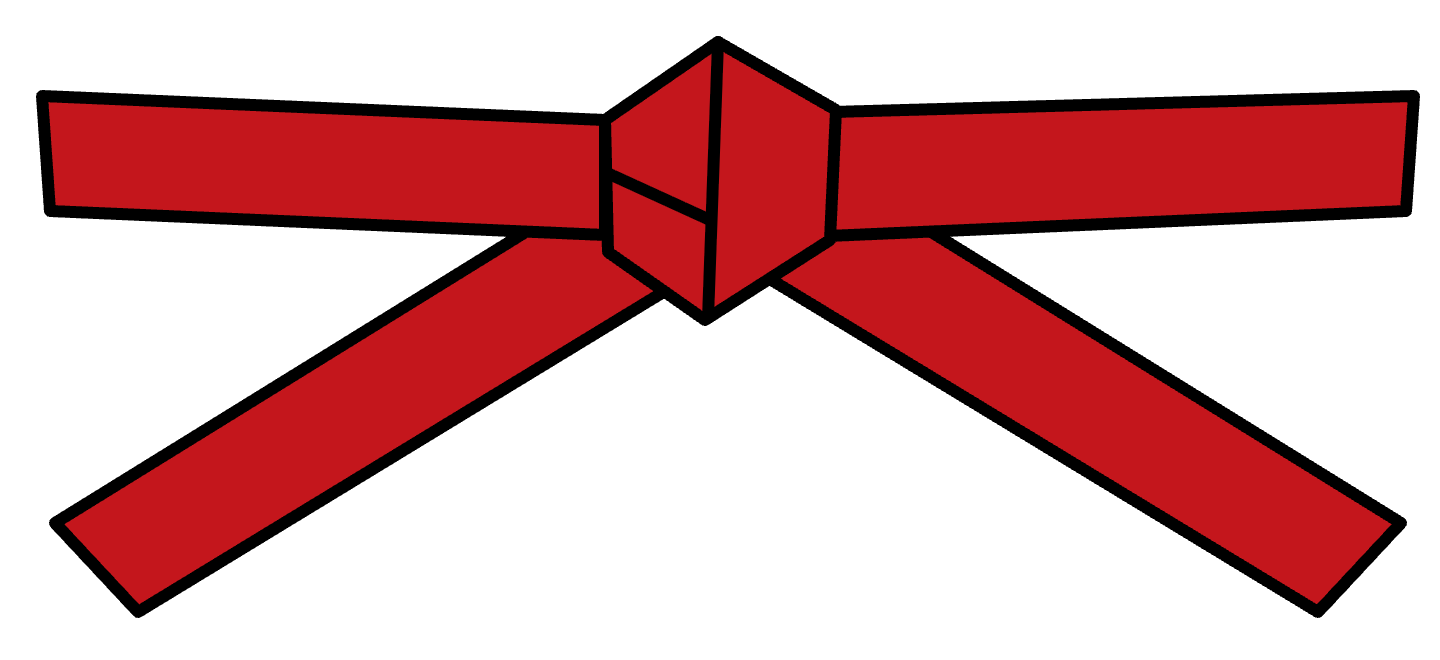 Judan – 10th Dan (段) – Shihan
The white and brown belts carry black tips, marking progress before the next full colour. No other belt in the system is tipped.