Starting Martial Arts as an Adult in Canberra: What Your First Month Looks Like
Why Most Adults Wait Too Long to Start
Adults put off martial arts for the same three reasons, every time – age, fitness and flexibility. None of them hold up once you look closely. Most people who walk in for their first class are in their 30s, 40s or 50s, and most of them aren't already fit. That's normal, not a barrier. Training is what builds the fitness, the flexibility and the confidence – it isn't something you need to arrive with already sorted.
What Your First Class Actually Looks Like
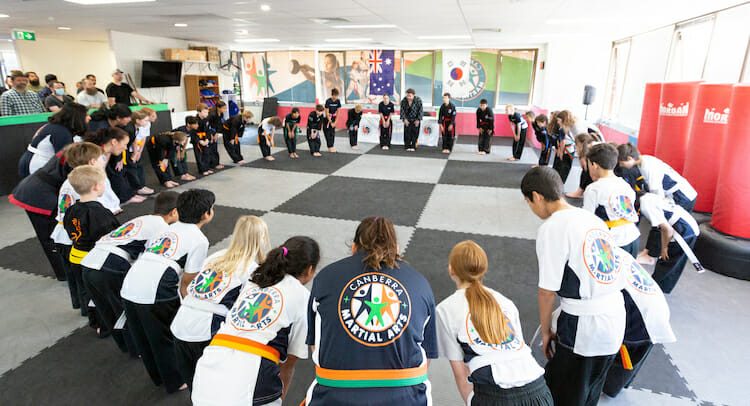
You won't be thrown in with people who've trained for years. Beginners work through the same warm-up and basic movements as everyone else, but the instructor keeps an eye on anyone new and adjusts the pace accordingly. Expect to learn how to stand, how to move, and one or two techniques – not a full pattern, not sparring, not pressure to perform.
Most first classes run 45 to 60 minutes. You'll leave tired, a little clumsy, and usually surprised at how much you picked up in one session.
The Gear You Actually Need
You don't need to buy anything before your first class – just show up in clothes you can move in. After that, the basics are simple:
- Loose, comfortable clothing – trackpants and a t-shirt are fine
- Bare feet or non-marking indoor shoes, depending on the program
- A water bottle
- A uniform (gi or dobok), usually only needed once you're training regularly
How Progress Actually Works
Belts exist to mark progress, not to gatekeep it. Each grading tests what you've learned since the last one – nothing more. Most adult students grade every few months, moving through a clear sequence of patterns, techniques and, eventually, sparring or grappling depending on the style.
You don't need to be the fittest person in the room. You need to keep showing up – the fitness and the confidence both follow.
Consistency matters more than talent. Two classes a week, held for a few months, will move you further than one intense week followed by a two-month break. Most adult students notice the difference in energy and focus well before they notice any change in the mirror.
What About Injuries, Age or Time?
These are the three questions instructors hear most, and none of them rule you out. Classes are structured so you can work at your own intensity – nobody is forcing contact you're not ready for. Older students and students carrying old injuries train alongside everyone else; techniques are adjusted, not skipped. And on time – most adults find one or two sessions a week fits around work and family more easily than they expected, because a class has a fixed start and finish, unlike an open-ended gym session where the discipline has to come entirely from you.
Finding the Right Program and Getting Started
Not every style suits every person, and that's fine. Some adults want striking and structure, some want grappling and problem-solving, some just want a hard, practical workout with real-world self-defence built in. Have a look through the adult martial arts programs on offer and see which one matches what you're after.
The only real step is showing up once. Check the timetable for a class that fits your week, then come & try a class – no experience, no gear, and no pressure to commit to anything on day one.