What to Expect at a Women's Self-Defence Course, Even With No Experience
Typing "women's self-defence course" into Google usually happens at night, after something has made the idea feel urgent rather than optional. The next question is rarely about technique. It is usually quieter than that: will I embarrass myself, will everyone else already know what they are doing, and can I actually do this if I have never trained a day in my life.
Those hesitations are normal, and they are the exact reason a proper course exists in the first place. Here is what a Women's Self-Defence Course at Canberra Martial Arts & Fitness actually looks like, from walking in the door to walking out with something you can use.
What Actually Happens in the Room
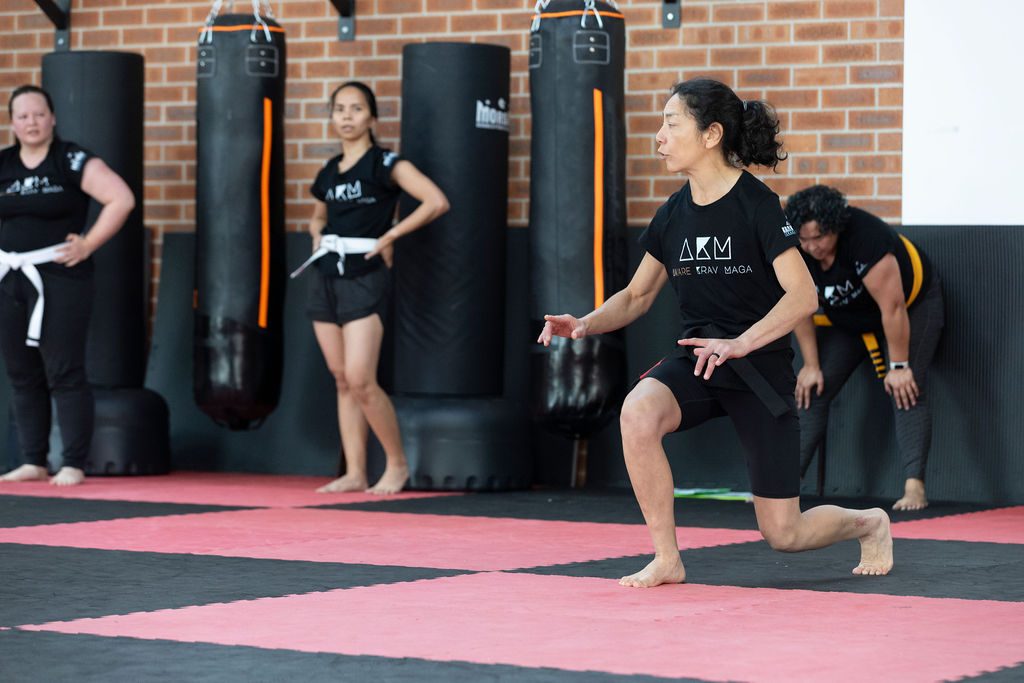
A self-defence course is not a sparring class, and no one is testing you against a partner who has trained for years. Sessions run through a small set of practical situations - a grab from behind, someone crowding your space, an arm caught mid-reach - and break each one into two or three movements you can repeat without thinking.
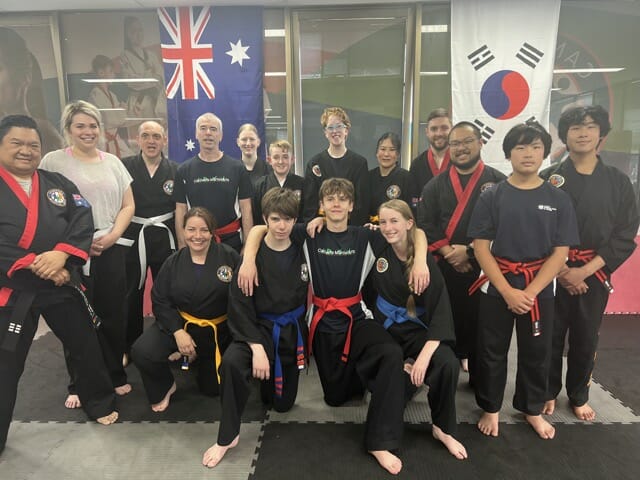
Every participant works at her own pace, in a room made up almost entirely of other beginners. There is no belt system to fall behind on and no ranking to worry about. The point is confidence and clarity, not competition.
A typical session moves in short blocks: a demonstration, a slow walk-through in pairs, then a faster repeat once the movement feels familiar. Instructors circulate the whole time, correcting quietly rather than calling anyone out in front of the group.
Do You Need Experience, or a Certain Level of Fitness?
No. This is the question we hear most often, and it is the easiest to answer honestly: the course is built for people who have never done a class like this before. You do not need to be strong, flexible, or athletic to get real value out of a session.
What matters is willingness to try a movement a few times until it feels familiar. Instructors adjust pace and contact to the group in the room, not the other way around.
"Most of the women who walk in are more nervous about looking silly than they are about the techniques themselves. Once the first drill is done, that fades fast - everyone in the room is in the same boat." - CMA&F instructor
Is It Actually Safe?
Yes. Contact is controlled, gradual, and always with instructor supervision. No one is paired with a partner who is significantly larger, stronger, or more experienced without that pairing being deliberately managed.
You are welcome to sit out any drill that does not feel right and rejoin when you are ready. Nothing about the format asks you to push past a limit you have not agreed to, and no one keeps score of who sat out what.
What Actually Softens the Nerves
Three things make the biggest difference before day one:
- Knowing you are not alone.
Every other participant is also new. There is no room full of experts watching a beginner. - Wearing comfortable clothing.
Anything you could move freely in for a light workout is enough. No uniform, no equipment to buy first. - Arriving ten minutes early.
A short look at the room and a quick word with the instructor before the group forms up settles most of the remaining nerves.
What Happens After the Course
Some participants finish the course and feel they have exactly what they came for - a set of practical responses they now trust. Others find the format itself appeals, and want to keep building on it in an ongoing class.
There is no pressure either way. If you do want to continue, adult classes such as our Adult Kummooyeh program build on many of the same principles - awareness, distance, and control - in a structured, ongoing format rather than a single course.
How to Book In
The simplest way to see whether a course is right for you is a complimentary come and try class, with no obligation attached. You can see the current timetable, meet the instructors running each session, and ask any question in person before you commit to anything.
Visit our timetable to find a session that fits your week, read more about the team on our team page, or head to getting started to book your first visit. Pricing for ongoing membership options, if you decide to continue, is listed on our pricing page.
The hardest part of a self-defence course is rarely the course itself. It is deciding to walk through the door the first time. Everything after that first class tends to look after itself.